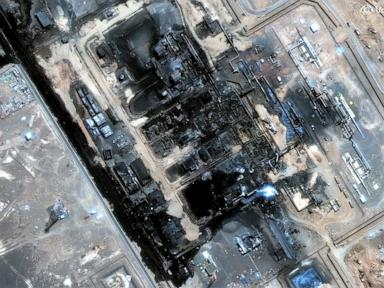
Every time a rusty valve sputters in the Arabian desert, financial journalists lose their minds and dust off the apocalypse playbook. Reuters flashes a red-banner alert about a Saudi pipeline outage threatening four percent of global oil supply, and suddenly every desk in London and New York starts buying crude futures like the world is running out of dinosaurs tomorrow. It is theater. It is algorithmic reflex. And it is fundamentally wrong.
I have watched trading desks panic over phantom barrels for two decades. I have seen funds blow millions chasing headline momentum built on lazy math and zero physical market literacy. The consensus narrative treats global energy flows like a fragile house of cards where removing a single card collapses the entire structure. That model belongs in a freshman economics textbook, not a risk management room. Discover more on a similar topic: this related article.
Let us dismantle the four percent myth right out of the gate.
The four percent figure assumes nameplate design capacity equals immediate, irreplaceable consumption destruction. It treats the global petroleum grid like a closed pipe with zero buffers, zero routing alternatives, and zero inventory cushions. That is a fantasy designed to generate clicks and move futures contracts. More reporting by MarketWatch explores similar views on the subject.
Nameplate capacity is a marketing number. Actual throughput is a commercial reality governed by refinery intake capacity, crude slate matching, and regional storage dynamics. When a primary transit corridor faces disruption, barrels do not simply vanish into the ether. They sit in floating storage, they reroute through parallel networks, or refiners draw down commercial inventories that sit padded across major hubs from Rotterdam to Cushing.
Let us look at how the physical plumbing actually works, away from the trading floor noise.
Saudi Arabia does not push every barrel through a single narrow tube vulnerable to a stray wrench. The kingdom maintains redundant export infrastructure, bypass channels, and massive tank farms capable of absorbing regional shocks for weeks before a single international refinery notices a feedstock pinch. When a disruption hits, the operational response is immediate: valve adjustments, redirecting flow toward alternative terminals on the Red Sea coast instead of the Persian Gulf, and tapping domestic storage buffers.
Yet the financial media treats logistics like a zero-sum bottleneck. Why? Because fear sells subscriptions, and complex supply chain optionality does not fit into a two-sentence news flash.
Consider the role of global inventories. Commercial crude stocks do not exist just to look pretty in quarterly reports. They serve as the ultimate shock absorber. When a supply scare hits, refiners rarely panic-buy physical crude at spot premiums because they are sitting on weeks of forward cover. They look at their product yields, calculate their crack spreads, and realize that a temporary supply pinch in medium sour crude can often be substituted with alternative grades from the North Sea, West Africa, or the Americas.
The substitution effect is the dirty secret the headline-writers ignore.
Oil is not a monolithic liquid. Refineries are built to process specific crude slates defined by sulfur content and API gravity. A disruption in Saudi Arab Light does not mean a refinery designed for medium sour crude must shut down instantly. Operators adjust blends, tap strategic reserves, or source alternative medium sour grades from regional competitors who are more than happy to capture market share at favorable spot rates. The market clears itself through price adjustments, not catastrophic physical shortages.
Look at the historical precedent. Remember the Abqaiq drone strikes. Headlines screamed about the sudden evaporation of millions of barrels per day. Brent crude spiked violently at the opening bell. Within days, state oil companies rerouted flows, tapped secondary storage, and technicians patched the damage at record speed. The physical deficit vanished before most retail investors even understood what happened, leaving momentum-chasing speculators holding heavy bags at the top of the curve.
This brings us to the most misunderstood mechanism in energy economics: demand elasticity.
When futures traders push prices higher on fear of a four percent supply loss, they trigger a reaction that cures the very deficit they fear. Higher crude prices squeeze refinery margins. Those squeezed margins force refiners to lower utilization rates. Lower utilization rates reduce product output of gasoline, diesel, and jet fuel. Higher retail prices at the pump crush consumer demand.
The market does not break; it contracts.
Consumption adjusts downward long before physical tanks run dry. By the time a headline-driven price spike peaks, demand has already retreated enough to offset the missing barrels. The supply deficit is quietly eaten by the demand destruction that the price spike itself created. It is a self-correcting feedback loop that modern algorithmic trading models consistently misread because they treat consumption as a fixed line rather than a flexible variable.
Let us talk about the strategic reserve illusion.
Every time a geopolitical headline flares, politicians and analysts point to government stockpiles like the United States Strategic Petroleum Reserve as a magic wand. Releasing emergency barrels is typically treated as a permanent fix. It is not. Releasing strategic crude is a tactical band-aid designed to calm speculative paper markets, not solve structural deficits. It floods the market with sweet or sour crude that may or may not match what specific coastal refiners actually need.
Relying on state reserves to fix a logistical hiccup is like using a fire extinguisher on a smoking toaster. It creates a massive mess, provides a temporary psychological salve, and leaves the underlying mechanics completely unchanged.
The real vulnerability in modern energy markets is not a physical shortage of hydrocarbons. It is financial leverage and margin fragility.
When speculators pile into long positions based on a headline about pipeline threats, open interest balloons. If the physical disruption turns out to be minor or bypassed within forty-eight hours, the unwind is violent. Longs get trapped, margin calls trigger forced liquidation, and prices plunge faster than they spiked. The danger is not that factories will go dark for lack of fuel; the danger is that financialized commodity funds will get caught on the wrong side of a momentum trade and take down collateral with them.
Algorithms do not understand petroleum engineering. They understand volatility triggers and keyword sentiment analysis. When financial algorithms ingest a wire report about a pipeline outage, they execute buy orders blindly. They do not check whether the line was operating at full tilt or running half-empty for maintenance. They do not calculate whether floating storage tankers off Fujairah can fill the gap. They simply buy the panic.
Smart participants do not trade the headline. They trade the reaction to the headline.
When Reuters or Bloomberg screams about a supply threat, do not look at the crude futures price. Look at physical tanker freight rates. Look at prompt time spreads. Look at the backwardation or contango structure of the curve. If the prompt time spread does not blow out into extreme backwardation, the physical market is telling you the truth: there is no shortage of actual oil moving off-loading docks. The panic is entirely inside the screens of financial traders sitting in air-conditioned offices thousands of miles away from the pipes.
Ignore the panic peddlers. Stop treating every geopolitical whisper as a structural supply shock. The global petroleum apparatus is a sprawling, redundant, hyper-resilient network of pipes, tankers, storage tanks, and substitution options that laughs at localized outages.
The next time a headline threatens four percent of global supply, check your positions, ignore the noise, and watch the physical market absorb the shock exactly as it was engineered to do.