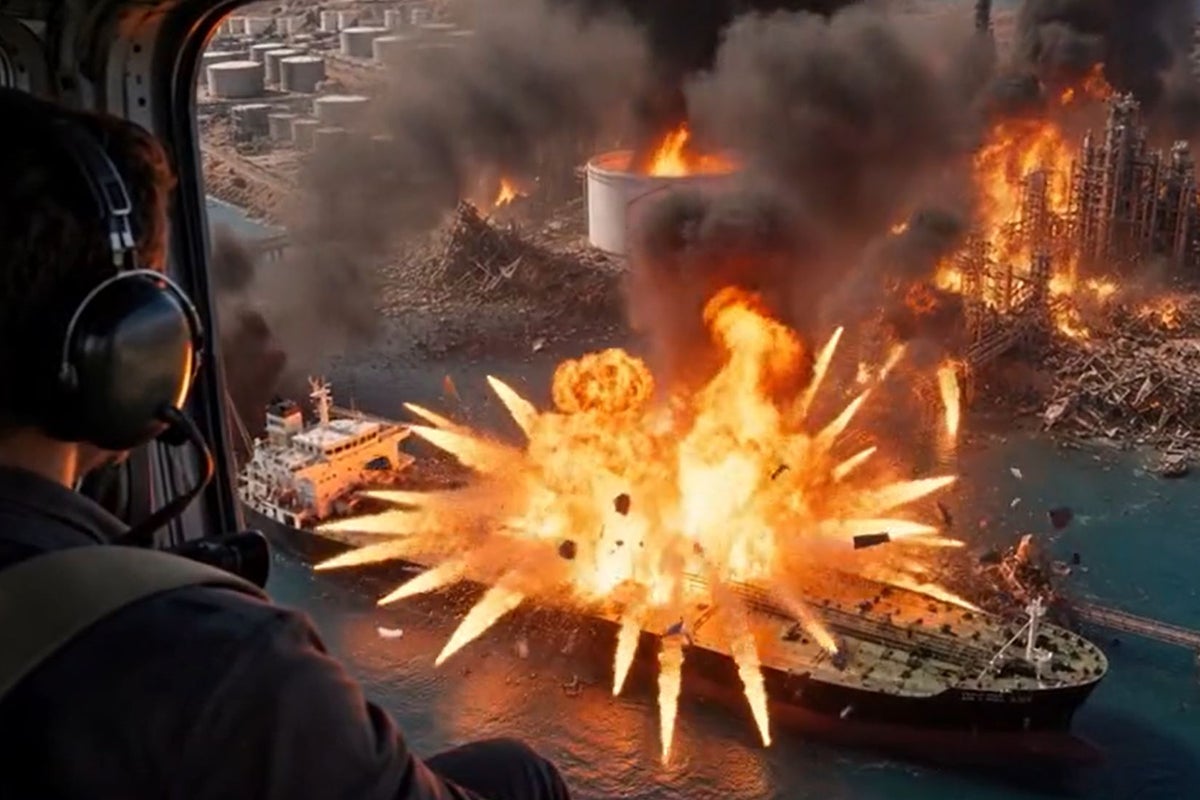
Every headline this week hyperventilates over a synthetic video showing Kharg Island burning to cinders. Pundits scream about escalation. Markets twitch. Analysts dust off stale playbooks about the Strait of Hormuz choking off global crude supplies.
They are missing the plot entirely.
Focusing on whether a low-grade deepfake of an oil terminal catching fire will trigger WWIII is the geopolitical equivalent of staring at a magician's left hand while he picks your pocket with his right. The lazy consensus assumes that physical destruction of infrastructure remains the primary vector of energy shock. That assumption is dead wrong.
I have spent two decades watching energy markets react to phantom threats while structural rot goes completely unnoticed. The real story isn't a digital fabrication of explosions on an Iranian export hub. The real story is how easily manipulated market sentiment can be when the underlying architecture of global oil distribution is already hanging by a thread of pure psychological bluffing.
The Myth of the Physical Bottleneck
Let us clear up a fundamental misconception right out of the gate. Kharg Island handles roughly ninety percent of Iran's crude exports. To the civilian observer, taking that terminal offline via kinetic strike or watching it burn in a computer-generated clip looks like an immediate death blow to Tehran's economy and a guaranteed spike to two-hundred-dollar oil.
It sounds terrifying on cable news. It also ignores how modern sanctions evasion actually works.
Iran has spent the last decade perfecting the art of shadow logistics. They do not need pristine, gleaming piers on Kharg Island to move barrels. Ship-to-ship transfers in sheltered waters, ghost tankers running dark transponders, and a voracious buyer of last resort in East Asia have turned Iranian oil flow into a resilient hydra. Cut off one head at the terminal, and three more pop up in the middle of the Gulf of Oman under different flags of convenience.
When analysts panic over a viral video depicting the island getting blown to smithereens, they display a profound ignorance of adaptive supply chains. Physical assets are rigid. Black markets are liquid.
"An oil barrel doesn't care whether its export pier was vaporized by a missile or rendered obsolete by a ledger entry in a Shanghai backroom."
Why AI Deepfakes Are Winning The Information War
Let us look at the mechanics of the clip itself. The footage circulating on social media isn't even sophisticated. It has the telltale warping artifacts, the weird lighting physics, and the uncanny valley texture that screams amateur hour. Yet, algorithms amplify it because outrage and fear generate engagement currency.
We are living through an era where a cheap text-to-video prompt carries more market-moving weight than a quarterly report from OPEC. Traders operating algorithmic feeds read keywords like Kharg Island, fire, and AI video, triggering automated sell stops before any human analyst even verifies the coordinates on a map.
This exposes a terrifying vulnerability in modern financial architecture. We have automated the panic.
I have seen trading desks lose millions in minutes because an unverified clip from a video game engine was tagged as breaking news from the Persian Gulf. The threat isn't that artificial intelligence is getting too good at faking reality. The threat is that our financial and geopolitical systems are too brittle to verify truth before the damage is done.
The Downside Of Being Cynical
Being right about media manipulation has its own heavy tax. When you tell people that a viral war video is digital smoke and mirrors, they accuse you of minimizing geopolitical risk.
Admitting that the system is built on smoke does not mean the fire cannot spread. The danger of these fake videos is not that they accurately predict the future. Their danger lies in catalyzing the very conflict they fake.
If Iranian military commanders see viral clips of their primary terminal burning, and domestic hardliners demand a kinetic response to save face over a digital hoax, the virtual world bleeds directly into the physical one. Perception becomes reality because politicians and generals feel compelled to react to what the public thinks is happening, regardless of actual satellite telemetry.
That is the feedback loop nobody in the mainstream press wants to discuss. We are no longer managing risk based on intelligence reports. We are managing risk based on viral engagement metrics.
What You Should Actually Be Watching
Stop looking at the deepfakes. Stop waiting for the smoke over Kharg Island. If you want to know where the energy market is heading, look at three boring, unsexy data points that never trend on social media:
- Insurance rates for Very Large Crude Carriers operating in the Persian Gulf. When underwriters actually start panicking, premiums spike quietly. That hasn't happened yet.
- Floating storage volumes off the coast of Malaysia. This is where the ghost fleet stages its inventory. Watch the numbers go up or down to see actual Iranian export health.
- Refining margins in independent Chinese teapot refineries. These smaller operations buy the discounted crude. As long as their margins stay positive, the oil keeps moving, fake video or not.
The next time a sensationalized clip hits your feed showing a vital choke point leveled by digital pixels, take a breath. Turn off the notifications. Look at the ledger, not the screen.
The market doesn't care about your feelings, and it certainly doesn't care about AI-generated special effects. It only cares where the crude actually docks.