Every time case numbers tick upward in Central Africa, the global media machine spins into motion. Headlines scream about grim milestones, approaching records, and impending doom.
It is lazy journalism fueled by fear.
When reports surface that Ebola cases in Congo have crossed thousands, the knee-jerk reaction from public health commentators is to sound the alarm on total infection counts. They treat the outbreak like a conventional respiratory pandemic, measuring severity purely by raw volume.
That framework is fundamentally flawed.
Focusing exclusively on aggregate case numbers blinds us to the real mechanics of epidemic control. Ebola is not an airborne contagion sweeping invisibly through crowded subways. It requires direct physical contact with bodily fluids. The transmission dynamics mean that raw totals tell us very little about containment velocity, community trust, or the actual efficacy of local interventions.
I have watched international aid organizations pour millions into high-profile treatment centers while completely ignoring the subterranean trust networks required to stop transmission at the village level. Pumping capital into shiny facilities means nothing if the local population hides the sick out of fear of isolation wards.
The Flawed Metrics of Epidemic Reporting
Let us examine how data gets distorted during a health crisis.
When officials talk about reaching near-record numbers, they rely on cumulative figures spanning many months or even years. Cumulative totals only move in one direction: up. They never decrease. Using a cumulative metric to measure the current danger of an outbreak is like judging the current speed of a car by looking at its total odometer reading.
A localized flare-up in a remote mining town requires an entirely different operational response than a scattered cluster in a dense urban center. Yet, the daily ticker aggregates them into a single, terrifying statistic.
Raw numbers without context are not information. They are ammunition for panic.
If we want to understand the trajectory of a filovirus outbreak, we must discard cumulative case counts entirely. We need to track three specific, unglamorous indicators instead:
- Generation Time: The average interval between infection of an index case and a secondary case.
- Chain Traceability: The percentage of new cases that can be directly linked to a known, monitored contact.
- Time to Isolation: The exact duration between symptom onset and safe burial or hospital admission.
When these three metrics improve, an outbreak is dying, even if the cumulative case count is technically climbing. When these metrics deteriorate, an outbreak is spinning out of control, no matter how low the total number of patients appears to be.
The Cost of Mistaken Identity
Treating Ebola like a fast-moving respiratory virus leads to catastrophic policy errors.
Governments and international bodies instinctively reach for heavy-handed border restrictions, forced quarantines, and militarized enforcement. These tactics feel decisive. They look good in press releases.
They also destroy the very community cooperation necessary to beat the disease.
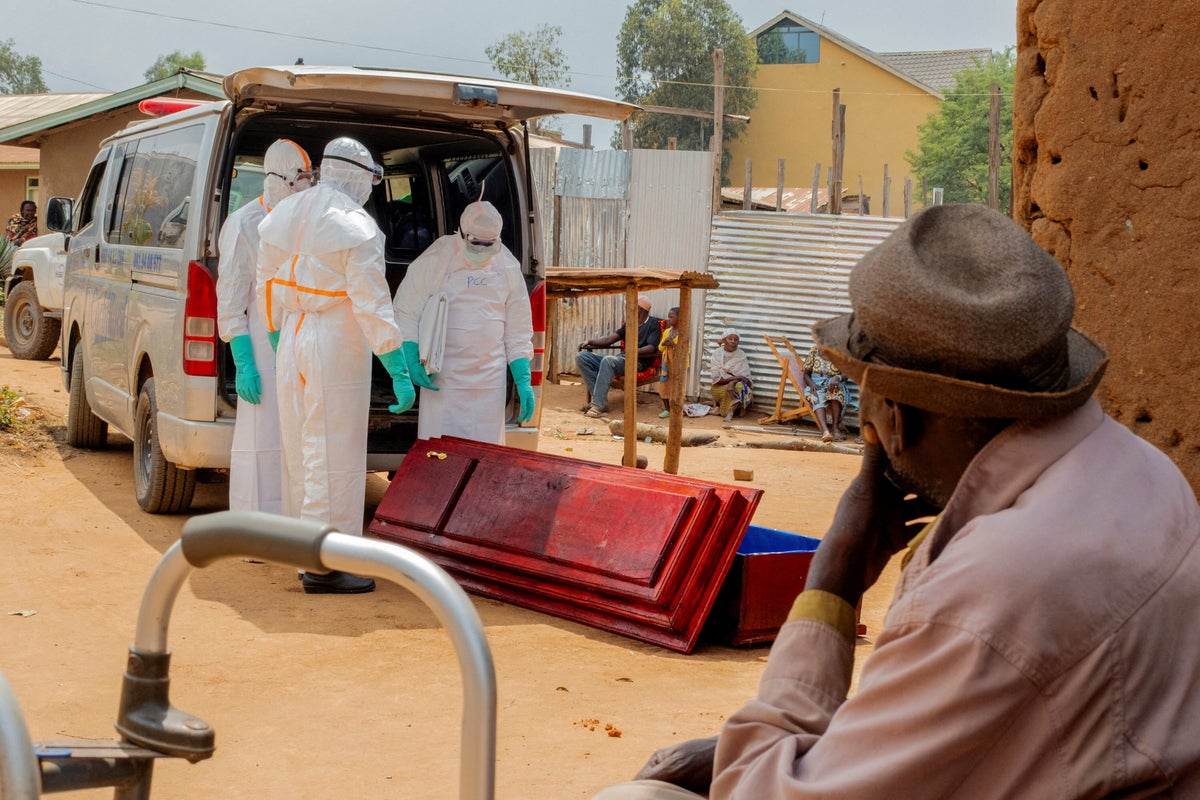
When health workers arrive in riot gear backed by security forces, villagers run into the jungle. They hide their sick relatives. They perform traditional burial rites in secret, bypassing safe-burial protocols entirely. Every instance of coercion acts as a force multiplier for the virus.
The conventional wisdom argues that strict containment requires absolute authority. The reality on the ground proves the exact opposite. Containment belongs entirely to the community.
I have seen elite epidemiological teams completely stall out in provinces where local elders refused to speak with them, only to watch transmission drop to zero within two weeks once leadership was handed over to local nurses and trusted community leaders who spoke the regional dialects and respected cultural norms.
Dismantling the Fear Narrative
Why does the media cling to the panic narrative? Because nuance does not generate clicks.
A headline reading "Contact Tracing Efficiency Improves by Four Percent in Rural North Kivu" does not capture global attention. A headline warning of a historic viral surge guarantees an audience.
This sensationalism carries a heavy toll. It starves other critical public health initiatives of funding and attention. While billions chase high-profile hemorrhagic fevers, routine childhood vaccination rates for measles and polio plummet across the same regions, quietly claiming far more young lives than the headline-grabbing pathogen.
We must stop reacting to every viral flare-up with apocalyptic projections.
What Actually Works
If we want to permanently alter the trajectory of these health crises, we have to flip the script on resource allocation.
First, stop building centralized fortresses that alienate local populations. Invest directly in decentralized, community-embedded primary health care networks. Give local clinics the cold chain storage, rapid diagnostic tools, and baseline medical supplies they need every single day—not just when an international emergency is declared.
Second, radically decentralize communication. Replace top-down, fear-based public service announcements with transparent, real-time data feeds managed by local health boards. When people understand the exact mechanics of transmission without the hyperbolic spin, they make rational choices to protect their families.
The real danger is not the virus itself. The real danger is our systemic refusal to look past the raw numbers and fix the human infrastructure underneath.
Stop counting the cases. Start fixing the trust.