Pakistan is currently playing a high-stakes game of financial musical chairs. The music just stopped for a $3 billion loan from the United Arab Emirates (UAE), and for the first time in seven years, Abu Dhabi isn't interested in extending the deadline. It’s a move that has sent Islamabad scrambling to Riyadh and Beijing to fill a massive hole in its balance sheet.
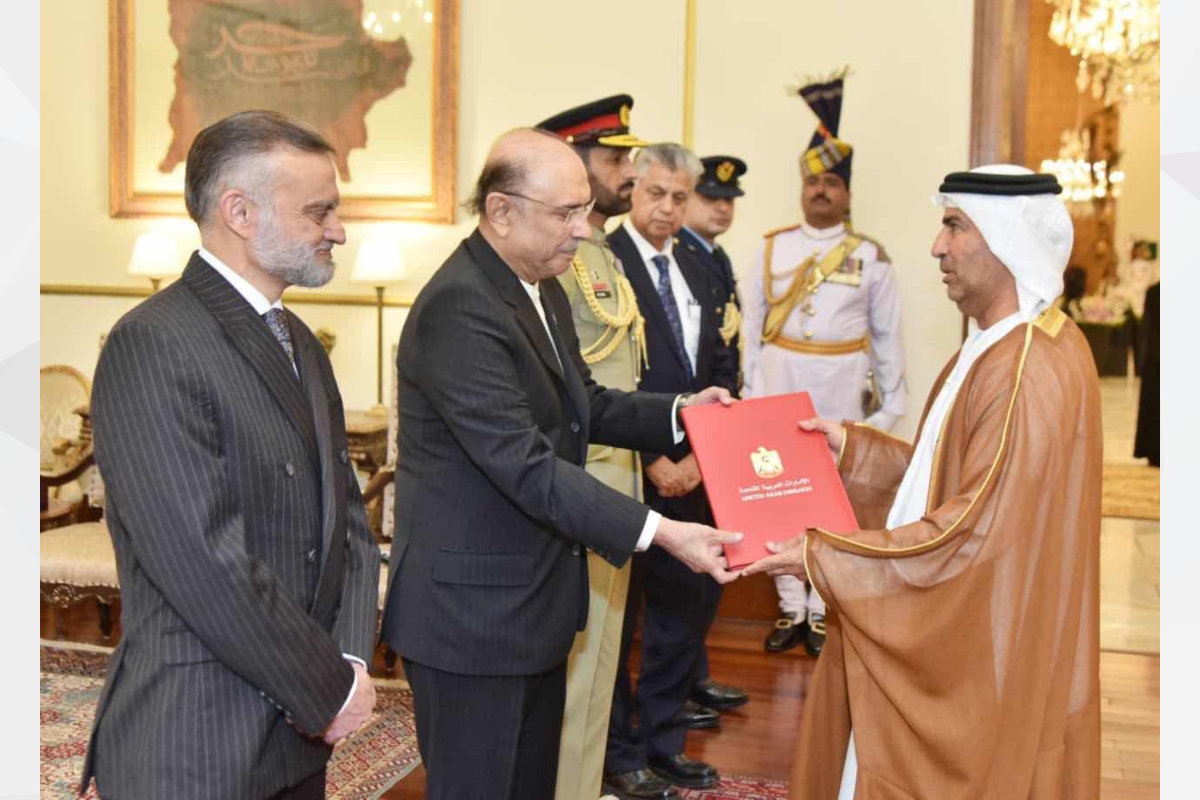
If you’ve been following Pakistan’s economy, you know the drill. The country survives on a cycle of "rolling over" debt—basically asking lenders to keep their money in Pakistan’s central bank for another year so the country doesn't go broke. But the UAE’s sudden demand for its $3 billion back by the end of April 2026 has shifted the landscape. It isn't just about the money; it's a signal that the unconditional "brotherly" support of the past is hitting a wall.
The UAE Debt Cliff
For years, the UAE was the reliable friend who didn't ask too many questions. They kept billions in the State Bank of Pakistan (SBP) to prop up foreign exchange reserves. But after a series of short-term extensions—some lasting only 30 or 60 days—the UAE has finally said "enough."
By April 17, 2026, Pakistan is expected to settle a significant chunk of this debt. With total foreign exchange reserves sitting around $16 billion—barely enough for three months of imports—writing a $3 billion check is a nightmare scenario. It would gut the country's liquidity just as it tries to impress the International Monetary Fund (IMF) for its next $1 billion tranche.
This isn't a "routine financial transaction" like the Foreign Office claims. It's a squeeze. Whether it’s due to cooling relations between Riyadh and Abu Dhabi or simply the UAE’s desire to pivot toward commercial investments rather than handouts, Pakistan is the one feeling the heat.
Why Saudi Arabia and China are Stepping Up
When one door closes, you hope the other two have bigger locks to pick. Finance Minister Muhammad Aurangzeb is currently juggling talks with Saudi Arabia and China to secure over $3.5 billion in fresh inflows.
Saudi Arabia, in particular, seems ready to play the hero again. Following Saudi Finance Minister Mohammed Al-Jadaan’s visit to Islamabad on April 10, reports suggest a $5 billion package from Saudi Arabia and Qatar is on the table. This isn't just charity; it’s a strategic play.
- Saudi Arabia's Angle: Riyadh wants to cement its role as Pakistan’s primary security and economic partner, especially as Pakistan deploys fighter jets to the Kingdom under mutual defense agreements.
- China’s Angle: As Pakistan’s largest creditor, China can't afford a total collapse. Beijing is likely to provide a mix of new loans and rollovers to ensure their multi-billion dollar CPEC investments don't turn into sunk costs.
The IMF Shadow
The timing couldn't be worse. Pakistan is currently under the microscope for the third review of its $7 billion IMF Extended Fund Facility. The IMF doesn't like seeing its money used to pay back other countries. They want to see "external financing assurances"—proof that Pakistan’s friends will keep their money in the country.
When the UAE pulls back, the IMF gets nervous. To keep the program on track, Pakistan has to prove that the $3 billion leaving for Dubai will be immediately replaced by $3.5 billion arriving from Riyadh or Beijing. It’s a frantic, circular flow of cash that does nothing to solve the underlying problem: Pakistan doesn't earn enough to pay its bills.
The Real Cost of These Bailouts
We need to talk about the interest rates. These aren't low-interest "friendship" loans. Recent rollovers from the UAE carried rates as high as 6.5%. When you're borrowing at those rates just to keep the lights on, you’re in a debt trap.
Most people think these loans are about building factories or infrastructure. They aren't. They’re "deposits" that sit in a bank account so the country’s currency doesn't collapse. It’s the equivalent of taking out a new credit card to pay the minimum balance on your old one.
Breaking the Cycle
If you're looking for the "next steps" for Pakistan's economy, the roadmap is clear but painful. Relying on Saudi Arabia and China to bail out UAE debt is a temporary fix.
- Stop the Rollover Reliance: The government needs to pivot from seeking deposits to seeking Foreign Direct Investment (FDI). Saudi Arabia has expressed interest in mining and refinery projects; those need to be fast-tracked.
- Tax the Untaxed: The IMF is pushing hard on this. If Pakistan doesn't bring its massive retail and agricultural sectors into the tax net, "brotherly" countries will continue to lose patience.
- Privatization: Selling off state-owned entities like PIA is no longer optional. It’s a prerequisite for staying in the good graces of global lenders.
The current scramble for $3.5 billion is a symptom of a deeper exhaustion among Gulf allies. They’re tired of being Pakistan’s ATM. If the current administration can't turn these loans into productive investments, the next time the music stops, there might not be any chairs left at all.