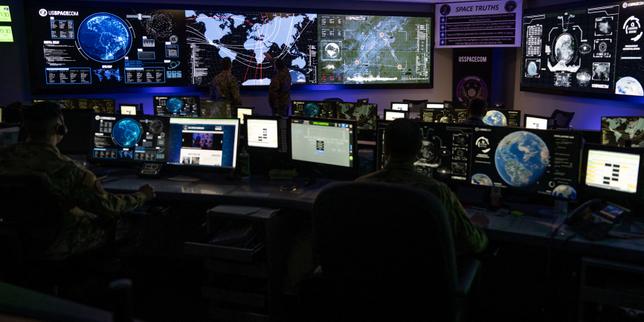
The recent acknowledgment by defense officials regarding the presence of operational space-based armaments represents a fundamental structural shift in geostrategic competition. For decades, international frameworks operated under the assumption of strategic restraint in the orbital domain, governed primarily by the Outer Space Treaty of 1967. However, the operational reality has outpaced legal constructs. The transition from dual-use reconnaissance and communications architecture to active orbital weaponization is not merely an incremental upgrade in military capability; it is a complete restructuring of the global security architecture governed by cost-asymmetry, orbital mechanics, and the high-stakes game theory of first-strike stability.
The Three Structural Drivers of Orbital Weaponization
The convergence of technological feasibility, economic democratization of launch vectors, and defensive vulnerability has eroded the traditional barriers keeping weapons out of low-Earth orbit. This shift can be deconstructed into three primary drivers.
The first driver is the severe asymmetry of the cost function associated with space assets. Ground-based infrastructure, naval carrier strike groups, and strategic nuclear silos require massive capital expenditure and long deployment timelines. Conversely, low-Earth orbit allows for persistent global coverage with minimal transit latency. A projectile or kinetic interceptor stationed in orbit possesses a permanent gravitational and kinetic advantage over terrestrial targets. The energy required to de-orbit a payload or intercept another satellite is a fraction of the energy required to launch a terrestrial intercontinental ballistic missile against a defended target.
The second driver involves the democratization of orbital access. Commercial aerospace advancements have drastically reduced the marginal cost per kilogram to low-Earth orbit. This reduction in cost lowers the barrier to entry for secondary and tertiary state actors, transforming an exclusive club of space superpowers into a congested, competitive theater. When launch costs plummet, the financial penalty for deploying weaponized or counter-space hardware decreases proportionally, inviting proliferation.
The third driver is the vulnerability of critical national infrastructure. Modern economic and military command structures rely entirely on space-based assets for precise timing, global positioning systems, secure communications, and early-warning telemetry. Because these nodes are exposed, undefended, and exceptionally difficult to armor without rendering launch economically unviable, they present high-value, asymmetric targets. The militarization of orbit is therefore framed by military planners not merely as an offensive expansion, but as an inevitable defensive necessity to protect or contest these vital nodes.
Orbital Mechanics and First-Strike Instability
To understand the strategic danger of space-based armaments, one must examine the tyranny of orbital mechanics. Unlike terrestrial military assets that can take hours or days to maneuver across oceans or continents, objects in low-Earth orbit travel at approximately 7.8 kilometers per second, completing a full circuit of the globe in roughly 90 minutes.
This velocity profile collapses decision-making timelines to absolute zero. If a state deploys kinetic-energy weapons or directed-energy systems in orbit, the warning time for a targeted nation drops from minutes or hours to seconds. This compression of time introduces severe first-strike instability. During a geopolitical crisis, the incentive to launch a preemptive strike to neutralize an adversary's orbital capabilities before they can be utilized spikes dramatically.
Furthermore, the debris cascade problem, famously modeled as the Kessler Syndrome, creates a unique collateral risk unique to the orbital domain. Unlike a conventional war zone where destruction is localized, kinetic engagements in space generate thousands of high-velocity fragments. These fragments do not fall harmlessly to Earth; they remain in orbit, threatening all adjacent commercial and military satellites indiscriminately. Weaponizing space introduces the distinct possibility of rendering entire orbital shells completely unusable for generations, effectively locking humanity into a terrestrial prison through self-inflicted environmental degradation.
The Failure of Traditional Deterrence Frameworks
Traditional deterrence theory rests on three pillars: mutual vulnerability, transparent attribution, and proportional response. The orbital domain subverts all three.
Attribution in space is notoriously difficult. If a critical communications satellite experiences a sudden failure, solar radiation, space debris impact, cyber-intrusion, and a co-orbital kinetic strike often leave identical diagnostic signatures in telemetry data. This ambiguity destroys the mechanism of deterrence. If an aggressor can plausible-deniability sabotage an opponent's asset under the guise of an accidental collision with space debris or a solar anomaly, the victim cannot formulate a proportional response without escalating an unprovoked conflict.
Mutual assured destruction worked during the Cold War because both superpowers could reliably verify the survivability of their nuclear arsenals. In contrast, space-based architectures are fragile. A relatively small investment in electronic jamming, cyber-attacks, ground-based lasers, or co-orbital inspectors can neutralize multi-billion-dollar space constellations. This asymmetry favors the offense over the defense, destabilizing the strategic balance and encouraging pre-emption during diplomatic deadlocks.
Strategic Realities and Future Projections
As state actors integrate active armaments into orbital deployment schedules, the strategic calculus shifts from regulation to resilience. Diplomatic efforts to negotiate a verifiable ban on space weapons face insurmountable verification hurdles, as almost any satellite possesses inherent dual-use capabilities. A robotic arm designed to refuel or repair commercial satellites can double as a kinetic grappler capable of disabling a rival military asset.
Consequently, military modernization strategies are pivoting away from legalistic prohibitions toward distributed architectures, smaller constellations, rapid reconstitution capabilities, and hard-kill defensive countermeasures. The era of a sanctuary in space has concluded. The militarization of orbit is now a permanent structural variable in international relations, governed not by normative treaties, but by the unforgiving mathematics of velocity, physics, and preemptive vulnerability.