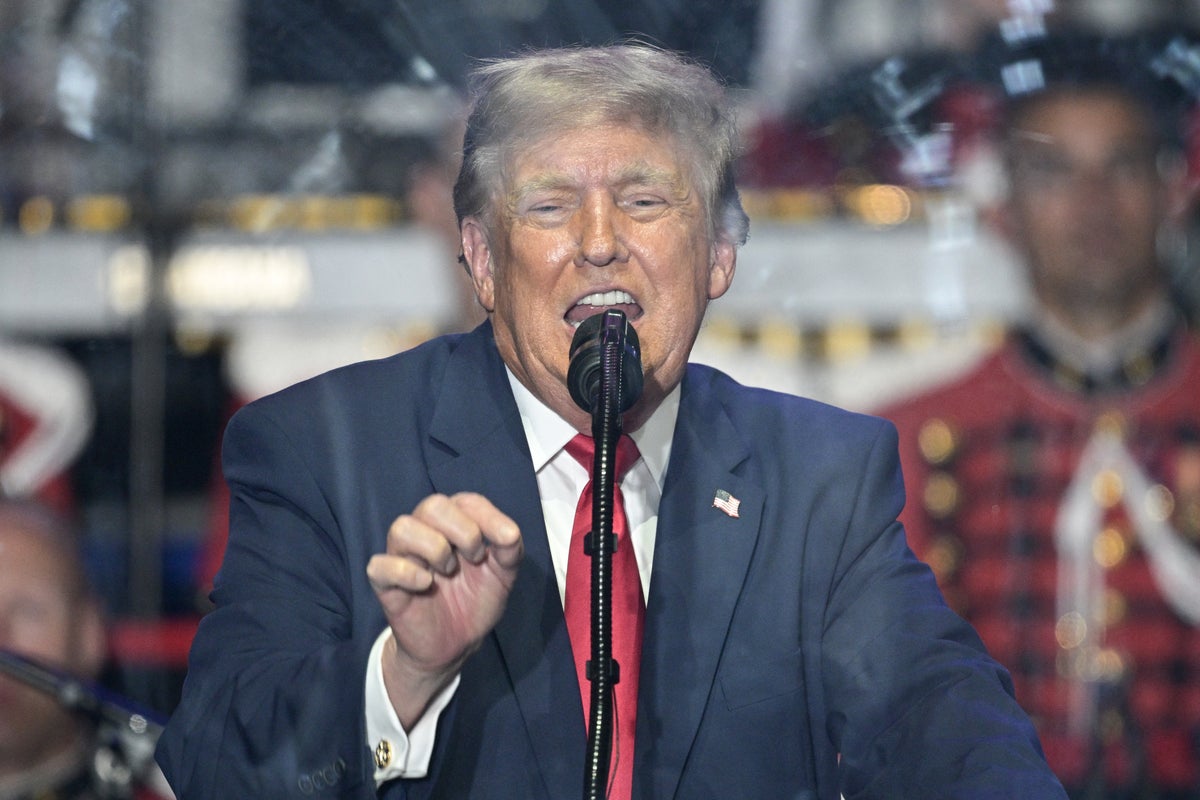
Crowd size has always been the ultimate currency in modern political optics. When reports surfaced that Donald Trump’s campaign team scrambling to delete social media images of a sparse crowd at a State Fair rally, it revealed a deeper structural crisis within the campaign’s advance operations. This is not just a story about a candidate’s ego. It is a technical breakdown in modern political advance work, where digital magnification tools failed to mask the physical reality of a shifting voter turnout dynamic. The frantic scrubbing of digital evidence underscores a desperate effort to maintain the illusion of an untouchable populist movement.
The Mathematics of the Advance Team Failure
Political advance work is an exact science. It relies on a calculation of venue capacity, sightlines, and focal lengths to ensure that whether five thousand or fifty thousand people show up, the cameras see a wall of humanity.
When a rally looks empty, it means the advance team miscalculated. They chose a venue too large for the realistic turnout projection, or they failed to utilize standard staging tricks. Typically, if an arena or outdoor fairground is under-filled, the production team uses "piping and drape" to cut the room in half. They pull the stage forward. They cluster the crowd tightly within the tight frame of the primary camera lens, creating a dense pocket of energy that looks massive on a television screen.
In the case of the State Fair rally, the open-air layout stripped away these architectural defenses. Wide-angle shots taken from peripheral angles by local journalists and attendees exposed vast swaths of empty grass and concrete. Once those images hit the internet, the official campaign narrative of an "overflow crowd" fractured instantly. The subsequent panic among staff members to delete wide-view photos from official feeds was a clumsy attempt to retroactively apply the framing that should have been managed on the ground.
The Illusion of Omnipresence
Modern political campaigns operate on a principle of perceived inevitability. For a populist movement, the crowd is the core policy argument. The crowd validates the message.
[Physical Turnout] ---> [Advance Framing] ---> [Media Broadcast] ---> [Perception of Momentum]
When the physical turnout drops, the entire chain weakens. The decision to purge photos from social media channels demonstrates a fundamental misunderstanding of the modern digital ecosystem. A photo deleted from an official account does not vanish; it becomes a artifact. It is screenshotted, archived, and weaponized by opponents. The act of deletion itself becomes a secondary news story, compounding the damage of the original empty seats.
This optical panic stems from a reliance on metrics that are increasingly difficult to replicate in non-election years or in traditional swing-state strongholds where rally fatigue has set in. The core base remains loyal, but the casual spectators who once treated these rallies as local spectacles are staying home.
The Changing Economics of the Political Rally
Rallies are expensive. Renting a major fairground, securing municipal permits, deploying private security to augment the Secret Service, and trucking in massive staging and audio equipment can run into hundreds of thousands of dollars per event.
- The High Cost of Empty Seats: When a campaign spends six figures to mount a spectacle, every empty square foot represents a negative return on investment.
- Donor Optics: Major financial contributors look at these crowds as a metric of viability. A thin crowd signals a cooling electorate, which can cause high-dollar donors to tighten their purse strings.
- The Local News Echo: Local television stations cover the arrival of a major political figure. If they lead the evening broadcast with footage of an underwhelming turnout, the campaign has effectively funded an advertisement for its own decline.
The strategy of relying on mega-rallies as the primary vehicle for voter mobilization is facing diminishing returns. The infrastructure required to fill these spaces relies heavily on local party organization. When local committees are underfunded or fractured by internal politics, the logistics of bussing in supporters from neighboring counties falls apart.
The Digital Streisand Effect
Attempting to scrub the internet of unfavorable images triggers what digital media analysts call the Streisand Effect. By attempting to hide a piece of information, you inadvertently guarantee its viral spread.
When staff members began deleting the wide-angle shots of the fairgrounds, they turned a routine local news story about a modest political turnout into a national drama about campaign panic. The internet operates on transparency and permanence. For every official photo removed, five citizen-journalist videos filmed from the upper decks or the perimeter fences emerged to fill the vacuum.
This reactive posture reveals a campaign apparatus that is playing defense against its own venue selections. Instead of controlling the news cycle with policy announcements or targeted attacks on opponents, the communications team spent a critical forty-eight hours managing the fallout of a bad photo op.
The Friction Between Data and Optics
Campaign data operations have become highly sophisticated, tracking voter sentiments down to micro-demographics. Yet, the public-facing side of politics still relies on the blunt instrument of the mass rally. This creates a friction point.
Internal polling may show a tight race, but a half-empty field sends a visceral message that overrides spreadsheets. The psychological impact of an empty venue on a campaign staff cannot be overstated. It breeds second-guessing. It causes internal finger-pointing between the logistics teams on the ground and the communications teams in the main headquarters.
The frantic deletion of social media photos was not a strategy; it was a reflex. It was the digital equivalent of closing the curtains while the house is on fire, hoping the neighbors won't notice the smoke. As the campaign calendar intensifies, the reliance on these high-risk, high-reward spectacles will either force a radical downsizing of venue selection or require an overhaul of how advance teams secure guaranteed attendance before the stage lights turn on.