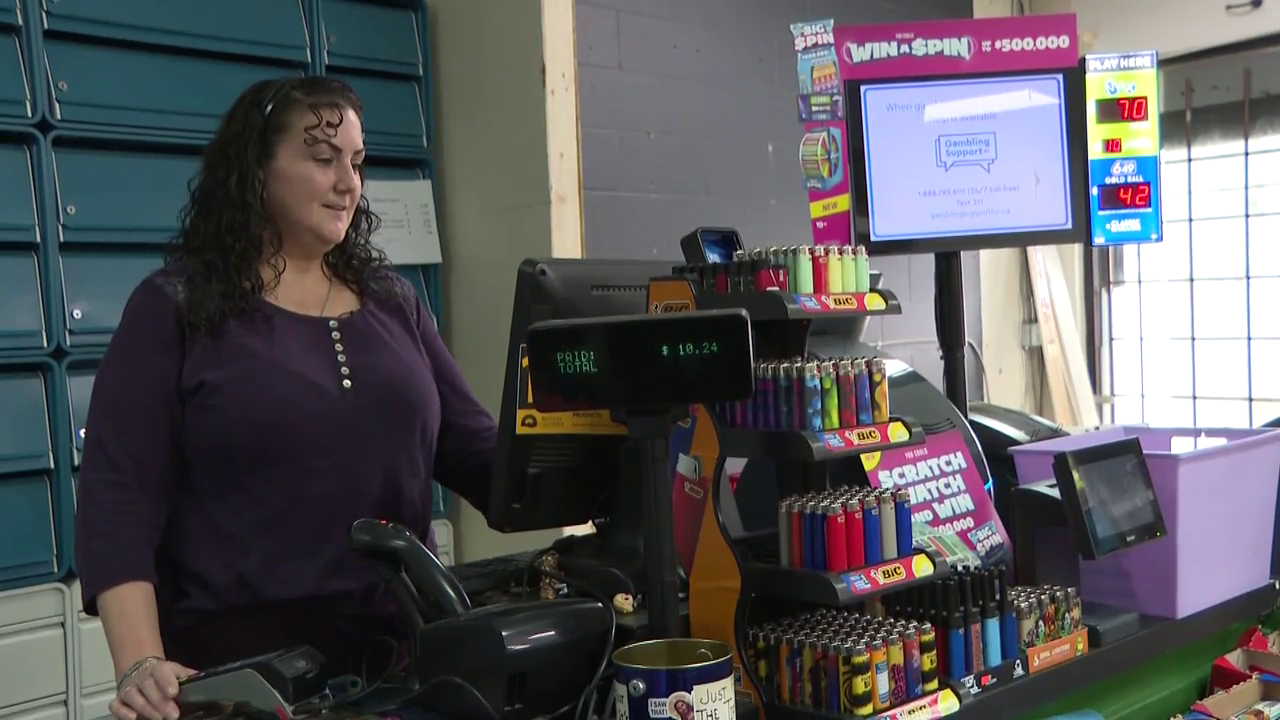
The confrontation between a retail employee and an armed assailant is not merely a localized crime report; it is a critical failure of institutional risk management and a case study in the unpredictability of human psychology under high-stress conditions. When a cashier in Chilliwack, British Columbia, refused to comply with an armed robber’s demands, the situation transitioned from a standard asset protection incident into a high-stakes psychological standoff. Most corporate security protocols are built on the foundation of total compliance to minimize liability and physical harm, yet the "bluff-calling" phenomenon persists as a rogue variable that complicates the standard safety calculus.
The Triad of Retail Vulnerability
Retail environments operate on three primary vulnerability vectors that make them perennial targets for low-level property crime.
- Liquidity and Accessibility: Retail outlets remain one of the few environments where liquid assets (cash) are handled in open, public-facing settings.
- The Friction Gap: Security measures—such as plexiglass barriers or timed safes—create friction. However, the requirement for a "seamless" customer experience often necessitates reducing this friction, thereby increasing the vulnerability of the staff.
- Predictability of Protocol: Criminals rely on the assumption that employees are trained to comply. This predictability reduces the perceived risk for the assailant, as they expect a low-resistance path to the assets.
In the Chilliwack incident, the cashier disrupted the third vector. By introducing irrational resistance (from the perspective of the robber), the employee inverted the power dynamic, forcing the assailant to choose between escalating to lethal violence—thereby increasing their own criminal exposure—or retreating.
The Cost Function of Non-Compliance
From a management perspective, the decision to resist an armed robbery is an operational nightmare. The "Cost Function" of resistance is skewed heavily toward catastrophic loss, even if the immediate outcome appears successful.
- Direct Physical Risk: The most immediate cost is the potential for injury or death. In a scenario involving a firearm or a replica, the employee lacks the information to verify the lethality of the weapon.
- Legal and Civil Liability: If an employee resists and a bystander is injured, the corporation faces significant litigation risks. Courts often weigh whether the employer’s training encouraged or failed to prevent such escalations.
- Psychological Trauma: Even in "successful" resistance where no shots are fired, the long-term impact of acute stress can lead to Post-Traumatic Stress Disorder (PTSD), increased turnover, and a breakdown in the perceived safety of the workplace.
The cashier’s actions in this specific case represent a "Black Swan" event in retail security—a low-probability, high-impact deviation from standard operating procedure. While the media often frames such events as acts of heroism, they represent a breakdown in the control systems designed to preserve life over property.
Game Theory in Armed Confrontation
To understand why a cashier might "call a bluff," we must look at the game theory of the interaction. This is a non-zero-sum game where both parties have conflicting and shared interests (both generally want to survive the encounter).
The Assailant’s Payoff Matrix
The robber wants the highest reward (the cash) for the lowest cost (jail time or physical harm). If the robber is forced to use a weapon, their legal "cost" shifts from robbery to attempted murder or homicide. This massive jump in sentencing acts as a deterrent for many low-level criminals.
The Employee’s Payoff Matrix
The employee is often acting on instinct rather than a calculated matrix. However, if the employee perceives the weapon as fake or senses hesitation in the robber, they may calculate that the "cost" of losing the store's money is higher than the "risk" of the robber actually shooting. This is frequently a miscalculation, as it relies on the rational behavior of an individual who is already acting irrationally by committing an armed robbery.
The Chilliwack cashier's refusal to hand over the cash created a "Commitment Problem." By signaling that they would not comply under any circumstances, the cashier removed the robber's primary leverage. If the robber is unwilling to use the weapon, their power vanishes the moment compliance is denied.
Structural Failures in Security Training
The persistence of these incidents suggests that current training models may be failing to account for the "Fight, Flight, or Freeze" response. Standard Corporate Social Responsibility (CSR) and safety manuals emphasize the "Give it up" mantra, but they often fail to address the "moral injury" some employees feel when being victimized.
- Instructional Over-Simplification: Training often assumes employees will remain calm and rational. It does not simulate the adrenaline-induced cognitive narrowing that occurs during a threat.
- Asset Priority Disconnect: If an employee feels a personal stake in the business or an intense dislike of being bullied, they may prioritize the defense of the asset over their personal safety, contrary to all corporate directives.
- The "Replica" Problem: As the prevalence of imitation firearms increases, employees may become desensitized. The danger here is the "false negative"—assuming a real weapon is a toy, leading to fatal overconfidence.
Quantifying the Ripple Effect on Local Commerce
When a robbery is thwarted by a staff member, it creates a temporary deterrent effect in the immediate geographic area. Criminals are risk-averse; if a specific location is marked as "difficult," they will likely shift their target to a higher-compliance environment. However, this is a localized benefit that does not outweigh the systemic risk to the retail brand.
Data from retail associations suggests that "successful" resistance can actually lead to an increase in the severity of future attempts. Assailants may return with more firepower or use more aggressive tactics from the outset to ensure compliance, effectively escalating the "arms race" between retail staff and local criminal elements.
Operational Redesign for High-Risk Zones
To move beyond the binary of "comply or resist," retail strategy must evolve toward environmental design that removes the employee from the decision-making loop.
- Closed-Loop Cash Systems: Using automated machines that take and dispense cash without the cashier ever having access to the till drawer. This makes the "bluff" impossible to call because the employee physically cannot comply.
- Architectural Hardening: Implementing bullet-resistant glass and remote-locking doors is an upfront capital expenditure that pays for itself by lowering insurance premiums and reducing the psychological burden on staff.
- Smart Surveillance Integration: Moving from passive recording to active AI-driven monitoring that can detect a weapon and immediately notify law enforcement while triggering pre-recorded audio cues. This shifts the "confrontation" from the cashier to the system.
The incident in Chilliwack serves as a reminder that the human element is the most volatile component of any security system. While the individual escaped unharmed, the event highlights a critical need for retail operations to transition toward automated security postures. The goal should be a system where the cashier has no agency in the transaction of a robbery, thereby removing the burden of resistance and the danger of calling a bluff that might one day be real.
Retailers must audit their current safety protocols to ensure they are not inadvertently relying on the "heroism" of underpaid staff. The most effective security strategy is one that assumes the human will fail and builds a mechanical or digital fail-safe to compensate. Implementing cash-recycling technology and high-visibility digital signage that indicates staff lack access to funds is the only logical step forward in de-escalating the retail-criminal interface.