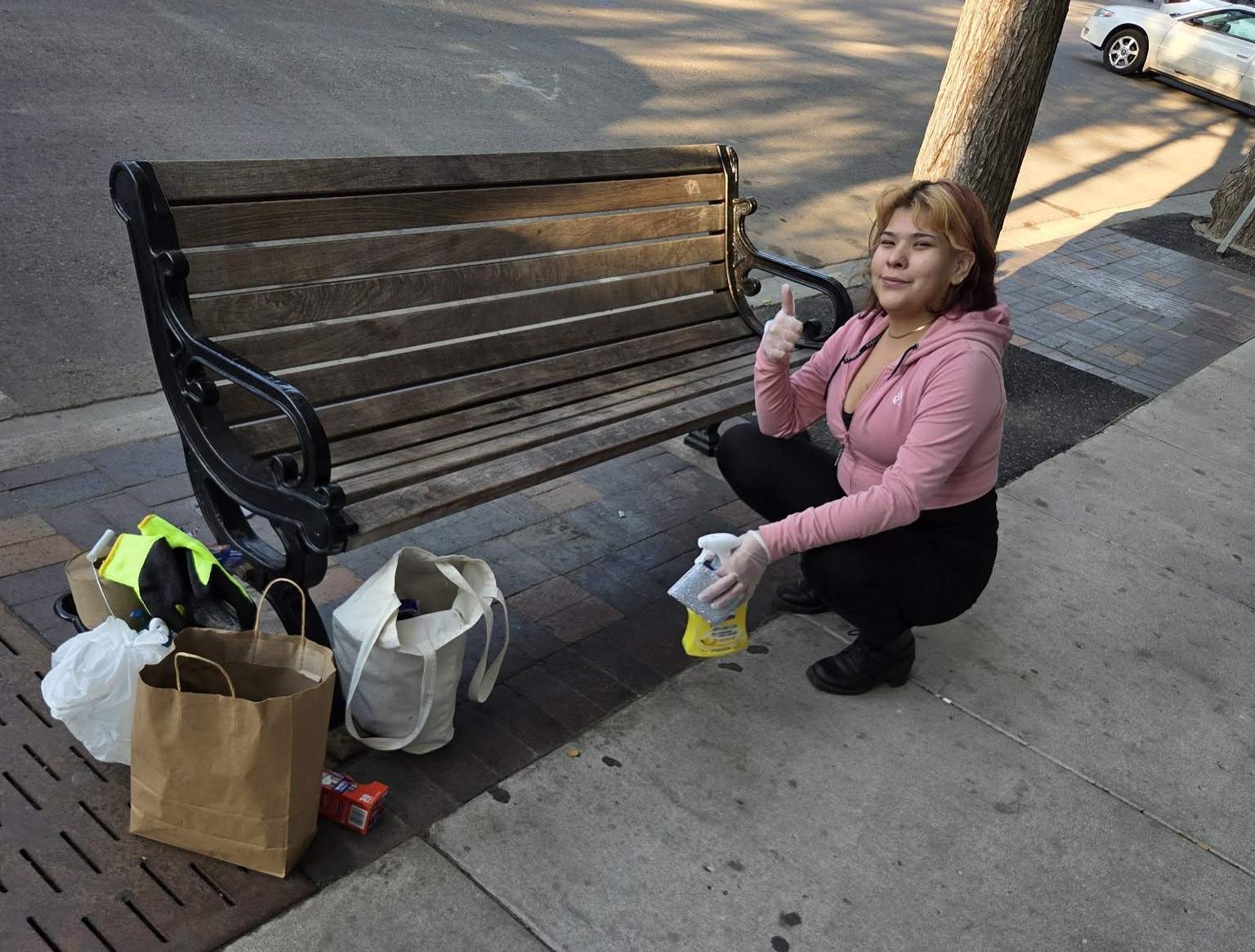
When city officials talk about tearing out public infrastructure to curb social disorder, they usually face polite public pushback or quiet resignation. But in downtown Saskatoon, a proposal to pull out twenty-five aging street benches sparked an entirely different response. Instead of writing letters or attending council meetings to argue, a local resident named Lillith Rose grabbed cleaning supplies and started scrubbing them herself.
The debate started when the Downtown Saskatoon Business Improvement District pushed for the temporary removal of specific downtown seating areas along spots like 21st Street and Second Avenue. Executive director Shawna Nelson pointed out that these particular structures had become magnets for vandalism, open drug use, and severe sanitation issues, describing them as being coated in graffiti, human waste, and general decay. Business owners wanted them gone to mitigate safety concerns. City planners weighed whether ripping them out would reduce urban friction or simply displace vulnerable people who rely on public space.
Rose saw it differently. Her motivation wasn't abstract or political. Years ago, she experienced homelessness herself, and those exact downtown benches served as her bed.
Why Removing Street Furniture Fails to Solve Root Problems
Cities love quick fixes. When a block deals with open drug use, litter, or loitering, removing benches feels like a tangible action. You take away the seat, and theoretically, you take away the gathering spot. But urban design experts and community advocates know that human beings don't simply evaporate when you remove a piece of wood and steel. They just move to building doorways, bus shelters, or dark alleyways.
Stripping public furniture hurts people who actually need it for its intended purpose. Seniors walking with walkers, people with mobility issues, and individuals exhausted from walking the core need places to rest under the sun. On hot summer afternoons when temperatures climb, a lack of shade and seating becomes a health hazard.
When Rose heard about the removal plan, she felt angry. When she talked to her parents about it, they reminded her that small actions often carry more weight than complaints. Armed with buckets, brushes, and cleaning solutions, she turned physical labor into a form of peaceful protest.
The Reality of Lived Experience on the Street
You can study urban renewal from an office building, but you won't understand what a clean public bench means until you have nowhere else to sleep.
When Rose began scrubbing the neglected wood and metal, individuals living on the street approached her with gratitude. They told her they felt safer sleeping on a clean surface. To Rose, every bench she cleaned represented a piece of her own past. She didn't see an eyesore or a nuisance. She saw her former community.
Downtown districts face immense pressure. Business owners struggle with broken windows, cleanup costs, and retail environments that feel unsafe for customers. At the same time, social support systems are failing across the board, leaving unhoused populations with fewer places to go. Pitting local businesses against vulnerable residents creates a false choice. Clean streets and compassionate public spaces shouldn't have to be mutually exclusive.
What Real Community Care Looks Like
If you want to support public spaces in your own city without erasing the people who use them, you have to look past cosmetic solutions.
- Support hygiene initiatives: Advocate for public restrooms, regular sanitation crews, and trash receptacles that keep public areas usable for everyone.
- Fund social infrastructure: Push municipal budgets toward housing-first initiatives, mental health crisis teams, and daytime drop-in centers so people aren't forced to live entirely in public rights-of-way.
- Engage directly: Talk to people experiencing homelessness in your neighborhood rather than relying solely on business association reports or social media panic.
Clean benches matter. Safety matters. Compassion matters. When citizens step up to care for shared public property with their own hands, they force the community to look at systemic problems square in the eye instead of sweeping them under the rug.