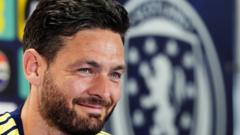
Age isn't just a number when you're diving face-first at the boots of charging strikers. At 43 years old, most soccer players have long settled into comfortable television punditry gigs or youth coaching roles. Not Craig Gordon. The Scotland goalkeeper isn't just defiance personified; he's officially the oldest player selected for the 2026 World Cup across the United States, Canada, and Mexico.
While the media fawns over Cristiano Ronaldo making history at 41, or Luka Modric pulling the strings for Croatia at 40, Gordon beats them all. But calling him a veteran feels like an understatement. The man is a medical marvel. Just a few seasons ago, his career didn't look like it was winding down—it looked utterly finished. The fact that he's sitting in a World Cup squad list, wearing the number 21 shirt for Scotland, defies every piece of logic in modern sports medicine.
The Christmas Eve Disaster that Should Have Ended It All
To understand why Gordon's presence in North America is so ridiculous, you have to go back to Christmas Eve in 2022. Playing for Heart of Midlothian against Dundee United, Gordon suffered an accidental, stomach-churning collision with Steven Fletcher. The result was a horrific double leg break, snapping his fibula and tibia.
He was 39 at the time, on the verge of turning 40. For a goalkeeper of that age, a catastrophic injury like that is usually an immediate retirement sentence. The rehab alone is a grueling, agonizing mountain to climb. Most people thought that was the curtain call. Honestly, it was a perfectly reasonable assumption.
Yet, a month later, videos emerged of Gordon back in the gym doing leg presses. The Scottish football community looked on in sheer disbelief. He basically looked at a career-ending skeletal trauma and decided he simply didn't care about natural healing timelines.
A Career Built on Beating the Medical Odds
The leg break wasn't even the first time Gordon looked down the barrel of forced retirement. A decade earlier, during his time at Sunderland and early into his thirties, a complicated, vertical tear in his patella tendon sidelined him for two years.
He went through three surgeries, endless injections, and countless dead ends. The pain was so persistent that medical staff at one point even suggested the agony might just be psychological. He was written off by almost everyone. He spent years out of the game, using his own money to find specialists across Europe, eventually tracking down experts in Sweden and Barcelona to spin his own blood in centrifuges for platelet-rich plasma therapy.
He didn't quit then, and he didn't quit after his leg snapped in half. It's a level of stubbornness that separates the good pros from the absolute anomalies. He doesn't just recover; he hunts down the target he sets for himself.
The Reality of the 2026 World Cup Campaign
Let's be clear about his role under Steve Clarke for this tournament. Gordon isn't heading into the group stage against Haiti, Morocco, and Brazil as Scotland's presumed number one. Angus Gunn has been handed the number 1 jersey, and Liam Kelly is the 12. Gordon is the veteran presence, the ultimate insurance policy dressing in the number 21 shirt.
But don't mistake his inclusion for a charity handout. Steve Clarke doesn't do sentimentality. You don't get a seat on a World Cup flight just because you're a nice guy who rehabbed well. Gordon earned his spot because when he plays, he still performs at an elite level. His shot-stopping reflexes haven't evaporated with age, and his positional awareness is sharper than ever.
Even recently, he had to overcome a nagging nerve issue stemming from a disc problem in his neck that caused weakness down his arm during his testimonial preparations. He just put his head down, went back to the gym, and fixed it.
What Older Athletes Can Learn From Gordon's Longevity
You don't survive four decades in professional soccer by accident. If you're an athlete looking to extend your playing days, Gordon's journey offers a blueprint that strips away the trendy wellness gimmicks.
- Focus on micro-goals: Gordon has stated frequently that looking at a two-year recovery window is paralyzing. Instead, break your recovery into weekly, measurable targets. Focus on moving a joint five degrees further, or adding five pounds to a lift.
- Maintain lean body composition: Carrying extra weight ruins aging joints. Gordon famously kept his body fat under 10% even during his two-year layoff in his thirties, reducing the load on his compromised knees.
- Ignore external timelines: Pundits, fans, and sometimes even club doctors will write you off based on statistical averages for your age bracket. True longevity requires a refusal to let outside expectations dictate your physical limits.
Take care of your body before the breakdown happens. Maintain your baseline fitness even when sidelined, and treat rehab as your primary job rather than a chore between games.


