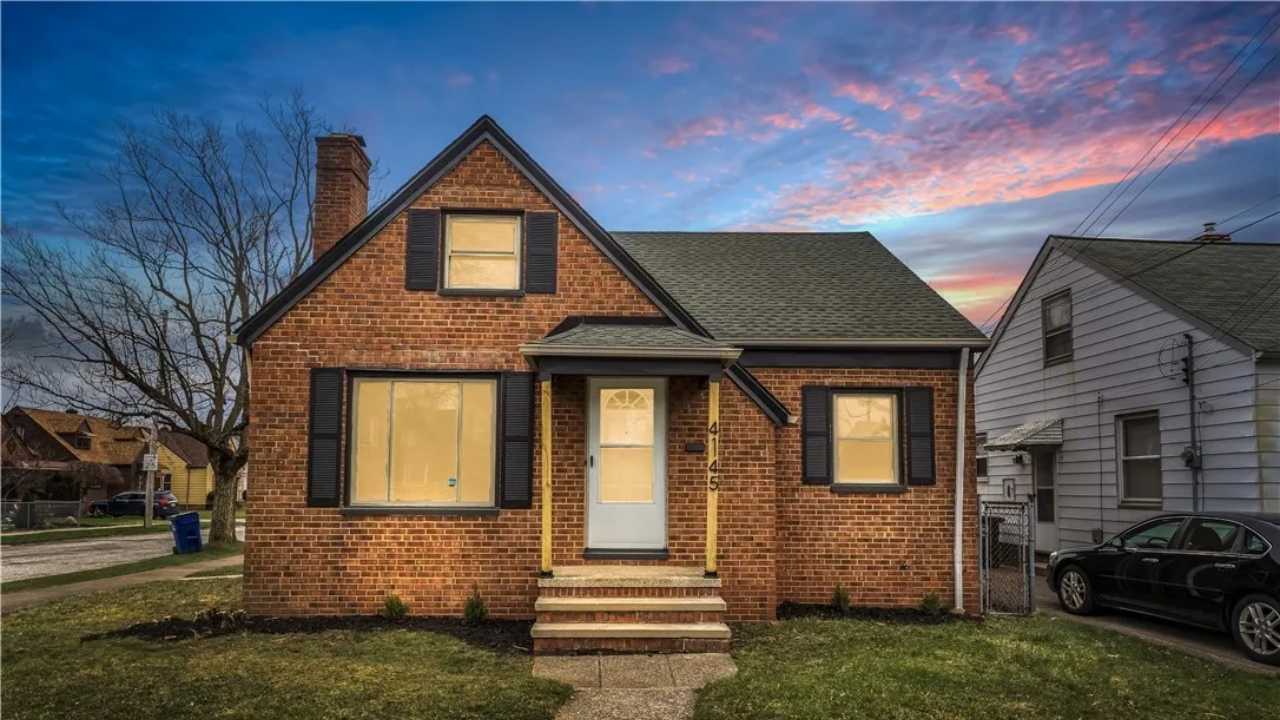
Everybody in real estate is currently hyperventilating over an Ohio appeals court upholding a zoning ban on Airbnb rentals in a 140-home neighborhood. The headlines are predictable. The reactions are even worse.
You have two camps screaming past each other in the comments section. On one side, the HOA boards and NIMBYs are popping champagne, convinced they just saved their cul-de-sac from turning into a frat house. On the other side, the short-term rental (STR) gurus are crying tyranny, claiming property rights are dead and the government is stealing their passive income.
Both sides are dead wrong.
The lazy consensus says this Ohio ruling is a devastating blow to real estate investors and a massive victory for suburban tranquility. That is surface-level thinking. When you actually look at the mechanics of municipal law, property valuation, and cash flow, this ruling isn't a tragedy for smart operators. It is a gift. It just wiped out your laziest competition and exposed a fatal flaw in how amateur investors buy property.
The Lie of Absolute Property Rights
Let's dismantle the biggest myth in the short-term rental space right now: the idea that buying a deed means you can do whatever you want with the dirt.
I have watched dozens of over-leveraged investors blow hundreds of thousands of dollars on single-family homes in residentially zoned districts, banking entirely on a regulatory gray area. They bought at the top of the market, ignored local ordinances, and prayed the city wouldn't notice their three-night minimum stays. When the city inevitably dropped the hammer, these investors acted shocked.
You don't own absolute rights to your property. You own a bundle of sticks, and the municipality holds the rubber band. Zoning laws have existed since the landmark 1926 Supreme Court case Village of Euclid v. Ambler Realty Co.—ironically, another Ohio case. The entire premise of Euclidean zoning is separating incompatible uses. You cannot open a tire factory next to an elementary school, and you cannot run a de facto commercial hotel inside an R-1 single-family residential zone without expecting pushback.
The Ohio appeals court didn't invent some radical new authoritarian doctrine. They simply looked at the plain text of the zoning code, saw that commercial transient lodging didn't fit the definition of single-family residential use, and enforced the rules.
If your entire business model relies on hoping the local zoning board falls asleep at the wheel, you don't have a business. You have a ticking time bomb.
Why the Neighborhood Winners Actually Lost
Before the neighborhood association in that 140-home subdivision gets too comfortable, let's look at the bill they just handed themselves.
When an HOA or a municipality bans short-term rentals, they think they are protecting property values. They assume that removing transient guests automatically makes the neighborhood more desirable. The data tells a much more complicated story.
Short-term rental bans artificially restrict the buyer pool. When you strip away the income-producing potential of a home, you eliminate every investor, second-home buyer, and hybrid-use family from the market. You are left exclusively with traditional, owner-occupied buyers who are entirely dependent on prevailing mortgage rates.
Imagine a scenario where a homeowner in that 140-home neighborhood needs to sell during a high-interest-rate environment. Under normal market conditions, an investor willing to pay cash—because the property's STR cash flow justifies the price—steps in and sets a floor on the neighborhood's comps. By banning STRs, that neighborhood just outlawed its highest-bidding buyer class. They traded occasional weekend suitcase noise for permanent downward pressure on their own home equity.
Furthermore, bans don't eliminate bad neighbors. They just change the paperwork. A terrible long-term tenant with a 12-month lease is infinitely harder to remove than a bad Airbnb guest who leaves on Sunday morning. Under Ohio landlord-tenant law, evicting a destructive long-term renter can take months of court filings and thousands in legal fees. A banned Airbnb host simply converts the property into a standard long-term rental, slashes their maintenance budget because they no longer care about five-star reviews, and rents it to whoever passes a basic credit check. The neighborhood gets less upkeep, zero hospitality standards, and the exact same transient traffic.
The Questions You Should Actually Be Asking
When news like the Ohio ruling drops, search engines light up with panicked queries from rookies. Most of them are asking the wrong questions entirely.
Can an HOA or city legally ban Airbnb after I already bought the house?
Yes, in most jurisdictions, unless you have explicit, statutory grandfathering protections—and even those are narrower than you think. Courts consistently view zoning regulations as valid exercises of police power aimed at public welfare. If you bought a home under general residential zoning without explicit commercial or transient lodging rights, you never had a vested right to run an Airbnb. You just had temporary permission by omission.
Should I stop buying short-term rentals altogether?
No. You should stop buying ill-suited short-term rentals. If you are buying a standard four-bedroom colonial in a suburban cul-de-sac surrounded by full-time families, you are begging to be regulated out of existence. You are invading a residential ecosystem with a commercial product. Stop trying to force a square peg into a round hole.
How do I fight a local short-term rental ban?
You don't. Fighting a municipality or a motivated HOA in appellate court will bleed your cash reserves dry long before you ever see a courtroom victory. Even if you win on a technicality, the city council will simply rewrite the ordinance six months later to close the loophole. Never get into a legal war with an entity that prints its own budget through property taxes.
The Contrarian Playbook for Bulletproof Cash Flow
The investors making real money right now aren't crying about Ohio. They are quietly absorbing the market share left behind by the amateurs who got wiped out.
If you want to survive the current wave of municipal crackdowns, you have to stop operating like a speculator and start operating like a commercial hospitality developer.
1. Hunt in Commercial and Mixed-Use Corridors
Stop looking at Zillow in residential neighborhoods. Look at properties zoned for commercial, mixed-use, or resort-residential operations. Yes, the acquisition cost is higher. Yes, commercial financing requires a larger down payment and carries different underwriting standards. That is the exact point. Those barriers to entry keep out the amateur TikTok investors who ruin the market for everyone else. When you buy in a commercial zone, the city wants you generating transient occupancy taxes. You are an asset to their budget, not a nuisance to their voters.
2. Master the Medium-Term Pivot
The Ohio ruling targets short-term transient stays—typically defined as anything under 30 days. The moment a lease crosses that 30-day threshold, the legal classification changes entirely. You are no longer running a hotel; you are providing residential housing.
Smart operators underwrite every single deal to work as a 30-to-90-day medium-term rental (MTR) from day one. Traveling nurses, corporate relocations, insurance displacement families, and remote tech workers are desperate for furnished, flexible housing. If a city passes an STR ban tomorrow, an operator with an MTR-capable property doesn't panic. They adjust their minimum stay settings on their channel manager, target corporate housing networks, and keep collecting checks without violating a single zoning ordinance.
3. Build Moats Through Unreplicable Assets
If your property is just a suburban house with a nice couch and a neon sign on the wall, you are a commodity. Commodities get regulated, taxed, and replaced.
The future of the industry belongs to experiential, destination-driven properties in unincorporated counties or municipalities with deeply entrenched tourism economies. Think A-frames on five acres of wooded land, waterfront cabins, or desert domes where your nearest neighbor is half a mile away. Nobody is forming an HOA to ban your Airbnb when there isn't another house within earshot.
The Uncomfortable Truth About This Strategy
I am not going to pretend this approach is easy. Moving away from residential suburban STRs comes with real, painful downsides that most gurus will never admit.
First, your deal flow will plummet. Finding properly zoned commercial assets or unrestricted rural acreage takes months of digging, off-market networking, and heavy due diligence. You cannot just click a button on the MLS and close in twenty days.
Second, your capital requirements will skyrocket. Commercial loans don't care about your personal W-2 income; they care about the Debt Service Coverage Ratio (DSCR) and the intrinsic value of the asset. You will need more cash upfront, and your interest rates will likely be higher than a conventional 30-year fixed residential mortgage.
Third, medium-term rentals produce lower gross yields than peak-season nightly rentals. You won't get those massive $800-a-night holiday weekend spikes when you are renting to a corporate engineer on a 60-day contract. You trade explosive upside for boring, predictable, regulation-proof stability.
Stop Blaming the Courts
The Ohio appeals court did the real estate industry a massive favor. They drew a bright, unmistakable line in the sand.
Amateur investors will read that headline, complain that the system is rigged, and sit on the sidelines waiting for conditions to magically become effortless again. Meanwhile, disciplined operators are reading the exact same ruling as a roadmap. They know where the regulatory landmines are buried, they know how to structure deals that survive municipal scrutiny, and they are buying up assets that don't depend on city council mercy to turn a profit.
If your real estate portfolio can be destroyed by a single vote at a Tuesday night zoning meeting, you didn't build an empire. You built a house of cards. Fix your underwriting, change your asset class, and stop crying about the rules of the game.