Salt crusts the wooden gunwales of a pirogue long before the sea takes it down.
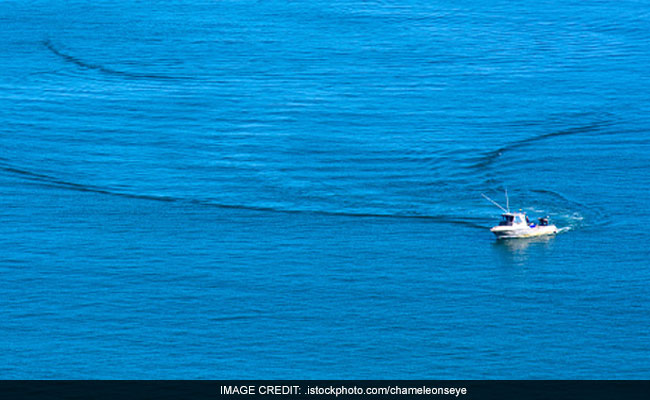
In the Atlantic waters off the coast of Mauritania, the ocean does not offer warnings. It does not whisper. It simply waits. When a wooden fishing vessel designed for coastal waters pushes out into the vast, churning expanse of the Atlantic migration route toward the Canary Islands, every wave becomes a calculated risk. Every engine sputter is a death sentence.
Recently, United Nations agencies released a grim tally that captures only a fraction of this reality: at least 144 human beings were reported dead or missing following a series of maritime disasters off the Mauritanian coast. One hundred and forty-four. It is a clean, sharp number on a white paper document printed in Geneva or Dakar.
Behind that number are 144 empty chairs in family rooms from Saint-Louis to Bamako. There are 144 cell phones ringing endlessly in dusty courtyard kitchens, sending calls straight to voicemail until the batteries finally die.
To understand how a routine voyage turns into a tragedy, consider a hypothetical traveler named Amadou. He is twenty-four years old. He carries a small plastic bag wrapped in layers of duct tape, containing his phone, his birth certificate, and a wet wipe soaked in freshwater to dab his lips when the thirst begins to burn.
Amadou does not step into a narrow, unstable boat because he loves the open sea. He steps into it because staying on land feels like a slow, quiet drowning of a different kind.
The Cold Reality of the Atlantic Route
The passage from the West African coastline to Spain’s Canary Islands is widely recognized by international observers as one of the deadliest maritime routes on the planet.
Unlike the Mediterranean, where land is often visible or reachable within a short span, the Atlantic Ocean is cold, deep, and relentless. The Atlantic currents off Mauritania run fast and treacherous. A boat departing from Nouadhibou or Nouakchott must fight crosswinds and swell that can easily capsize a vessel carrying double its intended capacity.
Consider the physics of these journeys. A standard wooden pirogue is built for local fishing along shallow coastal shelves. It lacks navigation instruments, life rafts, and emergency beacons. When sixty or eighty people pack into a space meant for twelve, the center of gravity shifts dangerously low.
If the single outboard motor fails—a frequent occurrence when low-grade fuel mixes with ocean spray—the boat begins to drift.
Drifting on the Atlantic means moving away from human help, not toward it.
The recent UN reports document multiple incidents within a matter of days. In one case, a vessel capsized within sight of the shore, throwing dozens into the violent surf. Local fishermen and emergency services managed to haul a few survivors onto the sand, wet, shivering, and hyperventilating. Dozens of others vanished into the foam. In another incident further out, a boat drifted for days without food or water before rescuers arrived. By then, the deck was mostly quiet.
+-------------------------------------------------------------------+
|               THE ATLANTIC MIGRATION ROUTE RISKS                   |
+-------------------------------------------------------------------+
|  1. OVERCROWDING     | Boats built for 12 often carry 60 to 80.   |
|  2. ENGINE FAILURE   | Unreliable motors fail in open swell.     |
|  3. DEHYDRATION      | Exposure to salt air exhausts water quickly|
|  4. DRIFT CURRENTS   | Strong winds push vessels into dark ocean. |
+-------------------------------------------------------------------+
Why the Numbers Keep Growing
Why take this risk? The answer lies in a collapse of options.
Overfishing by massive commercial trawlers along the West African coast has devastated local catches, leaving thousands of young fishermen without a livelihood. Climate shifts have made farming in the Sahel increasingly unpredictable. Combined with political instability across regions in West Africa, the pressure on young people builds like steam inside a sealed pipe.
When traditional routes through North Africa become heavily militarized or closed by border enforcement, the ocean becomes the only door left unlocked.
It is an open door, but it leads directly into a storm.
International relief workers stationed in Mauritania describe the psychological toll on survivors. Emergency medical teams often find survivors suffering from severe dehydration, fuel burns—caused when spilled gasoline mixes with salt water on skin—and deep hypothermia. The mental shock is even heavier. Many survivors have spent days sitting beside friends or relatives who did not survive the night, forced to make decisions no human should ever have to face in order to keep the vessel from sinking under extra weight.
Aid organizations stress that the official count of 144 dead or missing is almost certainly an underestimate.
The Atlantic is vast. Many boats vanish without a single witness. They become invisible tragedies, ships that departed a dark beach at 2:00 AM and simply never arrived anywhere. No distress call. No debris field. Just silence.
The Search for Lasting Answers
Addressing this crisis requires looking beyond the immediate aftermath of a shipwreck.
Preventing future loss of life demands a two-part approach. First, search and rescue capabilities along the West African coast need immediate strengthening. Local coast guards operate with limited patrol vessels, often unable to respond quickly when a boat signals distress miles offshore. Expanding international cooperation and emergency communication networks can mean the difference between a successful rescue and another mass drowning.
Second, the root causes driving people into those wooden boats must be tackled directly. Providing economic stability, protecting local fishing grounds, and creating legal, structured pathways for migration are not optional policy ideas—they are essential tools for saving lives.
Without systemic changes, the cycle repeats every season when the ocean winds temporarily soften.
On the beaches of Mauritania, when the morning tide comes in, the water washes up pieces of plastic, shredded foam, and single shoes. Local residents walk the shore, searching the horizon, knowing that every wave carries a history that deserves to be remembered, rather than swallowed whole by the deep blue.