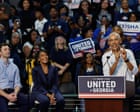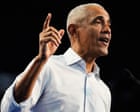
Political commentators are currently high-fiving over Barack Obama’s latest rally line. You know the one. He poked fun at Donald Trump’s rambling speech habits, comparing them to a marathon session at the Cheesecake Factory, and then mocked the ensuing conservative media meltdown. "They mobilized a whole of government response to that joke!" Obama grinned to thunderous applause.
The mainstream press immediately framed this as a masterclass in political jujitsu. They called it a effortless takedown. They claimed Obama proved he still owns real estate in Trump’s head, rent-free.
They are completely wrong.
Viewing this exchange through the lens of traditional debate scoring misses the actual mechanics of modern attention warfare. What looks like a clever zinger from a former president is actually an accidental distribution engine for his opponent. The pundit class is cheering for a touchdown while ignoring the fact that the other team just stole the stadium.
The Anatomy of the "Whole of Government" Fallacy
To understand why the media’s reading of this moment is flawed, look at the premise of Obama’s punchline. When he says the opposition "mobilized a whole of government response" to a throwaway joke about a casual dining chain, he is framing their reaction as fragile, obsessive, and disproportionate.
On a superficial level, he’s right. Watching cable news hosts, surrogates, and politicians spend forty-eight hours defending Trump’s rhetorical stamina against a Cheesecake Factory metaphor looks absurd to anyone outside the political bubble.
Here is the nuance the legacy press missed: outrage is not a symptom of weakness in asymmetric media; it is the primary fuel source.
I have watched major brands and political campaigns burn tens of millions of dollars trying to "win" news cycles with clever, polished clapbacks. They hire the sharpest speechwriters, test-group the jokes, and wait for the viral clip. Every single time, they fall into the exact same trap. They confuse applause inside their own echo chamber with persuasion outside of it.
When Trump’s media ecosystem "mobilizes" around a joke, they aren't playing defense. They are executing a high-volume content strategy. Every angry segment, every defensive tweet, and every counter-meme keeps the original speaker—Trump—at the absolute center of the public consciousness.
In the attention economy, there is no difference between being mocked and being praised, provided you remain the main character. By bringing up Trump’s speeches in the first place, Obama handed over the microphone. By mocking the reaction to the joke, he extended the news cycle by another three days.
Why Traditional Political Humor Fails in the Algorithmic Era
Political comedy used to operate on a simple, brutal mechanism: deflation. When Lloyd Bentsen told Dan Quayle, "Senator, you're no Jack Kennedy," the room went silent, the clip aired on three networks, and Quayle’s credibility suffered a permanent, quantifiable drop. There was no counter-network to spin the clip. There was no algorithm rewarding Quayle for acting furious about it.
That world is dead.
Today, political communication is governed by algorithmic amplification—the process by which social platforms prioritize content that triggers high-arousal emotions like anger, tribal loyalty, and schadenfreude.
Obama’s Cheesecake Factory routine is built for the 2008 media environment. It relies on irony, pacing, and the shared assumption that the audience values traditional presidential decorum. It is surgical, cool, and detached.
Trump’s communication style is built for the 2026 algorithmic feed. It is messy, repetitive, confrontational, and designed to be clipped into fifteen-second vertical videos. When Obama attacks Trump’s long-windedness by comparing it to a two-hundred-page restaurant menu, he is inadvertently validating the exact trait Trump’s base loves most: his refusal to use a teleprompter or stick to sanitized talking points.
The Streisand Effect in Reverse
Most people misunderstand the Streisand Effect. They think it only applies when someone tries to hide information and accidentally draws attention to it.
In modern politics, we are dealing with the Reverse Streisand Effect: attempting to belittle an opponent’s influence while simultaneously dedicating your prime-time speaking slot to talking about them.
Let’s look at the mechanics of how this actually plays out in voter perception. When a casual, undecided voter scrolls past a headline reading "Obama mocks Trump’s response to Cheesecake Factory jibe," they don't read a deep policy critique. They see two things:
- Obama is still talking about Trump.
- People are arguing about a restaurant.
Cognitive linguist George Lakoff spent decades explaining how political framing works. His core rule is brutally simple: when you negate a frame, you activate the frame. If I tell you, "Don't think of an elephant," you immediately picture an elephant.
When Obama stands at a podium and spends five minutes dissecting Trump’s speech patterns and the conservative reaction to them, he is activating the Trump frame. He is reinforcing the subconscious idea that Trump is the sun around which the entire political solar system orbits. Even the mock-exasperation—"They mobilized a whole of government response!"—signals that Trump’s machine is massive, energetic, and relentlessly active.
What People Are Really Asking (And Why the Premise Is Broken)
Whenever these viral rally moments happen, search engines flood with variations of the same basic questions. Let’s dismantle them.
"Did Obama’s joke actually hurt Trump’s campaign?"
No. Not even slightly. Campaigns are hurt by contrast on kitchen-table economics, broken promises, or visible incompetence—not by former presidents doing stand-up routines about chain restaurants. The people who laughed at the Cheesecake Factory line were already voting against Trump. The people who got mad at it were already voting for him. Zero minds were changed.
"Why did conservative media react so strongly to a simple joke?"
Because it was profitable. Cable news ratings and social media engagement thrive on tribal grievances. When Obama mocks Trump’s speaking style, right-wing commentators don't see an insult; they see an elitist lecturing working-class voters about what kind of entertainment they are allowed to enjoy. They didn't "mobilize" because their feelings were hurt. They mobilized because Obama handed them a lucrative, ready-made narrative about coastal condescension.
"Is humor still an effective weapon in politics?"
Yes, but only when it punches at hypocrisy or policy failure, never when it punches at style. Mocking a populist for talking too long at a rally is like mocking a rock band for playing too loud. The critique misses the entire point of why the audience bought a ticket.
The Heavy Cost of "Winning" the News Cycle
Let’s be fair to the other side of the argument. There is a valid tactical reason why campaigns deploy these kinds of barbs. Morale matters.
During the grueling final stretch of an election, volunteers get tired, donors get anxious, and party operatives start second-guessing their strategy. Putting Barack Obama on stage to deliver a polished, funny takedown acts as a massive shot of adrenaline for the base. It reminds them why they liked him in the first place. It generates positive press coverage that temporarily drowns out gloomy polling data.
I’ve seen this work in corporate crisis management, too. Sometimes you have to rally the internal troops just to keep them from quitting before Friday.
The downside is addiction.
When a political movement gets hooked on the dopamine hit of viral clapbacks, it stops doing the hard, boring work of persuasion. Speechwriters start optimizing for late-night television monologues rather than swing-state living rooms. Strategists start measuring success by retweets and cable news chyrons instead of voter registration numbers in suburban counties.
Look at the coverage of the Cheesecake Factory moment. The articles are breathless play-by-plays—"as it happened" live blogs tracking every eyebrow raise and audience chuckle. It reads like entertainment journalism, not political analysis. And while the media is busy grading Obama’s comedic timing, the actual structural issues deciding the race—inflation, border enforcement, healthcare costs, foreign instability—get shoved to page six.
How to Actually Dismantle a Populist Movement
If you want to beat a political juggernaut that thrives on chaos and attention, you cannot beat them at a game of volume. You cannot out-meme them, and you certainly won't beat them with smug observational humor.
You have to starve the machine. Here is what effective asymmetric counter-messaging actually looks like:
- Refuse to name the opponent. Every time you say their name, you pay their advertising bill. Talk about the specific outcomes of their policies without turning them into a larger-than-life villain or a punchline.
- Attack competence, not decorum. Voters do not care if a politician violates norms, rambles for two hours, or eats fast food. They care if their grocery bill went up or if their neighborhood feels less safe. Keep the spotlight relentlessly fixed on tangible results.
- Create a competing spectacle. Instead of reacting to what the opposition said at yesterday’s rally, force them to react to a bold, concrete policy proposal you just dropped. Make them play on your turf.
- Drop the insider wink. Comedy that relies on the audience feeling smarter than the other side is political poison. It flatters the base while actively alienating the exact undecided voters needed to win an electoral majority.
Imagine a scenario where Obama had stepped up to that podium and completely ignored Trump’s speech habits. Imagine if, instead of doing five minutes on the Cheesecake Factory, he had laid out a stark, three-point contrast on manufacturing jobs, housing affordability, and tax policy, without once mentioning Trump’s name or his media ecosystem.
Conservative outlets wouldn't have had a culture-war clip to rage-farm for seventy-two hours. Late-night hosts wouldn't have had an easy setup. Instead, the entire press corps would have been forced to cover the actual substance of the argument.
The Illusion of the Knockout Blow
The media loves a story with a clear winner and a clear loser. It makes for clean headlines and easy segments. Casting Obama as the cool-headed elder statesman effortlessly swatting away a frantic, overreacting opposition fits a familiar, comforting script.
It is also pure fiction.
In modern politics, the person who gets the biggest laugh in the room rarely walks away with the prize. While the pundits are busy applauding the joke, the target of the joke is busy collecting the clicks, the airtime, and the free publicity.
Stop measuring political power by who delivers the sharpest zinger. Start measuring it by who controls the subject of the conversation. On that metric, the Cheesecake Factory wasn't a punchline—it was a donation.