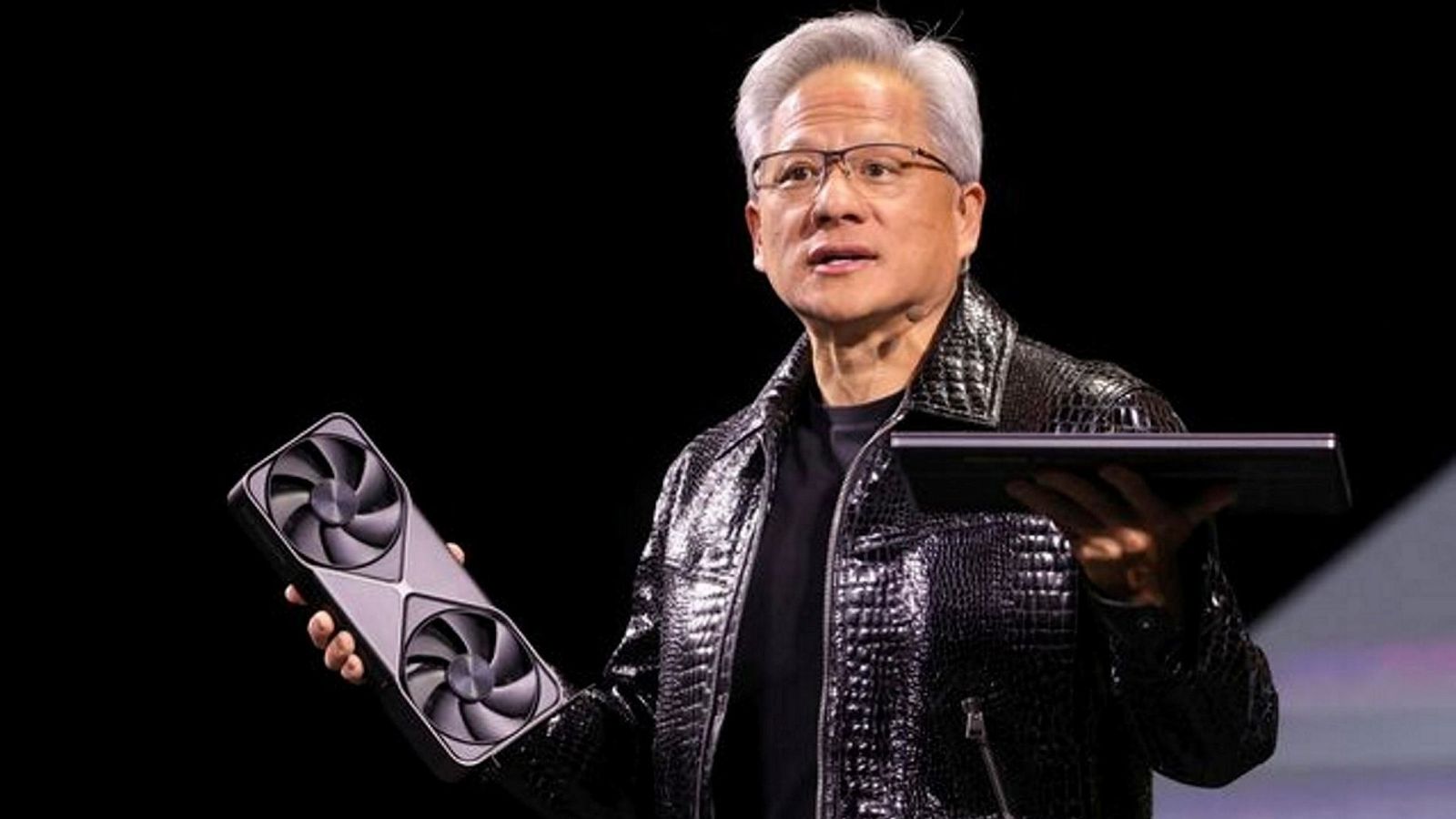
Diplomats love talking about trade deficits, soy beans, and tariffs, yet the real heavyweight sitting between Donald Trump and Xi Jinping right now isn't a diplomat at all. It's a silicon wafer designed in Santa Clara.
If you want to understand why the upcoming high-stakes talks between Washington and Beijing feel so tense, look directly at the Nvidia fallout. Over the past few years, the U.S. government has tightened export controls on high-end artificial intelligence chips, turning Nvidia's graphics processing units into the single most contested asset in modern geopolitics. Jensen Huang's company built the engine of the AI boom, and Washington is actively trying to keep Beijing's hands off the keys. That friction has fundamentally changed what a Trump-Xi summit looks like. For a deeper dive into this area, we suggest: this related article.
How Nvidia Became the Ultimate Bargaining Chip
For decades, tech trade between the U.S. and China followed a predictable script. American firms designed products, Chinese factories assembled them, and everybody made money. That era is dead.
When the U.S. Department of Commerce began restricting the sale of advanced semiconductors like the A100 and H100 to Chinese entities, it didn't just hurt Nvidia's bottom line in one of its biggest markets. It created an immediate technological chokepoint. Nvidia tried to adapt by designing watered-down chips specifically for the Chinese market, like the A800 and H800, only for regulators to tighten the screws again and block those too. Subsequent workarounds, including the H20 chip, have faced constant scrutiny from lawmakers in Washington who argue that any high-bandwidth compute power sold to China eventually strengthens its military and state surveillance apparatus. For additional context on this issue, comprehensive reporting is available at CNET.
This puts Trump in a fascinating, messy spot heading into negotiations with Xi. Trump has repeatedly criticized traditional multilateral trade deals while favoring aggressive, bilateral tariff strategies. At the same time, he has openly questioned the effectiveness of certain semiconductor subsidies like the CHIPS Act, suggesting tariffs are a better way to force manufacturing onto American soil.
Yet when he sits across from Xi, tariffs alone won't solve the semiconductor standoff. Xi doesn't just want lower duties on electric vehicles or solar panels. Beijing desperately needs access to advanced compute hardware to keep its domestic AI labs—companies like Baidu, Tencent, and ByteDance—competitive with OpenAI, Google, and Anthropic. Without Nvidia's hardware and its proprietary CUDA software ecosystem, Chinese AI developers are fighting with one hand tied behind their backs.
Why Beijing Can't Just Replace Nvidia Overnight
A common misconception among casual market watchers is that China will simply throw billions of state-backed yuan at the problem and build an Nvidia killer by next Tuesday. It doesn't work like that.
I've spent years watching semiconductor supply chains, and the sheer complexity of modern lithography makes catching up a multi-year, perhaps multi-decade grind. Sure, Huawei has made real strides with its Ascend 910B and newer AI processors, proving that Chinese engineers can design capable silicon even under crushing sanctions. Domestic tech giants have been forced to buy up Huawei's chips because they don't have much choice.
Still, hardware is only half the story. The real moat protecting Nvidia isn't just the physical chip—it's CUDA, the software platform that millions of AI researchers rely on to train and run models. Switching away from CUDA requires rewriting massive amounts of code, retraining engineering teams, and accepting lower efficiency. Even when Chinese firms get their hands on domestic chips, yield rates at foundries like SMIC remain a massive headache because U.S. and Dutch export bans block them from buying the extreme ultraviolet (EUV) lithography machines made by ASML.
Because Beijing can't instantly replicate Nvidia's stack, Xi enters any meeting with Trump facing an urgent timeline. Every month that Chinese labs are cut off from Blackwell-class or next-generation architectures, the compute gap widens. That gives the White House enormous leverage—provided Trump knows how to use it without blowing up the broader economic relationship.
The Trap Waiting for Washington
Here is where the fallout gets tricky for the U.S. side. Export controls are a blunt instrument, and Silicon Valley executives have been quietly warning policymakers that pushing too hard could backfire.
Jensen Huang himself has pointed out on multiple occasions that cutting Nvidia off from the Chinese market permanently hands an entire ecosystem to domestic Chinese competitors. If Chinese developers are forced to build their own software tools around Huawei hardware, they will eventually refine those tools until they rival Western standards. Once that happens, American tech companies lose market share forever, along with the massive revenues they plow back into research and development.
There is also the smuggling problem. Whenever Washington bans a chip, a gray market explodes overnight. High-end Nvidia GPUs have repeatedly surfaced in underground markets in Shenzhen and Hong Kong, routed through shell companies in Southeast Asia and the Middle East. Policing the global flow of small, high-value server components is nearly impossible. Every new restriction creates a game of whack-a-mole for the Bureau of Industry and Security, straining diplomatic ties with third-party nations that get caught in the crossfire.
Trump's team has to weigh these realities before making demands. If the U.S. doubles down on total tech decoupling—banning even older-generation chips or penalizing foreign firms that do business with Chinese AI labs—Beijing will retaliate. China controls the processing of critical rare earth minerals like gallium and germanium, which are essential for making semiconductors and defense electronics in the first place. Beijing has already shown it is willing to restrict exports of these materials when pushed.
What Both Leaders Actually Want From the Room
Strip away the diplomatic niceties, and both Trump and Xi have very specific domestic pressures dictating their moves on the Nvidia issue.
For Trump, looking tough on China is non-negotiable, especially with his political base and China hawks inside his own administration. Allowing Nvidia to freely sell its best AI chips to Beijing would trigger an immediate bipartisan backlash in Congress. At the same time, Trump measures success heavily through the stock market and American corporate dominance. Crashing the market cap of America's most valuable tech companies by triggering a full-scale retaliatory trade war isn't a win for him either. He wants a deal he can point to as a clear victory—whether that involves massive Chinese purchases of American agricultural goods, strict enforcement on fentanyl precursors, or commitments to curb industrial overcapacity.
Xi Jinping faces a completely different set of headaches. China's economy is dealing with a prolonged property slump, weak consumer confidence, and high youth unemployment. Beijing is betting heavily on "new productive forces"—high-tech manufacturing, green energy, and artificial intelligence—to pull the economy forward. You can't lead the world in AI without compute. Xi needs breathing room. Even a modest loosening of export rules, or a commitment from Washington not to expand sanctions to cloud computing access, would be a huge relief for Beijing's tech sector.
The Cloud Loophole Nobody Talks About
One of the sharpest flashpoints likely to surface in behind-the-scenes talks isn't physical chips crossing borders, but cloud access. Even if Chinese companies can't buy Nvidia's top hardware and ship it to data centers in Shanghai, they can often rent compute power on servers located outside mainland China.
Lawmakers in Washington have been pushing to close this gap by requiring American cloud providers to verify the identities of foreign customers training large AI models. Beijing views any attempt to police global cloud infrastructure as an aggressive overreach. Watch closely for how the two sides handle data governance and cloud restrictions—it's often a better indicator of real policy shifts than splashy tariff announcements.
How Investors and Tech Leaders Should Read the Signals
If you're tracking semiconductor stocks, managing supply chains, or just trying to figure out where the global economy is headed, don't get distracted by the photo ops when Trump and Xi meet. Handshakes mean nothing in this environment. Instead, watch three concrete indicators in the days immediately following the summit.
First, look at the Bureau of Industry and Security (BIS) entity list updates. If the U.S. pauses new additions of Chinese tech firms to trade blacklists right before or after the talks, that's a deliberate olive branch. Conversely, a fresh wave of sanctions tells you the negotiations hit a brick wall.
Second, pay attention to Nvidia's earnings guidance and regulatory filings. Because Nvidia is legally required to disclose material risks to shareholders, any subtle shift in how management talks about China revenue—or custom compliant chips—will tell you whether backchannel diplomacy actually eased the pressure.
Third, watch Beijing's response on critical minerals and antitrust reviews. China's State Administration for Market Regulation has frequently used merger approvals and antitrust probes to squeeze American chipmakers like Intel, Qualcomm, and Nvidia whenever geopolitical tensions spike. If those regulatory investigations suddenly quiet down, Xi got something he wanted at the negotiating table.
The semiconductor cold war isn't going away after one meeting, no matter how warm the rhetoric sounds at the closing press conference. Silicon has replaced oil as the resource nations are willing to risk global economic stability to control. Until Washington and Beijing figure out where the guardrails sit for artificial intelligence, every diplomatic summit will remain hostage to the chips inside the data center.