The coffee was still hot on the console when the screens went red.
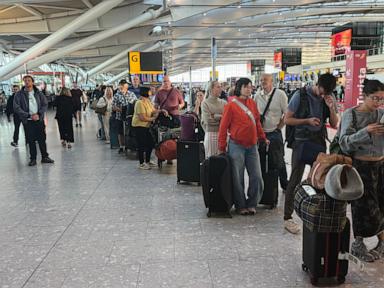
For the passengers waiting in the departure lounges of Heathrow, the morning started as an ordinary mosaic of anxiety and overpriced pastries. Suitcases rolled across polished tile. Announcement boards clicked through destinations like a mechanical heartbeat. Outside, the fog of a British dawn clung to the tarmac, blurring the silhouettes of tailfins and wingtips.
Inside the control room, however, the digital nervous system of European aviation flatlined.
Panic does not always arrive with sirens. Sometimes, it looks like a row of empty chairs and engineers staring silently at lines of code that refuse to make sense.
When the air traffic management system choked, the immediate whisper that slithered through the terminals was terrifying. Cyber attack. The phrase alone carries a modern weight, summoning images of unseen actors in distant basements plunging whole nations into darkness. It is the narrative we have been trained to expect. Every glitch is a siege. Every system failure is a weaponized code drop.
Yet, as the hours unspooled and thousands of flights ground to a halt, the truth proved to be far more mundane, and in many ways, far more unsettling.
Consider what happens when a single foundational thread snaps in a web designed for perfection.
(Note: The following reconstruction of the operational failure is based on verified incident reports and aviation safety analyses, illustrating how minor software corruptions cascade into systemic paralysis.)
Imagine sitting at a desk tracking forty steel tubes hurtling through the stratosphere at five hundred miles per hour. Your job is not just to watch them, but to choreograph an invisible ballet where a single misstep means catastrophe. You rely on data feeds that update faster than human thought.
Then, the data stops.
The UK air traffic chief stepped forward not to announce a breach of digital walls, but to dismantle the panic brick by brick. No malicious actor had breached the gates. No foreign power had flipped a switch. Instead, a technical anomaly had rippled through the flight plan processing system, blinding the people whose entire existence is dedicated to seeing the unseen.
The public breathes a sigh of relief when they hear it is not a cyber attack. We want to believe that machinery simply breaks, that gears wear down, that electrons occasionally misbehave. It feels manageable. An error can be patched. A bug can be squashed.
But there is a darker truth hiding beneath that relief.
We have built a world so impossibly complex that we no longer fully understand the systems keeping us alive.
Thousands of stranded travelers pacing the terminals at Heathrow did not care about root causes or software patches. They cared about missed weddings, canceled business deals, and the strange, disorienting feeling of being trapped on the ground while the sky above remained stubbornly empty. They were collateral damage in a war of logistics against our own ambition.
We demand a seamless sky. We want flights to depart every forty seconds. We expect luggage to vanish from our hands in London and reappear in New York as if by magic. We push the machinery of global transit to its absolute limits, squeezing every drop of efficiency out of every hour, every runway, every controller.
And then a line of code fails.
The system stops.
The silence that settles over the control room is different from the silence of a cyber attack. It is the quiet of realization. We are steering a juggernaut, and we are barely holding the reins.
As the technical teams worked through the night to flush the corrupted buffers and reboot the core processors, the human cost accumulated in terminal chairs. A retired couple missed their golden anniversary trip. A surgeon missed a transplant operation. These are the details that never make it into the official press releases, the quiet fractures in individual lives caused by a digital hiccup three miles away from the nearest passenger.
When the skies finally reopened and the first departure roared down the runway, the relief was palpable. Planes climbed back into the gray British clouds. The board clicked again.
Yet the ghost of that morning remains.
Every time we board a wide-body jet and push away from the gate, we are placing an extraordinary amount of trust in invisible architecture. We assume the code is clean. We assume the lines are secure. We assume that the people behind the screens will always find a way to drag order out of chaos when the digital night falls.
The sky is vast, but the thread holding us up is thinner than we care to admit.