Rain in South Florida does not fall so much as it occupies space. It is a heavy, ambient wetness that blurs the boundaries between the asphalt and the horizon, turning the nocturnal world into a watercolor wash of tail-lights and terminal glare.
At Miami International Airport, the rhythm of the night is usually measured in the mechanical pulse of arrivals and departures. Jets descend through the soup of the marine layer, their landing lights punching through the mist like fingers searching for a handhold. Ground crews move with practiced, fluorescent efficiency. Tug drivers tow dollies loaded with boxes, parcels, and envelopes bearing the ubiquitous, smiling arrow of global commerce. Everything has an address. Everything is expected.
Until it isn't.
On that particular night, the ordinary geometry of the airfield fractured.
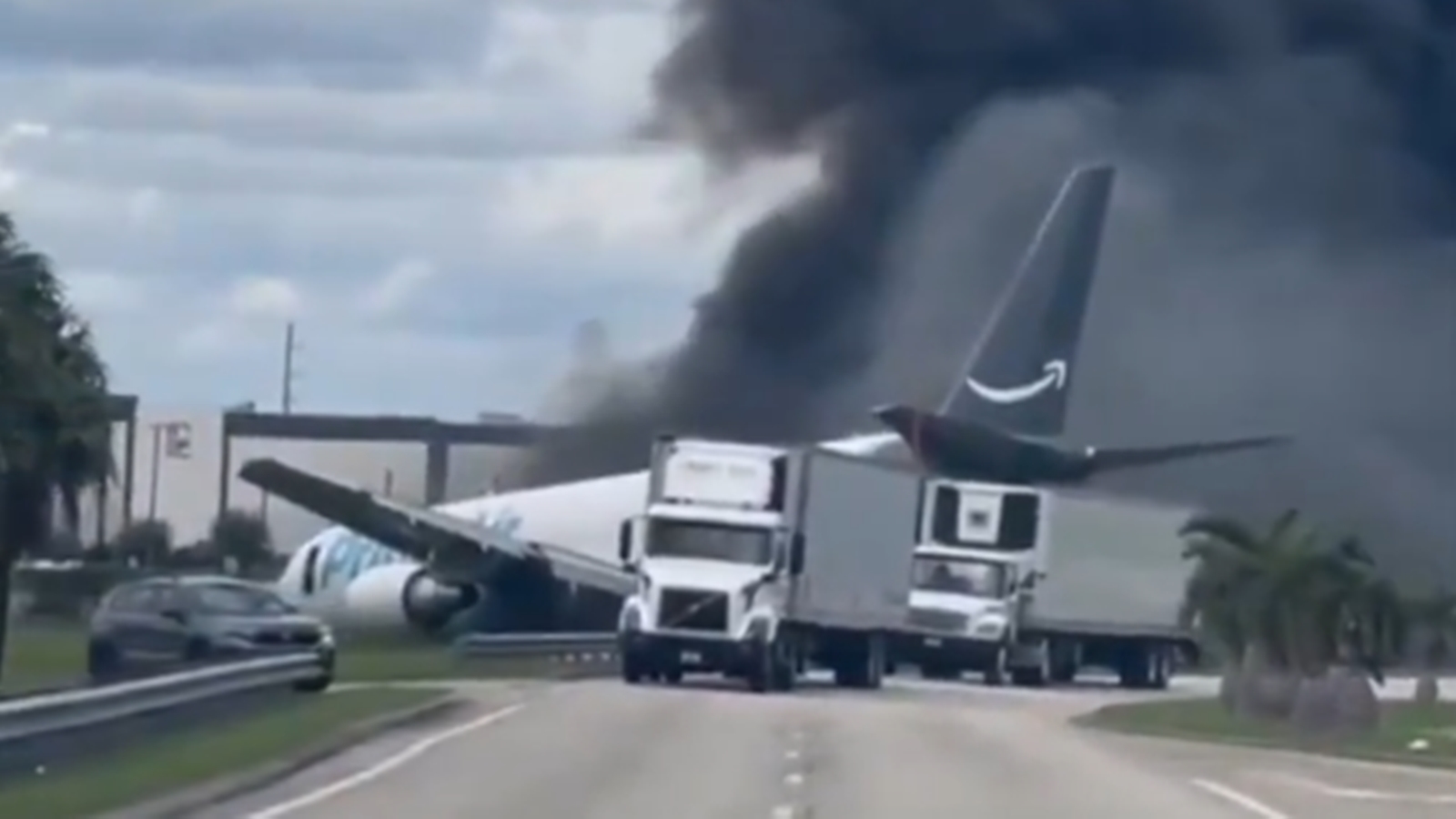
A cargo aircraft—a heavy freighter hauling the invisible weight of modern impatience—found itself wrestling with a runway that had suddenly become an ice rink under a curtain of tropical downpour. When a multi-ton machine of aluminum and composite materials loses its grip on the earth, physics stops negotiating. There are no second chances in the overrun zone. There is only momentum, mass, and the terrifying speed of a mistake made in seconds.
The plane barreled off the concrete.
It did not gently slide to a halt. It tore through perimeter barriers, crossed a busy service perimeter, and violently compromised its own structural integrity. The aftermath was not just a collection of twisted metal and spilled aviation fuel; it was a sudden, brutal punctuation mark in the lives of people who had simply gone to work.
At least five lives, extinguished in the span of a heartbeat.
We read numbers like this on screens every day. We scroll past them between updates on weather and market fluctuations. Five dead. It sounds clinical. It sounds like an administrative footnote in the massive ledger of global logistics. But behind that sterile statistic lies a profound, devastating human friction. These were individuals who kissed spouses goodbye, who packed thermoses for a night shift, who understood the quiet, unglamorous mechanics of keeping the world's supply chains humming while the rest of us slept.
Consider what happens in the air traffic control tower when the scream goes out over the radio.
The controller's voice, usually a marvel of calm cadence, catches. The radar screen blips, showing a stationary target where motion should be. Emergency vehicles—red, white, and amber strobes reflecting off sheets of standing water—scramble from their stations. Firefighters rush toward a horizon illuminated by the sickly orange glow of ruptured fuel.
This is the hidden cost of our collective desire for immediacy.
We live in an era accustomed to the miracle of next-day delivery. We tap a glass screen, and the machinery of the world swings into motion. Planes take off in thunderstorms. Trucks burn rubber down interstate highways at three in the morning. Cargo hubs operate as sleepless cities of conveyor belts and barcode scanners. We demand speed, and the system delivers speed, rarely pausing to let us look at the gears grinding beneath the surface.
When a cargo bird goes down, it forces us to look.
It reveals the precarious architecture of our convenience. Aviation safety is often spoken of in percentages and regulatory compliance, as if flying were an equation that could be balanced on a spreadsheet. But anyone who has ever stood near the wing of a jetliner on a rainy tarmac knows the truth. It is a fragile dance between human judgment and hostile elements.
The investigation that follows will be exhaustive. Investigators from federal boards will sift through scorched insulation and shattered flight data recorders. They will analyze crosswinds, braking coefficients, tire tread depths, and pilot fatigue charts. Every second of the final flight path will be dissected in windowless rooms in Washington. They will find a chain of events. They always do. Aviation accidents are rarely the result of a single catastrophic failure; they are almost always a sequence of small, seemingly insignificant anomalies that align like locks on a canal.
Yet, long after the reports are filed and the runway is repaved, the human void remains.
The empty chair at a kitchen table in Dade County. The phone that will never ring with an update from a layover. The sudden, agonizing realization by families that the routine rhythms of life can be shattered without warning by a wet night and a sliver of lost traction.
We tend to view technology and transportation as separate from human vulnerability. We board planes and buy goods online trusting an invisible infrastructure that feels as permanent as the earth itself. But disasters like the one in Miami remind us that this infrastructure is sustained entirely by human hands. Real people steer those steering yokes. Real people calculate those weights and balances. Real people pay the ultimate price when the margin for error evaporates into the rain.
The lights at Miami International Airport have long since been repaired. The planes continue their endless procession out of the south, climbing into the night sky, carrying our packages and our expectations. But down on the dark concrete, the memory of that barrier breach lingers—a sobering reminder of what it truly costs to keep the world moving.