The border does not bleed because it is sharp. It bleeds because it is a scar.
Drawn by a British civil servant in 1893 with a stroke of ink that ignored every tribe, valley, and bloodline on the map, the Durand Line has long been a place where nations pretend to have borders while families pretend they do not exist. On one side stands Islamabad, wrapped in the bureaucratic weight of a nuclear-armed state trying to secure its restless perimeter. On the other stands Kabul, currently held by a regime of religious hardliners who view sovereignty not as an international agreement, but as an existential test of endurance. Between them lies a fragile, jagged strip of earth where air currents carry more suspicion than oxygen.
Consider what happens when a drone hums through the dark.
Imagine a farmer in the rugged borderlands of Khost Province. Let us call him Malik. He is fifty years old, his hands calloused from coaxing wheat out of stubborn stone, his ears finely tuned to the ambient sounds of the mountains. He knows the whisper of the wind through the pines. He knows the heavy, rhythmic throb of an MI-17 helicopter. But when the drone arrives, it brings a different kind of silence. It is an absence of sound until the moment of catastrophe.
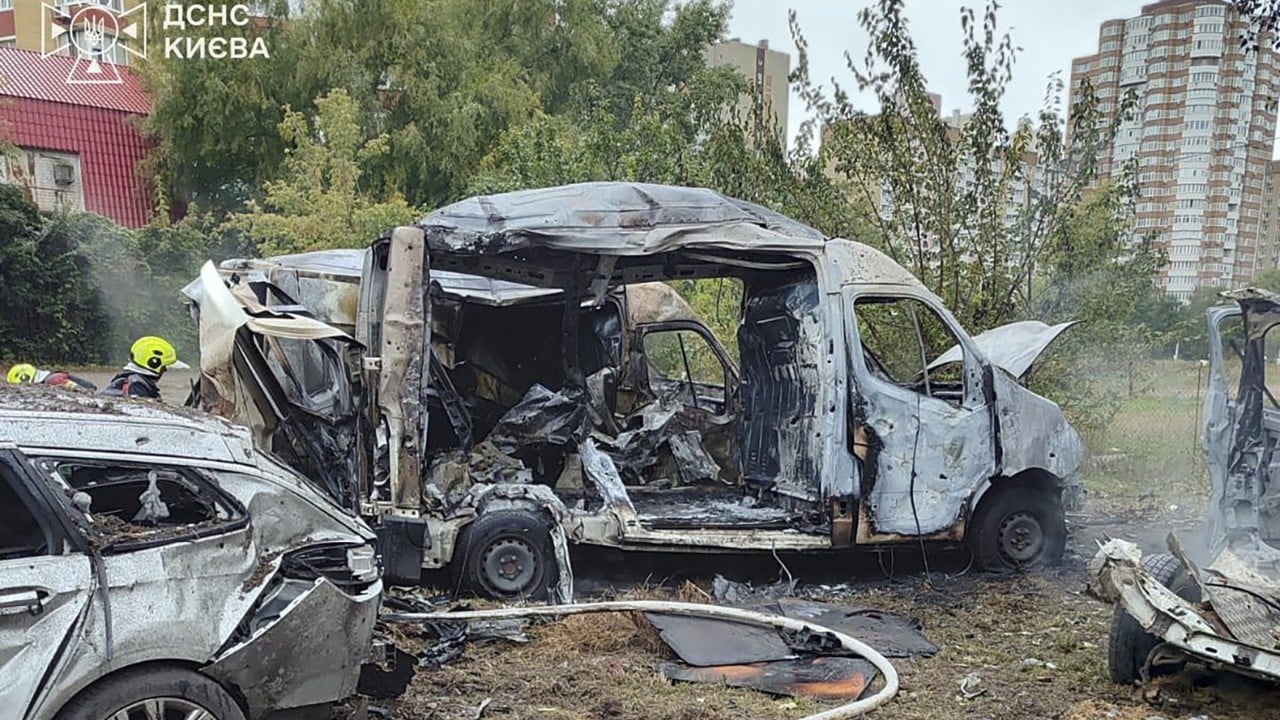
When the strikes hit ten distinct sites across eastern Afghanistan, Malik did not check a news feed. He felt the concussion in his chest before he heard the blast. Windows shattered in mud-brick homes where children were sleeping. The night sky turned the bruised, orange color of a furnace door flung open.
Islamabad called these raids precise counter-terrorism operations. They pointed to the rising tide of militant violence spilling across their frontier—suicide bombings in Peshawar, ambushes in Balochistan, the unmistakable signature of Tehreek-e-Taliban Pakistan operatives finding safe haven and strategic depth in the ungoverned spaces of their western neighbor. From the perspective of the military planners in Rawalpindi, patience had run out. A state cannot simply absorb endless casualties from cross-border incursions without striking back at the source.
Yet Kabul saw something entirely different in that fire. They saw an affront to Afghan dignity, an aggressive violation of territorial integrity by a neighbor that has long played the game of regional chess at their expense. To the Taliban leadership, sovereignty is non-negotiable, earned through decades of outlasting foreign empires. They warned of severe consequences. They vowed that actions have a price.
This is how a border dispute escalates from quiet friction into open fire. It is not merely a clash of armies. It is a collision of two completely different realities.
The Anatomy of a Breaking Point
To understand why the skies over Afghanistan and Pakistan erupted on this particular night, we have to look past the immediate flashpoints and trace the slow, grinding erosion of trust that preceded it.
Bilateral relations between these two capitals have never been simple, but the return of the Taliban to power in Kabul fundamentally warped the geopolitical gravity of the region. Initially, some strategists in Islamabad hoped for a compliant, friendly government across their western frontier—a strategic depth that would counter Indian influence. Instead, they got something far more complicated. Ideological cousins of the Pakistani Taliban, the Afghan rulers found themselves caught between the ideological solidarity of their movement and the practical realities of governing a bankrupt state desperate for international legitimacy.
Meanwhile, the body count inside Pakistan began to climb.
Statistical reports from security institutes in Islamabad tell a grim story. Militant attacks surged by staggering margins over the preceding year, particularly in the Khyber Pakhtunkhwa and Balochistan provinces. For the average citizen riding a bus in Lahore or walking through a market in Islamabad, the threat of terrorism felt like a ghost returning from a war they thought they had won.
Governments under pressure must act. And when diplomatic channels clog with mutual recriminations—demands for extradition met with denials of militant presence—military logic begins to take over.
Drones are the modern weapon of choice precisely because they offer an illusion of clinical detachment. They allow a state to project lethal force across a hostile border without putting a single pilot in the crosshairs. But on the receiving end, there is nothing clinical about a missile tearing through a roof. It kills indiscriminately, pulling civilians, alleged insurgents, and local bystanders into the exact same statistical category of collateral damage.
The Invisible Cost
When the smoke cleared over those ten targeted sites, the casualty figures began to trickle out through local channels. Official statements from both sides quickly dissolved into a fog of propaganda. Pakistan insisted the targets were strictly militant hideouts belonging to splinter factions staging attacks on its soil. Afghan officials countered with images of destroyed homes, injured children, and grieving mothers, framing the operation as an assault on national sovereignty and civilian life.
The truth, as is so often the case in asymmetric warfare, likely lives in the dark space between those narratives.
Militants do operate in these remote border regions. They blend into local populations, using families and tribal affiliations as human shields. That is a tactical reality. But it is equally true that smart munitions dropped in densely populated mountain hamlets do not discriminate between a hardened insurgent and a sleeping baker.
When civilians die in airstrikes, the calculus of war shifts immediately. Every funeral in Khost or Paktika becomes a recruitment seminar for the very insurgency Islamabad is trying to crush. This is the tragic paradox of modern counter-terrorism: in the effort to eliminate an enemy today, you manufacture three more for tomorrow.
Consider the human ripples of this violence. A family displaced by a midnight blast packs what they can carry onto the back of a tired donkey and heads deeper into the mountains. A local schoolteacher looks at his shattered classroom and wonders what future is left for his students in a valley where the sky itself feels hostile. A diplomat in Islamabad drafts a furious demarche, while a commander in Kabul loads a mortar tube in the dim light of dawn.
Where the Road Ends
Borders are ultimately human constructs, sustained by shared agreements or enforced by raw power. When the agreements fail, power is all that remains.
The strikes of that night did not solve Pakistan's security dilemma. They did not eradicate the cross-border militant networks that haunt the military establishment. Nor did they break the resolve of Kabul's leadership; if anything, they hardened their defiance, providing a convenient external enemy to rally a fractured populace against.
What remains is a landscape of heightened tension, where every patrol along the Durand Line now walks with a finger twitching on the trigger. The two nations are locked in a dangerous embrace, geographically inseparable, politically alienated, and economically interdependent in their misery.
Malik sits on the porch of his damaged home, staring out at the jagged peaks of the mountains that separate two worlds. The sun is rising, painting the rocks in shades of gold and rust, but the air still smells faintly of sulfur and cordite. He does not know what the generals in Islamabad are planning next, nor what speeches are being drafted in the palaces of Kabul. He only knows that the mountains are old, the border is a lie, and the sky can turn to fire at any moment without warning.