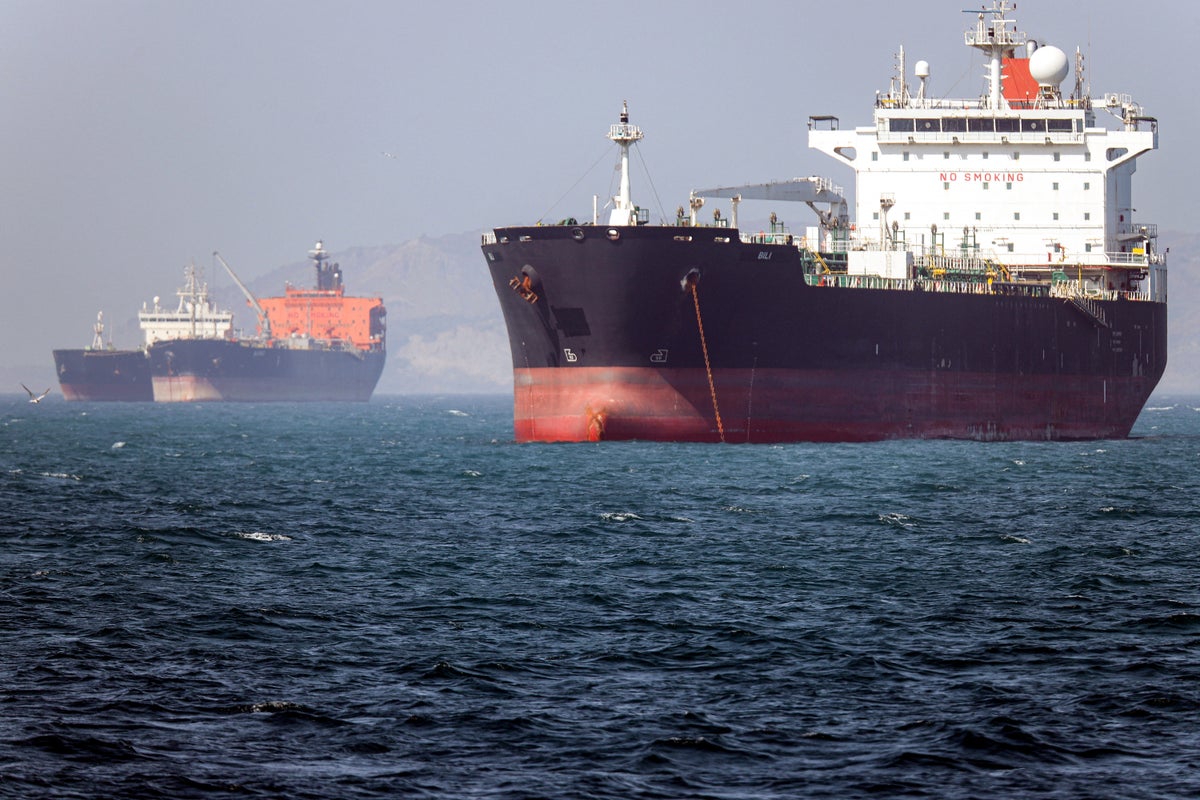
The steel hull of a bulk carrier is rarely a place of comfort. It is a world of constant, low-frequency vibration, the smell of heavy fuel oil, and the endless, rhythmic Slap-hiss of the Persian Gulf against the bow. For the crew aboard a vessel transiting the narrow corridors near Qatar, the horizon usually promises nothing more than the shimmering heat haze of the desert coast. But at 02:00, the sea is a void. You are a small, floating island of light in a universe of ink.
Then comes the sound.
It isn't the sound of waves. It is a sharp, metallic shriek that tears through the hum of the engine room. It is the sound of physics being forced where it doesn't want to go. A projectile, launched from the darkness, finds its mark. In an instant, the routine of a merchant mariner—the thoughts of home, the calculation of overtime, the steam from a mug of coffee—is incinerated.
The Invisible Artery
Most people think of global trade as a series of clicks on a screen. You want a product; it appears at your door. We rarely consider the flesh and bone trapped inside the logistics. We forget that the "supply chain" is actually a collection of tired men and women navigating the most volatile waters on Earth.
When the British military confirmed that a bulk carrier near Qatar was struck and set ablaze, the report was clinical. It spoke of coordinates and damage assessments. What it missed was the smell of scorched paint and the way the air turns thick and toxic when a cargo hold becomes a furnace.
Maritime security isn't about maps. It’s about the vulnerability of a thirty-year-old sailor from Manila or Odessa who suddenly realizes that his ship has become a target in a game he never agreed to play. The projectile doesn't care about the manifest. It doesn't care if the ship is carrying grain to feed a nation or steel to build a skyscraper. It only cares about the statement made by the fire.
The Geometry of Fear
The waters off Qatar are a pressurized environment. To the north lies the Iranian coast; to the west, the sprawling energy infrastructure of the Arabian Peninsula. Every ship moving through these lanes is squeezed into a predictable path.
For a captain, this is a nightmare of geometry. You cannot swerve. You cannot hide. A bulk carrier, laden with tens of thousands of tons of cargo, has the maneuverability of a tectonic plate. When the warning comes—if it comes at all—there is nowhere to go.
Consider a hypothetical third mate named Elias. He is on the bridge, eyes strained against the dark, watching the radar sweep. He sees a blip that shouldn't be there. A fast-moving streak. In the seconds before impact, Elias isn't thinking about geopolitical tensions or the price of crude oil. He is thinking about the fire extinguishers in Hallway B and whether the lifeboat davits will jam if the ship begins to list.
The reality of modern maritime conflict is this: the weapons are high-tech, but the defense is medieval. You have steel walls and your own bravery. That is it.
The Cost of a Spark
The fire on the carrier near Qatar was eventually contained, but the damage ripples far beyond the charred hull. Every time a projectile hits a ship, the "war risk" insurance premiums for the entire region twitch upward.
- Insurance rates climb.
- Shipping companies reroute vessels around the Cape of Good Hope.
- Fuel consumption triples.
- The price of every loaf of bread and gallon of gas on your local shelf inches higher.
This is the hidden tax of instability. We pay for these fires at the checkout counter, months after the smoke has cleared. But the sailors pay immediately. They pay in adrenaline and the long-term erosion of their peace of mind.
Imagine trying to sleep in a cabin that you know is essentially a target. You lie in your bunk, listening to the creaks of the ship, wondering if the next sound you hear will be the wind or a missile. It changes a person. It turns a job into a tour of duty.
Why Qatar Matters
Qatar sits at the heart of the world’s energy pulse. It is the transit point for a massive portion of the globe's Liquefied Natural Gas. When a carrier is hit in these specific waters, it isn't just an isolated incident; it is a finger on the throat of the global economy.
The British military’s involvement in reporting these strikes highlights the international nature of the crisis. This isn't a local dispute. The UK’s United Kingdom Maritime Trade Operations (UKMTO) acts as the nervous system for these waters, sending out "vessel under attack" alerts that flash on bridge screens from Singapore to Rotterdam.
When that alert goes off, the silence on a bridge is absolute.
Every captain in a five-hundred-mile radius looks at their own deck. They look at their own crew. They realize that the line between a successful voyage and a catastrophe is thin. It is as thin as the hull of a ship.
The Human Residue
After the fire is out, the investigation begins. Investigators will look at the fragment patterns. They will debate the origin of the projectile. They will write reports that will be filed in grey cabinets in London and Doha.
But the ship remains. It sits in the water, a blackened monument to a moment of violence. The crew will eventually be replaced. They will fly home, carrying the smell of the fire in their luggage and the sound of the impact in their dreams.
We often speak of "securing the lanes" as if we are talking about a highway or a pipeline. We aren't. We are talking about a wilderness of water where the only thing keeping the world moving is the courage of people who are willing to sail into the dark.
The fire near Qatar was extinguished, but the heat remains. It is the heat of a world that is becoming increasingly comfortable with using the sea as a chessboard. As long as those projectiles keep flying, the horizon will never truly be dark. It will stay lit by the orange glow of ships that were just trying to get from one port to the next.
Somewhere right now, a sailor is standing on a bridge near the Qatari coast. He is looking at the dark water. He is checking his radar. He is hoping that tonight, the only thing that hits his ship is the spray of the salt.