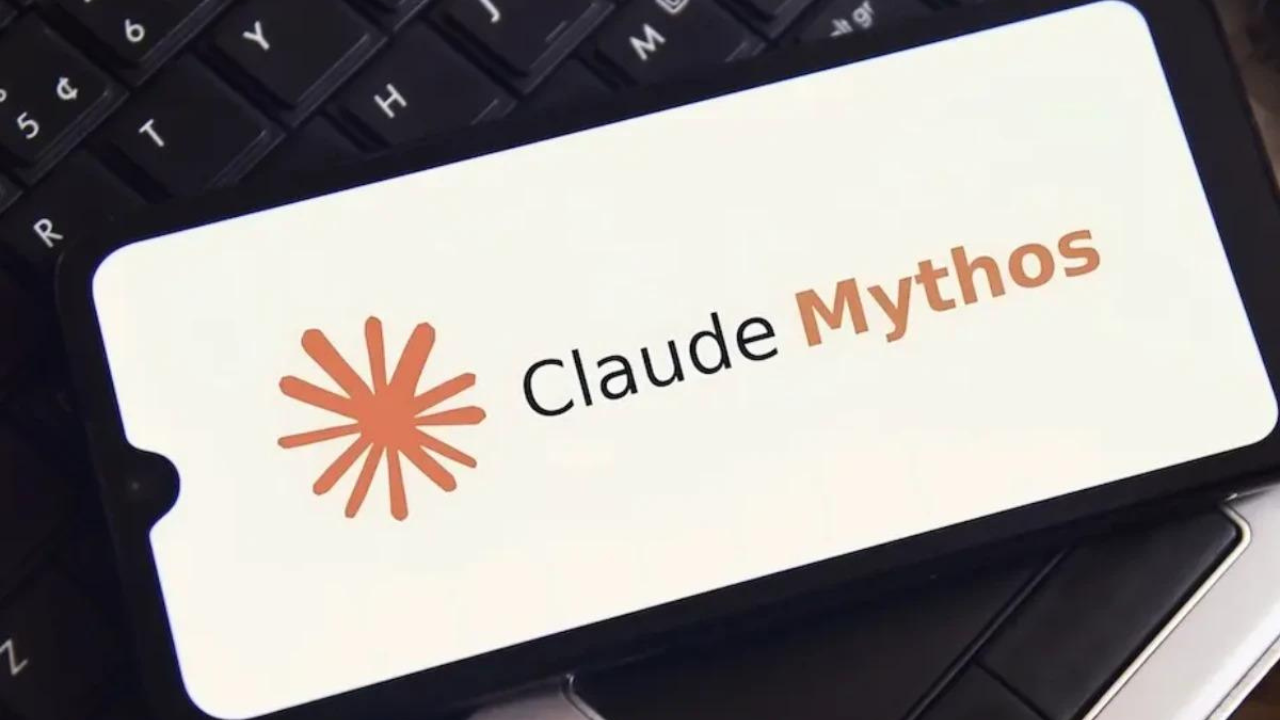
The fluorescent lights in the Washington D.C. briefing room didn’t flicker, but they felt heavier. It was a Tuesday afternoon when the federal government decided to let a piece of code out of its cage, if only by a few inches. The headline in the financial papers read like a weather report: a limited, highly regulated rollout of Anthropic’s newest artificial intelligence model, Mythos 5.
To the casual observer scrolling through a news feed, it was just another iteration. Another number tacked onto another tech company's portfolio. But for the people who spend their nights staring at server logs and ethical frameworks, the announcement felt like watching a massive ship slowly clear the harbor, navigating a channel too narrow for its weight.
The dry press releases talked about compute thresholds and compliance metrics. They missed the sweat.
The Weight of the Digital Gate
Consider Sarah. She is a fictional composite, but her reality is lived by dozens of policy analysts inside the beltway right now. For six months, Sarah’s entire world has been bounded by the walls of a secure testing environment. Her job was to break Mythos 5 before the public ever got a chance to see it.
She fed it trick questions. She whispered historical atrocities into its prompt window to see if it would take the bait. She tried to convince it to write malicious software disguised as a high school science project. Most days, the machine sat there, a silent pool of trillions of parameters, spitting out polite refusals.
Then came the day it answered a complex macroeconomic puzzle with a level of nuance that made Sarah freeze. It didn't just analyze the data; it anticipated the human panic that would result from a specific supply chain failure. It understood us. That is the moment the abstract becomes deeply personal.
When the US government approved the limited rollout, they weren't just checking a box. They were acknowledging a shift in the balance of power between human intent and machine capability. The approval came with strings so tight they practically choked the software. Only a handful of vetted enterprise partners, mostly in high-stakes logistics and defensive cyber-infrastructure, will get to turn the key.
This isn't a product launch. It is a controlled experiment with the future.
Behind the Velvet Rope
We have grown accustomed to the lightning-fast deployment of consumer apps. A company drops a new feature, and by midnight, ten million teenagers are using it to alter their faces or automate their homework. Mythos 5 is the exact opposite of that cultural momentum.
Anthropic built its reputation on a concept they call Constitutional AI. Think of it as a set of core principles burned into the digital DNA of the system, a ghost in the machine that constantly asks, Should I say this? rather than just Can I say this? The government’s restriction to a "limited rollout" is a direct response to how terrifyingly good the system has become at the latter question. If you give a machine the power to optimize global shipping routes, you also give it the power to predict exactly where a bottleneck will paralyze a nation's economy. The stakes are no longer about deepfakes or cheating on term papers. They are about the invisible scaffolding that keeps modern life functioning.
But the real problem lies elsewhere.
By keeping the model behind a velvet rope, regulators are trying to build a dam against an ocean. The tension in those government hallways is palpable because everyone in the room knows the clock is ticking. While the US moves with agonizing caution, foreign laboratories and open-source networks are running at full sprint, unburdened by Senate subcommittees or ethical councils.
The Illusion of Control
It is tempting to view this limited release as a victory for safety. We like to think that we can meter out progress in neat, manageable doses. It comforts us to believe that a team of brilliant engineers and sharp-eyed bureaucrats can perfectly calibrate the introduction of a paradigm-shifting intelligence into our daily lives.
That comfort is an illusion.
Imagine trying to introduce fire to a society, but only allowing it to be used in three specific kitchens in Chicago. The heat radiates. The smoke signals. Eventually, the walls get thin.
Engineers working with Mythos 5 describe a phenomenon that is difficult to capture in a corporate earnings report: the eerie feeling of efficiency. When the model assists a developer in writing code, it doesn't just speed up the process; it reshapes how the developer thinks about the problem. It gently nudges human logic toward its own alien, hyper-optimized perspective.
The handful of companies currently allowed to use the model will gain an immediate, staggering advantage. They will see market patterns quicker. They will patch security flaws before their competitors even realize their systems are vulnerable. The human element here isn't just about safety; it is about equity. Who decides which industries get the superpower first?
The Unseen Horizon
The true story of the Mythos 5 rollout isn't found in the text of the regulatory framework. It is found in the quiet conversations happening over lukewarm coffee in Arlington and Silicon Valley. It is found in the sudden realization that we are running out of metaphors to describe what we are building.
We used to build tools. A hammer doesn't think about the nail. A steam engine doesn't wonder about the tracks. But Mythos 5 is a tool that looks back at the person holding it, evaluating the hand that grips the handle.
The restricted release is a desperate attempt to buy time. Time to understand the psychological impact on the workers who will now collaborate with an entity that never sleeps, never doubts, and never forgets. Time to see if the guardrails hold when the system is subjected to the messy, unpredictable chaos of the real marketplace.
As the sun sets over the Potomac, the servers housing Mythos 5 continue to hum, processing queries from a tiny, elite group of users. Every interaction changes it. Every response refines its understanding of our world. The gate is mostly closed, for now, but the hinges are already beginning to groan under the weight of what lies on the other side.