The tea in the bazaar of Peshawar was already cold by the time the emergency decree cleared the printer. In these quiet hours before dawn, when the stray dogs cease their barking and the weight of the Hindu Kush seems to press down directly onto the flat roofs of the city, political crises do not arrive with the blare of trumpets. They arrive as a whisper of parchment, a stroke of a pen three hundred miles away in Islamabad, and the sudden, heavy rumble of heavy transport trucks moving toward the provincial assembly gates.
To understand what happened when the federal government suspended the provincial administration led by Imran Khan’s Pakistan Tehreek-e-Insaf party, one must understand how paper tigers dictate the lives of living men.
Imagine standing on a street corner in Lahore or Peshawar as the morning haze lifts. The vendor selling hot jalebis knows nothing yet of constitutional articles or executive overreaches. He knows only that the price of flour has doubled, that his nephew is sitting in a holding cell after a youth rally gone wrong, and that the television in the corner tea stall is broadcasting a frozen frame of a somber anchor speaking about state necessity.
State necessity is a heavy cloak. It has been worn by many masters in this country's turbulent seventy-nine-year history.
Days before the suspension, the rhetoric on the streets had reached a fever pitch. Khan’s party, nursing grievances that stretch back through years of legal battles, prison walls, and disputed ballots, had called for a final march. Not a polite procession of placard-waving citizens, but a flood of humanity pouring down the Grand Trunk Road toward the capital. A movement designed to paralyze the machinery of government until their demands were met.
The government in Islamabad, viewing the impending march not as a democratic exercise but as an existential threat to public order, reached for the ultimate administrative weapon. Under the constitutional framework, the federal executive has the power to step in when a province is deemed incapable of maintaining peace or executing federal laws. Critics call it a sledgehammer used to crack a walnut. Defenders call it the preservation of the republic.
But labels matter little to the ordinary citizen caught in the crossfire.
Consider a hypothetical civil servant—let us call him Tariq—who has spent twenty-two years shuffling files in the provincial secretariat. Tariq has served under three different political parties and two military administrators. To Tariq, politics is not an ideological crusade; it is a clock that must be wound every morning at nine and allowed to run down at five.
When the suspension order dropped, Tariq arrived at his office to find padlocks on the mahogany doors and a contingent of paramilitary rangers stationed by the courtyard fountain. The administrative machinery had simply stopped. In an instant, the province of millions was placed under direct federal oversight, its elected ministers sidelined, its legislative assembly reduced to a silent monument of green marble and iron gates.
This is the tragedy of institutional friction in developing democracies. When the friction becomes too hot, the system does not adapt; it breaks.
The suspension of the provincial government was ostensibly framed as a preventative measure to stave off violence during the march. Yet, history teaches us that administrative freezes rarely quell anger; they compress it. Like tectonic plates locked in a silent struggle beneath the earth, the pressure does not dissipate when you declare a state of emergency. It builds. It migrates downward, finding cracks in the foundation of daily life.
On the ground, the immediate consequence was a chilling quiet. Markets in the provincial capitals saw lower foot traffic. Transport operators whispered among themselves about canceled routes, fearing that buses carrying party workers would be impounded at toll plazas miles outside the city limits. The digital sphere fared no better; mobile internet speeds slowed to a crawl, turning smartphones into expensive paperweights and cutting off the vital flow of independent verification. In the absence of truth, rumor became the currency of the realm.
Why does this cycle repeat with such agonizing predictability?
The answer lies in a fundamental disconnect between institutional power and public sentiment. In a mature democracy, legitimacy flows upward from the ballot box and is continuously renewed through compromise. In states where the architecture of governance is still contested, legitimacy is often treated as a zero-sum prize. Win it all, or lose everything.
Imran Khan’s party discovered this truth from both sides of the aisle. Having tasted power and subsequently lost it through a parliamentary no-confidence vote in 2022, they pivoted from governance to perpetual agitation. Their strategy was clear: make the country ungovernable for their successors until fresh elections are forced. The federal coalition, facing an unrelenting opposition that refused to acknowledge its mandate, responded with the full might of the executive apparatus.
When both sides refuse to yield an inch, the constitution ceases to be a social contract and becomes a weapon to be swung.
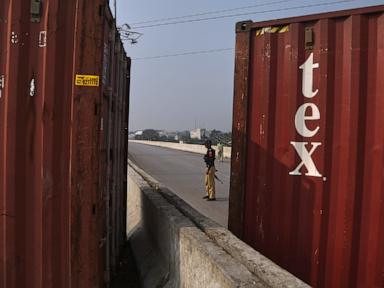
By midday following the suspension, the streets around the provincial assembly were sealed off with shipping containers—those ubiquitous steel boxes that have become Pakistan’s architecture of choice for civic immobilization. A lone stray dog trotted across the empty asphalt where thousands of protesters had planned to gather just forty-eight hours prior.
Inside the cordoned zone, a young constable leaned against his riot shield, wiping sweat from his forehead. He had been on duty for thirty-six hours straight. His boots were caked with dust from the highway, and his rifle was slung loosely over his shoulder. He did not look like a defender of democracy, nor an agent of tyranny. He looked simply exhausted.
This is where grand political maneuvers ultimately land: upon the shoulders of men who are too tired to care about articles and clauses, wishing only for a hot meal and an eight-hour sleep.
The federal takeover of the provincial government bought Islamabad time, certainly. It disrupted the logistics of the march, scattered leadership into safe houses or courtrooms, and temporarily restored an enforced calm to the avenues of power. But time bought through coercion is a depreciating asset.
As the sun began to dip behind the dry hills surrounding the capital, casting long, bruised shadows across the barricades, the fundamental question remained unanswered. You can suspend a government, you can padlock an assembly hall, and you can reroute a march with steel containers and tear gas. But you cannot legislate away the grievances of millions of people who believe their vote was stolen, nor can you permanently suppress a political movement that draws its strength from the very persecution it faces.
The pen had written the order. The printers had finished their work. The tea in the bazaar had long since gone cold. But out on the dark highways, beneath the vast, indifferent sky of the Punjab, the trucks were still rolling, and the night was far from over.