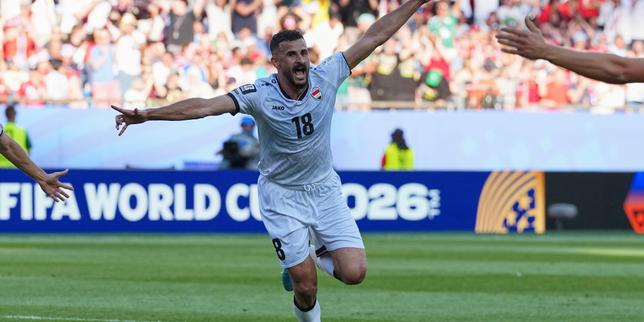
The air inside the stadium didn't just feel warm; it felt heavy, thick with the salt of the nearby coast and the suffocating weight of history.
On one side of the pitch stood Uruguay. La Celeste. A footballing dynasty stitched into the very fabric of the World Cup, a nation whose jersey carries the phantom weight of four world titles if you count the early Olympic triumphs they guard so fiercely. Their players moved with the easy arrogance of men who belong under the brightest lights. They expected to win because winning is what they do. It is their birthright. Discover more on a similar subject: this related article.
On the other side stood Cape Verde.
To look at Cape Verde on a map is to see a handful of volcanic dots scattered across the vast Atlantic Ocean, looking less like a nation and more like an afterthought of continental drift. Their entire population could fit into a single neighborhood of Montevideo. In the grand calculus of international football, they were supposed to be a footnote, a team happy just to have their passports stamped. More reporting by Bleacher Report delves into comparable views on the subject.
Nobody told them the script.
When the final whistle blew, the scoreboard read 2-2. To the statisticians, it was a draw. To the spreadsheet analysts, it was a point apiece in the group stage. But stats are a poor language for capturing the soul of a football match. This wasn't a draw. It was a refusal to die. It was a tiny island nation looking into the eyes of a footballing superpower, bleeding from an early onslaught, and deciding that history could wait its turn.
The Weight of the Blue Jersey
Football in Uruguay is not a pastime; it is a religion where the gods wear sky blue. When a Uruguayan player walks onto the field, he isn't just chasing a ball. He is carrying the ghosts of Obdulio Varela and the 1950 Maracanazo. They play with garra charrúa—a mythic, clawing intensity that thrives on conflict and treats every square inch of grass as land to be conquered.
You could see that intensity in the opening minutes. Uruguay didn't just pass the ball; they weaponized it. Their transitions were sharp, predatory, and calculated to exploit the slightest hesitation. When they scored, it felt inevitable. It was the natural order of things asserting itself. The stadium found its expected rhythm, the traveling South American fans singing of glory, already looking past the tiny archipelago and focusing on the knockout rounds.
Imagine being a Cape Verdean defender in that moment. Let’s call him Mendes—a composite of every boy who grew up kicking a deflated ball along the dusty, wind-swept streets of Mindelo, listening to the waves crash against the rocks. You are staring down forward lines that cost hundreds of millions of euros. You have just conceded. The stadium is shaking. Every instinct of human nature tells you to shrink, to minimize the damage, to accept that you are outmatched.
The temptation to fold is a physical weight. It sits on your chest and saps the oxygen from your lungs.
But Cape Verdean identity is forged in isolation and resilience. This is a diaspora nation, a place where more citizens live abroad than on the islands themselves, bound together by sodade—that uniquely Portuguese longing for a home that is always just out of reach. They are used to the wind blowing hard against them. They are used to surviving on very little.
The Anatomy of the Fightback
What happened next defied the logic of the modern game. Instead of retreating into a defensive shell to prevent a rout, Cape Verde began to pass. Not panicked clearances, but deliberate, rhythmic, triangular sequences that started from the back.
They bypassed the fierce Uruguayan press not through brute strength, but through courage. It takes immense bravery to play short passes in your own penalty box when a world-class forward is sprinting at you with bad intentions. It requires a absolute belief in the man next to you.
The equalizer wasn't a fluke. It was a masterpiece of collective willpower. A ball won in the midfield, a sudden, vertical injection of pace, and a finish that silenced the sky-blue wall of supporters. The joy was frantic, a explosion of color and noise from the small pocket of Cape Verdeans who had traveled across oceans to witness what everyone else assumed would be a execution.
Suddenly, the pitch shrunk. The giant looked confused.
Uruguay responded the only way they know how: with fury. They pushed bodies forward, tilting the field until it felt like Cape Verde was defending on a steep incline. The pressure built until the seams popped. Uruguay took the lead again, a strike born of sheer individual brilliance that seemed to restore the universe to its proper axis. 2-1.
In the old days, that would have been the end of the story. The brave underdog fights hard, earns a moment of glory, but ultimately succumbs to the superior depth and pedigree of the elite. The commentators prepare their patronizing compliments about "giving a good account of themselves."
But this generation of Cape Verdean players doesn't want your compliments. They want your points.
The Disruption of the Natural Order
The final twenty minutes of the match became something primal. The tactical boards were thrown out. The game transformed into a test of cardiovascular endurance and mental fortitude. Uruguay wanted to kill the clock; Cape Verde wanted to bend time to their will.
The second equalizer was a moment of pure, unadulterated chaos, the kind that only happens when a team completely abandons fear. A long ball, a contested header, a loose ball bouncing in the penalty area like a live grenade. In that fraction of a second, status means nothing. Salary means nothing. The only thing that matters is who wants their boot on the ball first.
A Cape Verdean foot found it. The net bulged.
The celebrations weren't just joyful; they were defiant. Players sprinted to the corner flag, falling into a heap of sweaty, exhausted humanity. They had done it twice. They had climbed the mountain, been pushed off, and climbed it again.
The final whistle didn't bring a sense of relief; it brought a strange, lingering awe. The Uruguayans dropped to their knees, staring at the grass, trying to understand how a victory that seemed so certain had evaporated into the humid night air. They had played well. They had fought hard. But they had run into a team that refused to accept the role of the victim.
As the stadium emptied, a small group of Cape Verdean players remained on the pitch, locked in a circle, arms draped over each other's shoulders. They were thousands of miles from the Atlantic archipelago, yet they had never been closer to home. They had proved that on any given night, ten volcanic rocks in the middle of the ocean can stop the world.