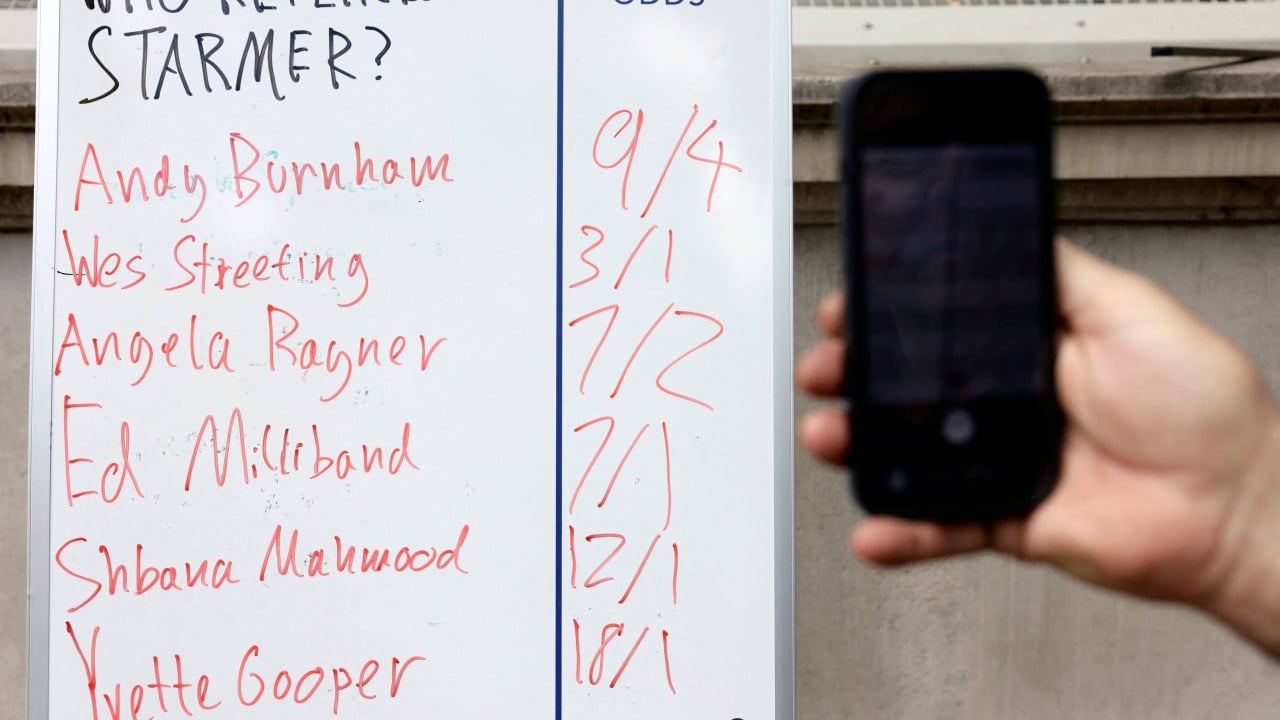
The British political commentariat is currently obsessed with a list of names that effectively amounts to a high school yearbook for the Westminster bubble. They look at Keir Starmer’s polling wobbles and immediately start handicapping the usual suspects: Rachel Reeves, Angela Rayner, or perhaps a returned Andy Burnham.
They are all wrong. Also making waves recently: The Vatican Chess Move Against the Resistance of Archbishop Vigano.
The assumption that the next occupant of Number 10 must be a linear successor from the current Cabinet or the Shadow Frontbench ignores the fundamental decay of the party-political machine. We are witnessing the death of the "career ladder" premiership. In an era of permacrisis, the next leader won't be the person who played the most disciplined game of musical chairs in the House of Commons. They will be the person who breaks the chair.
The Succession Myth and the Curse of the Spreadsheet
The lazy consensus suggests Rachel Reeves is the natural heir because she possesses "fiscal credibility." This is a fundamental misunderstanding of how British power cycles function. Additional information regarding the matter are explored by Al Jazeera.
Stability is a sedative, not a strategy. Reeves represents the ultimate triumph of the spreadsheet—a technocratic approach to governance that treats the UK economy like a mid-sized accounting firm. History shows us that technocrats are excellent at maintaining status quos but utterly incapable of surviving their collapse.
When the public tires of Starmer, they won’t be looking for "Starmer with better math." They will be looking for an escape hatch.
The media focuses on the "People Also Ask" staples: Is Angela Rayner popular enough? or Can Wes Streeting lead the NHS to safety? These questions are built on a flawed premise. They assume the public still views the traditional department-to-department career path as a badge of competence. It isn't. It’s seen as a record of complicity.
The Outsider Strategy is the Only Strategy Left
I have watched organizations from FTSE 100 giants to local councils try to "promote from within" during a systemic meltdown. It almost always ends in a fire sale.
The UK is currently in a state of institutional exhaustion. The civil service is bloated and sclerotic. The tax burden is at a seventy-year high. Productivity is a flatline. In this environment, "experience" in a failing system is a liability, not an asset.
The next Prime Minister will likely be a "mercenary leader." Think less about the traditional MP and more about the rise of the high-profile regional mayor or the industrial titan who enters the fray to "fix the plumbing."
We are moving toward a French model, whether we like it or not. Emmanuel Macron didn’t rise through a traditional party apparatus; he blew the apparatus up. The next British leader will be someone who can command a personal mandate that exists entirely outside of the Labour or Tory branding.
Why the Modern Cabinet is a Talent Desert
If you look at the current talent pool in Westminster, it is historically shallow. For decades, the vetting process for MPs has favored the "safe pair of hands"—individuals who have never said anything controversial on Twitter and whose CVs are a seamless transition from SPAD (Special Adviser) to MP.
This has created a leadership vacuum.
- The Echo Chamber Effect: They all speak the same dialect of "Consultant-ese."
- Risk Aversion: They are more afraid of a bad headline in The Guardian or The Telegraph than they are of national stagnation.
- Lack of Domain Expertise: We have a Health Secretary who has never run a hospital and a Chancellor who hasn't operated in the private sector for years.
The public's appetite for this brand of polished nothingness is at zero. The person who replaces Starmer will be the one who speaks with the bluntness of a turnaround CEO, not the rehearsed empathy of a career politician.
The "Regional King" Fallacy
Everyone loves to talk about Andy Burnham. He is the "King in the North," the man who escaped Westminster to build a power base in Manchester. The narrative is tidy: he returns as the prodigal son to save the party from its London centrism.
This is a fantasy.
Returning to Westminster from a regional mayoralty is like trying to put toothpaste back in the tube. The Westminster system is designed to neutralize outsiders. The moment Burnham or any other regional leader steps back into the Commons, they are stripped of their executive power and forced back into the grinding gears of the whip system.
The next leader won't come back to Westminster to play by the rules. They will demand the rules be rewritten. We are looking at a potential shift toward a more presidential executive branch, where the Prime Minister bypasses the Cabinet entirely to communicate directly with a frustrated electorate.
The Economic Reality Check
Let’s talk about the numbers that actually matter. The UK’s debt-to-GDP ratio is hovering around 100%. This isn't a "challenge"; it is a straitjacket.
Any successor to Starmer who promises "growth through investment" without explaining exactly where the capital comes from is lying. The competitor articles love to speculate on personalities, but they ignore the underlying physics.
Whoever takes over will have to perform radical surgery on the British State.
- Abolishing the Planning System: Not "reforming" it. Total demolition to allow for infrastructure.
- Tax Simplification: Scrapping the thousands of pages of loopholes that only benefit the top 1%.
- Energy Sovereignty: Moving past the ideological battles over North Sea oil vs. Renewables and simply building everything, everywhere, as fast as possible.
The politician who proposes this will be hated by the Westminster establishment. And that is exactly why they will win.
The Rise of the "Anti-Politician"
We are seeing a global trend toward the "strongman" or "strongwoman" archetype—not necessarily in an authoritarian sense, but in a functional one. People want someone who can actually make a decision without a three-month consultation period.
If you want to know who the next PM is, stop looking at the frontbench. Look at the people who are currently being called "dangerous" or "unpredictable" by the BBC. Look at the figures who are building massive, independent media platforms.
The next leader will be a communicator first and a legislator second. They will understand that in the 2020s, attention is the only currency that matters.
The Downsides of the Contrarian Leader
I’ll be the first to admit: this isn't a "safe" path. A leader who breaks the system can just as easily break the country.
- Market Volatility: The City of London hates unpredictability. A "disruptor" PM could trigger a run on the pound faster than Liz Truss if they don't have a coherent plan.
- Institutional Friction: The Civil Service will attempt to slow-walk every initiative.
- Social Polarization: Radical change creates winners and losers, and the losers usually have loud voices.
But the alternative is a slow, dignified decline under a series of "safe" leaders who manage the shrinkage of the UK until there’s nothing left to manage.
Stop Asking "Who" and Start Asking "What"
The obsession with names—Rayner, Streeting, Badenoch, Flynn—is a distraction. It treats politics like a soap opera rather than a series of structural problems.
The UK is currently a business with a failing product, a massive debt load, and a demoralized workforce. In the private sector, you wouldn't replace the CEO with the Head of HR and expect the share price to move. You would bring in someone from the outside with a mandate to gut the underperforming divisions.
The next Prime Minister will be the one who realizes that "Starmerism" was just the last gasp of the old consensus. They won't be a successor; they will be a replacement.
Stop looking at the list of Cabinet ministers. They are the past. The person who will actually lead the UK out of its current malaise is likely someone the London press gallery currently considers an "irrelevance."
History is a series of sudden breaks, not a smooth line. We are due for a break.
Get ready for the era of the Unaffiliated Leader. The party is over.