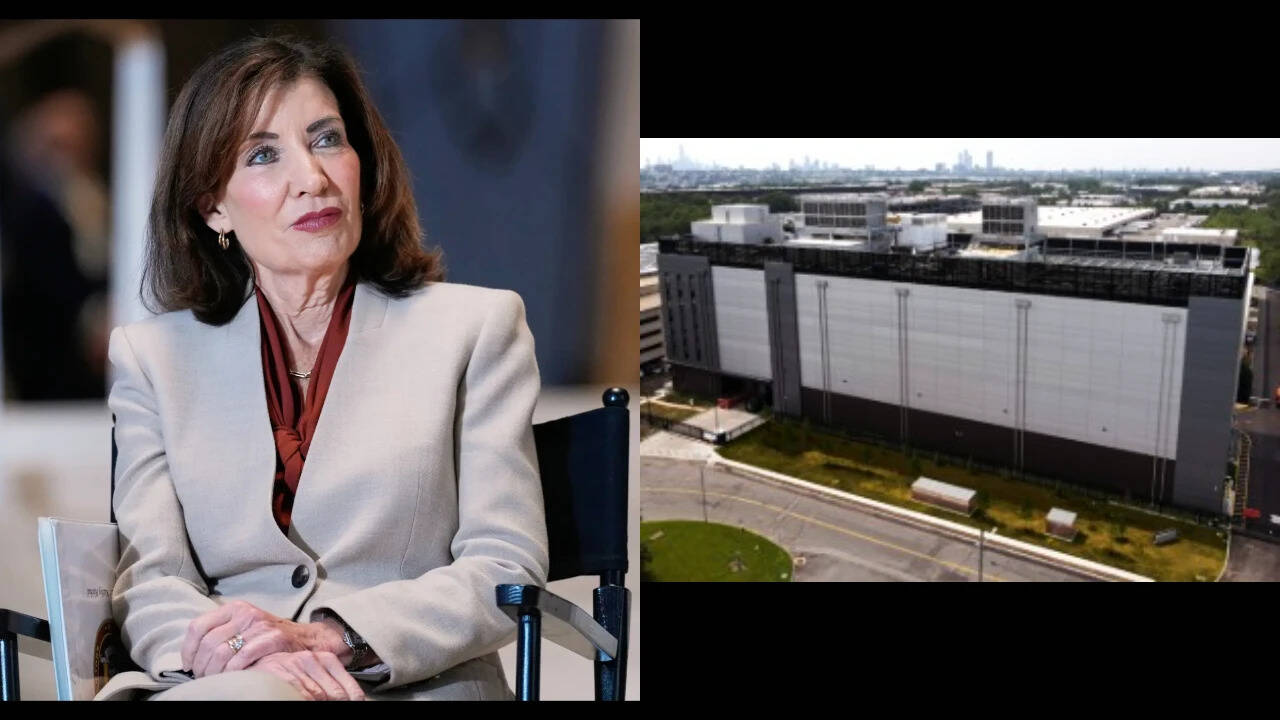
New York politicians are celebrating a one-year moratorium on data center permits as a victory for the working-class taxpayer. They claim they are protecting your wallet. They tell you that freezing high-density computing infrastructure is the only way to keep your monthly electric bill from skyrocketing.
It is a beautiful, politically convenient narrative. It is also flat-out wrong.
By banning new data centers, New York is not saving its grid. It is paralyzing it. This moratorium is a short-sighted regulatory panic that ignores how modern energy economics actually work. If you freeze the development of your highest-paying, most flexible energy consumers, you do not lower prices for everyday citizens. You shift the massive, systemic costs of maintaining an aging grid directly onto their backs.
The state is treating a supply-and-demand problem with a blunt instrument, and local rate-payers are the ones who will ultimately foot the bill.
The Lazy Myth of the Energy Parasite
The prevailing sentiment behind the ban is simple: data centers are energy vampires. The logic goes that these facilities crawl into a region, suck up gigawatts of power, strain the transmission lines, and force utilities to buy expensive peak power, driving up rates for local businesses and families.
This argument relies on a fundamental misunderstanding of utility rate-making.
Utilities are regulated monopolies. They do not make money by selling electricity; they make money by getting a guaranteed rate of return on capital investments—like building new substations, replacing wooden poles, and upgrading transmission lines. This is known as the "rate base."
When a utility upgrades its infrastructure, the state allows it to recover those costs by spreading them across its entire customer base.
                       [ Massive Infrastructure Maintenance Costs ]
                                            │
                    ┌───────────────────────┴───────────────────────┐
                    ▼                                               ▼
         WITHOUT DATA CENTERS:                           WITH DATA CENTERS:
   Sparsely distributed across local               Subsidized by high-volume,
   households and small businesses.                flat-load commercial users.
                    │                                               │
                    ▼                                               ▼
       (Higher Bills Per Family)                       (Lower Bills Per Family)
Data centers are the ultimate anchor tenants for an electric grid. They consume vast amounts of power, yes, but they consume it at a incredibly flat, predictable rate. Unlike a residential neighborhood that spikes its power usage at 6:00 PM when everyone turns on their air conditioners and stoves, a data center runs at a near-constant load 24/7.
When you ban these high-volume users, you do not reduce the cost of maintaining the grid. The transmission lines still need to be repaired. The substations still need to be upgraded to meet state climate mandates. But now, instead of a multi-billion-dollar tech conglomerate paying for 40% of those upgrade costs, 100% of that financial burden is divided among local households and small businesses.
I have watched municipalities play this exact game before. They kick out heavy industrial users under the guise of "protectionism," only to watch their local utility petition the public service commission for a 15% rate hike twelve months later because their revenue base evaporated.
Why Grid Flexibility Beats Grid Stagnation
The crowd cheering this moratorium assumes that data centers are rigid monoliths that only know how to take. In reality, modern data centers are becoming the most dynamic grid-balancing tools we have.
Through programs known as Demand Response, major computing facilities can act as virtual power plants. When the grid is stressed—say, during a blistering July heatwave—data centers can shift their non-essential computational workloads to facilities in other states, spin up their massive on-site battery backup systems, or curtail their power usage entirely.
By doing this, they shed load instantly, preventing blackouts and eliminating the need for utilities to fire up highly polluting, incredibly expensive "peaker" plants.
The Real-World Mechanics of Demand Response
- Workload Migration: Advanced orchestration software allows operators to shift latency-tolerant computing tasks (like training AI models or processing batch data) to regions with excess energy supply within milliseconds.
- On-Site Storage Integration: Modern facilities are deploying utility-scale lithium-ion and sodium-ion battery arrays. These do not just sit idle; they feed power back into the local grid when demand peaks.
- Pre-Funded Substation Upgrades: Tech companies routinely pay for the entire construction of new, high-capacity substations as a condition of their grid connection. These substations improve localized grid reliability for nearby residential areas at zero cost to taxpayers.
When New York locks out these facilities, it locks out the capital required to build a self-healing, flexible grid. You cannot build a 21st-century energy system using 20th-century regulatory blockades.
The Downside of My Position: A Brutal Admission
To be absolutely fair, hosting data centers is not a consequence-free endeavor. If a state permits these facilities recklessly without requiring them to participate in grid-firming activities, they can cause localized issues.
If a utility is allowed to build fossil-fuel-burning generation units solely to serve a data center without enforcing strict carbon-offset or green-tariff matching, carbon footprints will rise in the short term. Furthermore, if the regulatory body is weak, a data center might secure a highly subsidized energy rate that does not reflect its true impact on local transmission congestion.
But the solution to these risks is not a blanket ban. It is intelligent, dynamic regulation.
Instead of pausing permits entirely, New York should be mandating that any new data center must co-locate with new clean energy generation, invest in localized grid infrastructure, and guarantee participation in demand-response programs. A ban is not a strategy; it is an admission of regulatory incompetence.
Dismantling the "What About Water?" Argument
A common objection raised by proponents of the ban is the sheer volume of water data centers require for cooling. "They are going to drain our municipal water tables," the critics cry.
Once again, this is an argument stuck in 2012.
The industry has largely transitioned away from evaporative wet-cooling towers. Modern, high-density data centers utilize closed-loop liquid cooling systems.
[ Heat Source: Server Chips ] ──► [ Closed-Loop Liquid Coolant ] ──► [ Heat Exchanger / Radiator ]
              ▲                                                                   │
              └─────────────────────── (Recycled Coolant) ────────────────────────┘
In a closed-loop system, the water or dielectric fluid is sealed inside a continuous piping network. It absorbs heat from the servers, travels to a heat exchanger where it is cooled by outside air, and is pumped right back to the servers. The net water consumption of these systems is effectively zero.
By banning new permits, New York is stopping the construction of these highly efficient, closed-loop facilities. Meanwhile, older, less efficient industrial sites—which actually do dump millions of gallons of heated water back into local rivers—continue to operate without a peep from the legislature.
The Economic Flight Path
Capital is highly fluid. It does not wait for a state to finish its one-year emotional reflection period.
While New York pauses, neighboring states with more pragmatism are rolling out the red carpet. The digital infrastructure, the high-paying construction jobs, and the millions of dollars in local property tax revenues are simply migrating across state lines.
When a data center sets up shop, it pays massive local property taxes. In rural and semi-rural counties, a single data center campus can fund an entire school district’s annual budget or pay for a town's new road infrastructure. When you ban these developments, those local towns do not get a break. They still have to fund their schools and pave their roads—they just have to raise your property taxes to do it.
Stop falling for the political theater. Banning data centers does not protect your utility bill; it guarantees that you will pay more for a less reliable grid, all while your local economy watches the future get built somewhere else.
Turn the power back on.