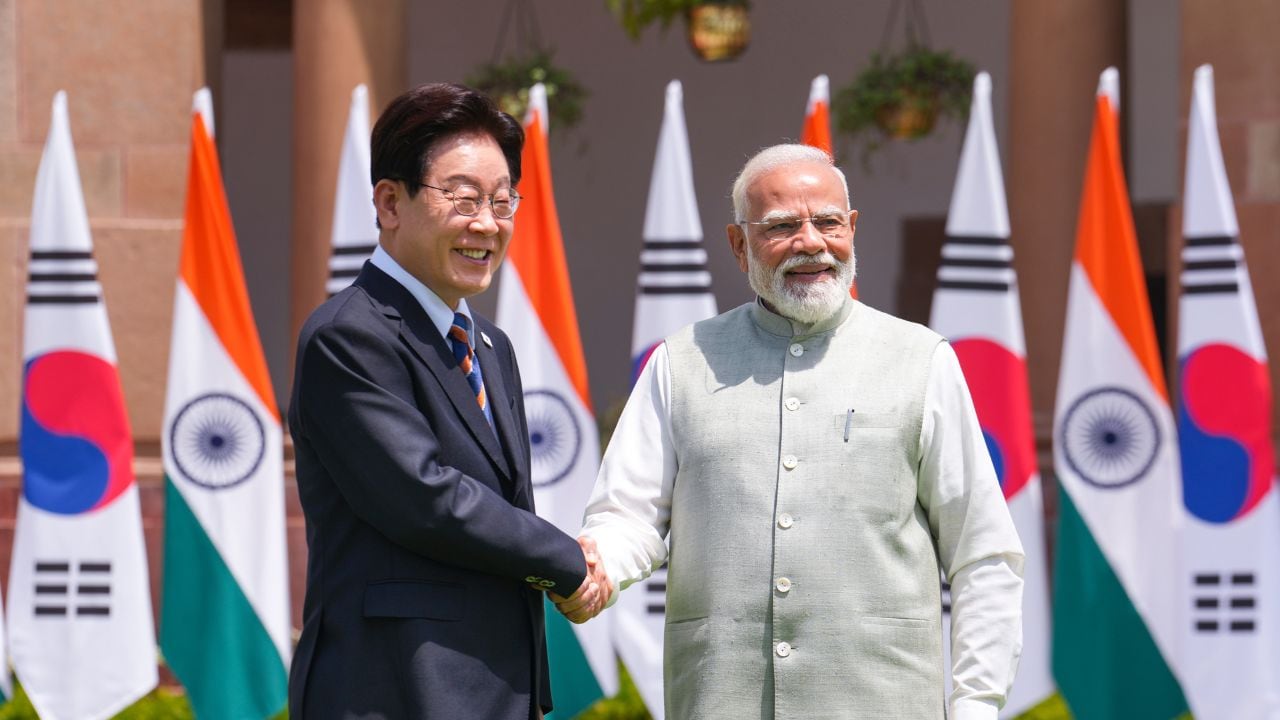
You’ve probably seen the headlines. India and South Korea want to hit $50 billion in bilateral trade by 2030. It sounds like another generic diplomatic goal. It’s not.
If you look at the mechanics behind this, you’ll see why this shift from a "trusted partnership" to a "futuristic partnership" is a big deal for anyone tracking global supply chains.
Why $50 Billion Is Just The Start
Right now, trade sits around $27 billion. Doubling that in four years seems aggressive. But both governments are moving beyond simple tariff reductions. They’re talking about "chips to ships."
Honestly, the current economic relationship is lopsided. South Korea consistently runs a significant trade surplus—exporting electronics and machinery while India struggles to find its footing in the Korean market. To hit that $50 billion target, New Delhi isn't just looking for more trade. They’re demanding more balanced trade.
This is why the decision to upgrade the Comprehensive Economic Partnership Agreement (CEPA) is so critical. The original 2010 agreement is showing its age. It didn't account for today's focus on:
- Critical minerals: Essential for EV batteries.
- Semiconductors: The backbone of modern tech.
- Defense manufacturing: Specifically, "Make in India" initiatives.
The Strategic Shift To Chips And Ships
The most interesting development isn't the trade volume. It's the institutional changes. For the first time, both nations are setting up a ministerial-level Industrial Cooperation Committee.
Why does this matter? Because past efforts often got stuck in bureaucratic gridlock. A ministerial platform forces accountability. It’s a direct channel to resolve trade disputes before they turn into major headaches for businesses.
Think about the shipbuilding sector. South Korea is a global titan in high-end vessel construction. India needs to build its maritime capacity to handle increasing trade flows and defend its waters. If India can secure technology transfers or joint ventures in shipbuilding, it gains industrial muscle. South Korea, meanwhile, gets a massive, growing market that's hungry for expertise. It’s a pragmatic exchange.
Addressing The Energy Security Reality
You can't talk about trade in 2026 without mentioning energy. The Middle East remains a wildcard. When shipping routes get disrupted, everyone feels the squeeze.
South Korea recently had to lean on India for naphtha supplies—a critical feedstock for their massive petrochemical industry. That wasn't just a one-off transaction. It signaled that Seoul views India as a strategic insurance policy for their industrial inputs. This is why the new economic security dialogue focuses specifically on supply chain stability. They’re basically building a safety net for each other.
What You Need To Watch Next
If you're an investor or just paying attention to the markets, don't get distracted by the fancy "futuristic partnership" branding. Watch the actual policy changes:
- The CEPA Negotiations: Negotiations start in May. How quickly they wrap up will show how serious both sides are. If they drag their feet, the $50 billion target becomes just a wish, not a plan.
- SME Cooperation: Small businesses are usually the ones that get left out of these high-level summits. Pay attention to the new working-level body being created for Korean SMEs entering India. If that succeeds, you'll see a surge in specialized tech and manufacturing services.
- Specific Projects: Keep an eye on joint ventures in steel and green energy. Projects like the proposed integrated steel plant in Odisha aren't just corporate deals; they are the concrete evidence of this partnership working in real time.
Don't expect overnight results. These things are slow. But for the first time in eight years, the political will is actually matching the economic potential. They've stopped talking about just buying and selling products. They’re now talking about integrating industrial ecosystems. That’s a fundamentally different game.


