Vladimir Putin has pushed his chips to the middle of the table on one specific strategy. He is betting that a relentless barrage of ballistic missiles will eventually break Ukraine's back before the West can scale its defense production. It is a brutal calculation based on math and industrial capacity. Right now, Ukraine can shoot down cruise missiles and slow-moving Iranian-designed drones with a high success rate. Ballistic missiles are a completely different beast. They fly high into the upper atmosphere and scream down at hypersonic speeds, giving air defense crews seconds to react.
To stop this nightmare, Ukraine just signed a massive defense pact with Germany.
The agreement, signed in Brussels during the Ramstein-format Ukraine Defence Contact Group meeting, flips the script on how Europe handles air defense. Ukrainian Defense Minister Mykhailo Fedorov and German Defense Minister Boris Pistorius put pen to paper on an initiative that merges German industrial muscle with Ukraine's battlefield testing. This isn't just another promise of future aid packages or a shipment of leftover cold-war stockpiles. It is a co-development deal designed to build a brand new European anti-ballistic missile system.
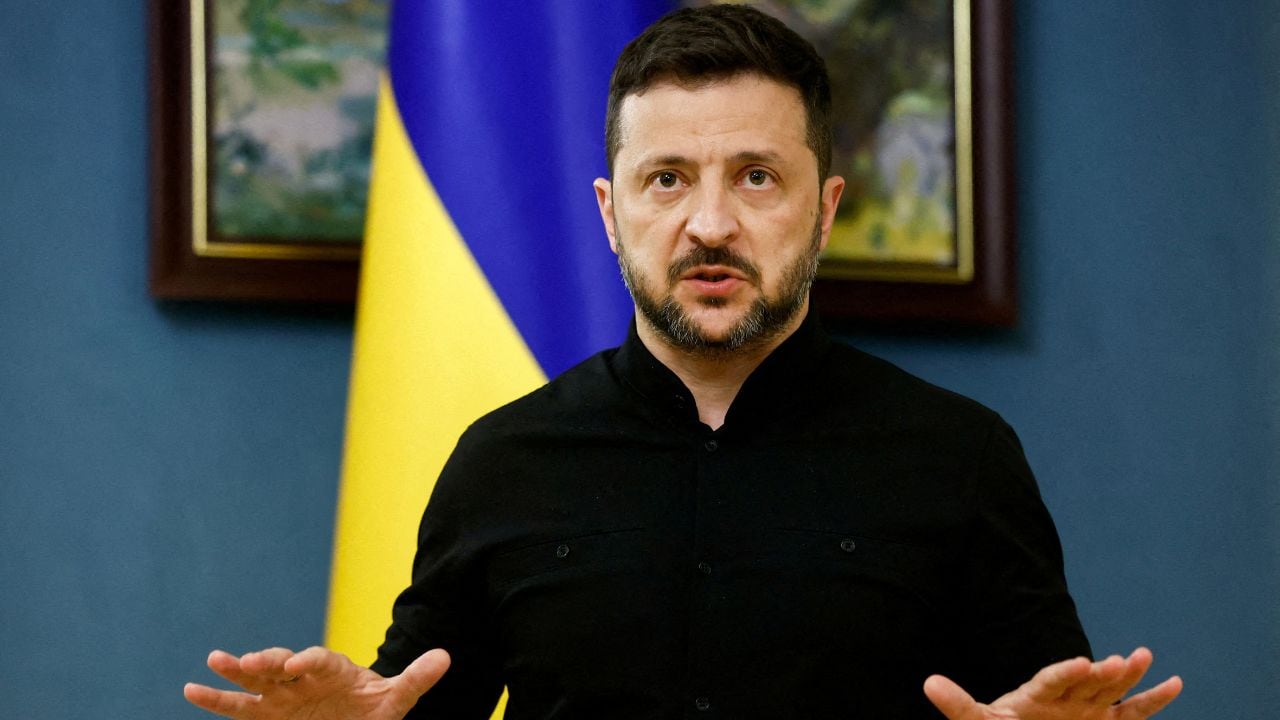
President Volodymyr Zelenskiy isn't hiding his timeline either. He wants to see actual interceptor hardware working on the frontlines before the snow falls.
The Absolute Terror of Ballistic Missile Logistics
Most people lump all air defense into one bucket. They think a missile is a missile, but that misunderstanding hides the true crisis facing European defense coordinators.
When Russia fires a Kh-101 cruise missile, it basically acts like a small, jet-powered airplane. It hugs the terrain, navigates around hills, and flies relatively slow. Air defense teams can track it, pass the data along the chain, and knock it down with mobile teams using shoulder-fired missiles or standard anti-aircraft guns.
Ballistic missiles don't play by those rules.
An Iskander-M or a Kinzhal missile launches upward on a massive arc, reaching the edge of space before diving down almost vertically. By the time it enters its terminal phase, it travels at several times the speed of sound. You can't shoot that down with a heavy machine gun or a basic anti-aircraft battery. You need specialized, incredibly expensive interceptors like the American Patriot PAC-3 or the European SAMP/T.
The problem is simple. The West doesn't make enough of them.
Right now, a single Patriot interceptor missile costs around four million dollars. Russia can buy cheap ballistic tech from its allies or churn out its own stockpiles at a rate that threatens to empty Western magazines. If Ukraine uses its entire supply of high-end interceptors to protect every single electrical substation, its frontlines become completely exposed.
This new deal seeks to solve that specific math problem. Instead of begging Washington or Berlin for more expensive interceptors that take years to manufacture, Ukraine and Germany are creating a localized production ecosystem. Ukraine brings something no Western defense contractor has: real-world, daily data on how Russian ballistic missiles dodge, spoof, and strike. Germany brings the advanced manufacturing facilities, deep capital reserves, and engineering precision.
Fire Point and the Rise of Domestic Interceptors
We don't hear much about Fire Point in everyday news cycles, but it is the anchor of this new agreement. Fire Point stands as Ukraine's largest domestic drone and missile manufacturer. Under the new agreement, this Ukrainian company will work directly with German defense firms to design and build interceptors.
Think about the sheer scale of this shift.
For the first few years of the conflict, the relationship between Kyiv and its Western allies was purely transactional. The West gave weapons, and Ukraine used them. Now, the relationship has evolved into a genuine industrial partnership. By licensing tech and co-developing new missile bodies, Germany and Ukraine can bypass the sluggish bureaucratic loops of traditional arms procurement.
Zelenskiy revealed that his conversations with global leaders, including recent discussions during international summits, have consistently hammered home this idea of localized European production. Even US policymakers have expressed a desire to see American defense firms license their tech to be built directly on European soil. The German-Ukrainian agreement is the first concrete manifestation of that strategy.
The plan involves designing an entirely new tier of interceptor missiles. These systems won't replace the Patriot, but they will complement it. They aim to create a multi-layered shield that can absorb high-velocity impacts without bankrupting the nations buying them.
The TerMIT Ground Robot and Frontline Logistics
While the headline of the agreement centers on the anti-ballistic shield, the fine print contains another vital project that will impact the daily grind of trench warfare. Fedorov and Pistorius also signed a production arrangement for thousands of TerMIT unmanned ground vehicles (UGVs).
Germany is footing the bill for this massive production run.
The TerMIT is a rugged, tracked robotic platform designed to handle the deadliest jobs on the modern battlefield. It can carry up to 300 kilograms of cargo, including ammunition, heavy gear, and fresh water directly to forward positions.
If you talk to any infantry commander who has survived the fighting in eastern Ukraine, they will tell you that logistics is a meat grinder. Sending a squad of soldiers to carry heavy ammo boxes across an open field monitored by Russian FPV drones is practically a suicide mission.
The TerMIT changes that equation entirely.
- It keeps human logistics crews out of the line of fire.
- It operates in heavy mud and ruined terrain where wheeled vehicles get stuck.
- It provides a reliable supply line to isolated outposts under heavy artillery barrages.
The units will be built primarily in Germany with direct input from Ukrainian soldiers who know exactly how these robots fail under real electronic warfare pressure. Multiple German companies have already jumped at the chance to get involved, recognizing that autonomous ground vehicles represent the future of land warfare.
Moving Past the Limits of NATO Bureaucracy
Zelenskiy didn't pull any punches during his speech in Brussels. He explicitly pointed out that Ukrainian military representatives often run into artificial walls when dealing with rigid NATO structures. There is a frequent feeling among Ukrainian officials that Western institutions have placed a strict limit on how deep the cooperation can go.
That hesitation is dangerous.
The new anti-ballistic coalition is an attempt to route around that institutional sludge. By creating a direct, bilateral pipeline between Kyiv and Berlin, both nations can move at the speed of the war rather than the speed of a committee meeting.
This deep integration helps Europe just as much as it helps Ukraine. European nations are currently looking to build their own comprehensive air defense shield to protect against future threats. They have the factories, but they don't have the operational experience. Ukraine has spent years tracking, targeting, and intercepting the most advanced missiles in the Russian arsenal. Germany gets to harvest that priceless operational data, integrating it into the core architecture of the future European defense network.
Getting Interceptors in the Air Before Winter
The immediate goal is brutal and unforgiving. The coalition needs to show tangible results before the arrival of winter 2026.
Russia historically uses the coldest months of the year to launch its most devastating strikes against Ukraine's energy grid, hoping to freeze the population into submission. Last year saw massive blackouts, and the threat of another winter campaign means there is zero room for delays.
If you are looking at how this impacts the broader security framework, keep your eyes on the Prioritized Ukraine Requirements List (PURL). Around ten nations have recently pledged new packages under this initiative, focusing heavily on Patriot components, IRIS-T systems, and anti-ballistic missiles.
The next practical phase involves moving the agreement off the paper and onto the factory floor. German defense firms need to finalize contracts with Fire Point, establish secure supply chains for solid-rocket propellants, and set up the manufacturing lines for the TerMIT ground robots. For Europe, investing in this joint venture is no longer just about charity or solidarity. It is a necessary investment in their own industrial survival.