Concrete doesn't fix politics. For twelve long years, the New Yalu River Bridge sat finished on the Chinese side, pointing across the water toward North Korea while leading basically nowhere. Now it's finally open, following its official launch on October 15, 2026.
If you're expecting trucks to roll endlessly across the span and instantly transform North Korea's economy, hold on. Opening a four-lane, three-kilometer bridge between Dandong and Sinuiju sounds like a massive commercial breakthrough. In reality, the opening exposes a deeper tension between physical capacity and political control.
What Actually Happened When the Bridge Opened
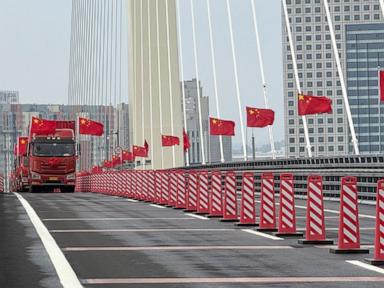
Ceremonies and state headlines love a clean narrative. When the New Yalu River Bridge opened in mid-October 2026, official outlets from both Beijing and Pyongyang framed the moment as a milestone in bilateral ties. Chinese Premier Li Qiang and North Korean Premier Pak Thae Song sent congratulatory messages, and state broadcasts showed trucks lined up with flags flying.
A few days later, on October 24, 2026, North Korean leader Kim Jong Un crossed the new span for a day trip to Dandong. Visually, the optics looked historic.
Yet ground reporting and trade data tell a much quieter story. Observers on the Chinese side saw crowds of tourists snapping selfies near the bridge while customs gates and compounds looked surprisingly calm in the days right after opening. Satellite imagery analyzed by NK News showed vehicles gathering at customs facilities in waves rather than a steady flood, and Chinese customs figures showed bilateral trade dipped in October 2026 to $254 million from nearly $300 million in September.
That gap between ribbon-cutting fanfare and actual cargo volume is the whole story. A bigger road doesn't erase sanctions, customs bottlenecks, or Pyongyang's obsession with border control.
Why This Crossing Took More Than a Decade
Most people assume big infrastructure delays come down to engineering snags or budget fights. Here, politics did the heavy lifting.
Work on the bridge began in late 2010, with Beijing funding the construction to replace the aging Sino-Korean Friendship Bridge—a single-lane combined road-and-rail crossing dating back to 1943 that struggles with heavy cargo and weight limits around 20 metric tons. By 2014, the Chinese side of the new span was physically done.
Then everything stalled. Relations between Beijing and Pyongyang soured amid nuclear tensions, tightening UN sanctions, and North Korea's reluctance to build out the matching approach roads and customs infrastructure on its bank. Later, pandemic lockdowns froze border movement even tighter.
When you study border infrastructure in Northeast Asia, you learn a simple rule: physical completion and operational readiness aren't the same thing. A bridge can stand ready for a decade while diplomacy works on its own clock.
The Old Bridge vs. The New Bridge
To understand why the New Yalu River Bridge matters—even if trade hasn't exploded overnight—you have to look at what came before it.
- Age and design: The Sino-Korean Friendship Bridge dates to 1943 and shares space between rail and road traffic. The new bridge is a modern, four-lane crossing built specifically for heavier, higher-volume road transport.
- Weight and flow: The old bridge's tight lanes and weight caps—commonly noted at 20 metric tons—created predictable choke points. The new span removes the physical bottleneck on the river itself.
- Customs and inspection: Having four lanes doesn't speed up trade if every truck faces strict screening. Reporting from Daily NK and satellite tracking highlight tighter inspections and controlled vehicle surges rather than wide-open commerce.
Honestly, capacity without frictionless customs is just a wider parking lot at the border. If authorities inspect every load closely or meter traffic around political visits, wait times still happen.
What Analysts and Traders Misread About Border Openings
Whenever a long-stalled crossing opens between China and North Korea, two opposite myths pop up right away.
The first myth is that trade will skyrocket immediately. It rarely works that way. Even when October 2026 trade slipped to $254 million, it still ranked among the stronger months of the year—showing that monthly swings depend heavily on state procurement, commodity schedules, and sanctions enforcement, not just bridge geometry.
The second myth is that informal cross-border hustle will just pick up where it left off. In practice, stricter controls on both sides have squeezed side opportunities for drivers carrying extra goods. Pyongyang wants state-channeled trade and tight security over porous border life.
There's also a data blind spot we should be straight about. Official customs figures from China's General Administration of Customs give clear monthly totals, while satellite images show vehicle clusters at customs yards, yet neither tells you everything happening inside North Korean warehouses or behind closed-door bilateral agreements. Treat single-month trade drops or single-day photo snapshots with caution.
Practical Ways to Track What Happens Next
If you follow Northeast Asian trade, sanctions, or border security—or you're trying to separate hype from real shifts on the ground—don't rely on opening-day speeches.
- Watch multi-month customs trends, not one headline: Compare monthly totals from China's General Administration of Customs across several months rather than reacting to a single dip or spike.
- Pair satellite imagery with ground reporting: Look for sustained truck movement at both the Dandong and Sinuiju customs complexes alongside reporting from outlets like NK News and AP Archive / Xinhua coverage.
- Check whether the old bridge goes quiet: A true operational shift shows up when heavy road traffic steadily moves from the 1943 Friendship Bridge to the new crossing without long customs stalls.
The bridge is open. Now comes the real test of whether Dandong and Sinuiju move more goods smoothly—or simply move the same cautious trade across a newer span.