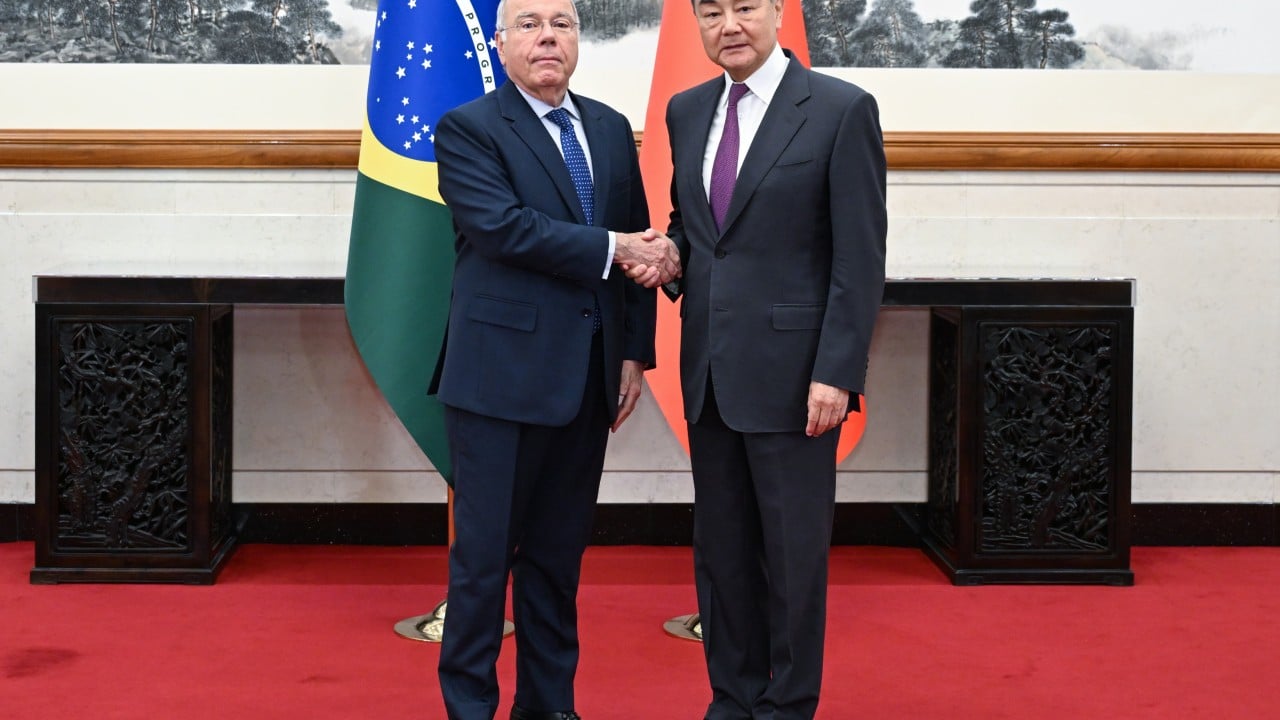
Beijing just sent a loud, unmistakable signal to the West. During a high-profile meeting in the Chinese capital, Chinese Foreign Minister Wang Yi looked his Brazilian counterpart, Mauro Vieira, in the eye and laid out a heavy proposition. He urged Brazil to jointly repel external challenges as ties deepen between the two economic heavyweights.
This isn't just standard diplomatic fluff. It's a calculated geopolitical play. When Beijing talks about "external challenges," everyone knows exactly what, and who, they mean. They're talking about Washington. They're talking about Western trade barriers, unilateral sanctions, and the shifting tech war.
If you think this is just another routine handshake photo-op, you're missing the bigger picture. This meeting marks the fifth China-Brazil Foreign Ministerial-Level Comprehensive Strategic Dialogue. It comes at a moment when the global order is splintering into distinct blocs, and the Global South is actively rewriting the rules of the game.
The Real Numbers Behind the Rhetoric
Let's skip the vague political speeches and look at what actually drives this relationship. Money. Specifically, a staggering amount of trade that keeps both economies afloat.
Many people don't realize how lopsided Brazil's trade dependencies have become. China has been Brazil’s largest trading partner since 2009. Last year, bilateral trade between the two nations hit a record $170.9 billion.
Here's the kicker that makes Washington nervous. Brazil managed a massive $29 billion trade surplus in that exchange. They aren't just buying cheap manufactured goods; they're feeding China's massive industrial machine and its population. Brazil’s agricultural sector practically runs on Chinese demand for soy, beef, and iron ore.
Look at how traditional Western trade has cratered by comparison. Back in 2000, the United States swallowed 25% of Brazil’s exports. By last year, that number hovered at a measly 12%. Europe has seen a similar downward slide. Beijing filled that vacuum, and they have no intention of giving up ground.
Reading Between the Lines of the Beijing Talks
When Wang Yi calls on Brazil to "jointly fend off external challenges," he's asking for a united front against Western economic dominance. China wants to insulate its supply chains. It needs secure access to food and minerals, free from the threat of US naval blockades or financial sanctions.
Brazil, led by President Luiz Inácio Lula da Silva, plays a delicate game here. Lula isn't a Chinese puppet. He's a pragmatic nationalist who wants a multipolar world. He likes having options. By aligning closer with Beijing, Brasilia gains massive leverage when negotiating with Western powers.
During their June meeting, Vieira explicitly stated that Brazil will always adhere to the "One-China principle." That's music to Beijing's ears, especially with Taiwan remaining a massive global flashpoint. But what does Brazil get in return? Beijing is backing Brazil’s push for major reforms in global governance, specifically demanding that the United Nations Security Council and the IMF give developing nations a bigger seat at the table.
It Goes Way Beyond Soybeans
The common misconception is that China and Brazil just trade commodities for electronics. That view is dangerously outdated. The modern partnership spans areas that directly challenge Western technological supremacy.
- The Space Race: You probably didn't know that Brazil and China have been jointly building satellites since 1988 through the CBERS program. They recently finalized a deal for the CBERS-5 satellite, giving Brazil massive autonomy in climate and meteorological data collection without relying on Western tech.
- De-Dollarization: Both nations are actively chipping away at the US dollar's dominance. They've already established frameworks for local-currency trade settlements, bypassing the SWIFT system entirely for certain transactions.
- The Culture Push: They've designated this year as the China-Brazil Cultural Year. It's an aggressive soft-power push to build public support and move the relationship past a cold, transactional business arrangement.
The Tightrope Brazil Has to Walk
Don't assume this relationship is completely flawless. Brazil faces real, structural dangers by leaning too hard into Beijing's embrace.
Domestic industrial leaders in São Paulo are quietly terrified. While Brazilian farmers thrive on Chinese cash, Brazilian factories are getting crushed by a wave of cheap Chinese industrial imports. The country risks "de-industrializing"—turning into a glorified farm and mine for Chinese factories.
There's also the unavoidable shadow of the United States. Brazil cannot afford to fully alienate Washington. The US remains a massive source of foreign direct investment in complex industries like technology and manufacturing. If the US-China cold war escalates further, Brazil's attempt to stay neutral while raking in Chinese cash will become impossible. Washington will eventually force them to pick a side, especially regarding 5G infrastructure, artificial intelligence, and semiconductor supply chains.
What Happens Next
This meeting in Beijing isn't an isolated event. It sets the stage for a massive diplomatic calendar, including upcoming BRICS summits and G20 meetings where both nations plan to coordinate their policies tightly.
If you're keeping tabs on global business or geopolitics, watch the local-currency trade volumes over the coming months. Track whether Brazil formally signs onto China's Belt and Road Initiative, a move they've resisted so far but face heavy pressure to accept. The diplomatic dance in Beijing proved one thing clearly. The old days of unipolar Western dominance are dead, and the axis running between Beijing and Brasilia is going to dictate where the global economy goes next.