The aftermath of an acute mass-casualty incident or active violence event within an educational institution produces a predictable systemic collapse in cognitive architecture across the affected population. When a high school in Colorado encounters an active shooter event, the resulting psychological injury extends far beyond physical casualties, triggering chronic hyperarousal states in surviving students, faculty, and administrative personnel. Conventional post-crisis responses typically rely on talk therapy and critical incident stress debriefing models. These modalities often fail during the acute phase due to physiological override: an activated amygdala and a flooded sympathetic nervous system prevent linguistic processing and cognitive reframing. Interventions must therefore bypass the cortical bottleneck and target autonomic nervous system regulation directly. The deployment of certified therapy dogs into post-shooting environments represents a physiological intervention that leverages non-verbal mammalian biocommunication to down-regulate the neuroendocrine stress response.
To understand the efficacy of canine deployment, one must examine the neurobiological cost function of acute trauma exposure. When students experience an active threat within a primary environment, the locus coeruleus-norepinephrine system initiates a cascade designed for immediate survival. Cortisol and adrenaline surge, heart rate variability plummets, and the prefrontal cortex—responsible for executive function, academic retention, and emotional regulation—goes offline. In the days and weeks following the event, returning to the physical facility (the school building) acts as a persistent trauma trigger. The environment itself becomes a conditioned stimulus for fear.
Standard psychological first aid attempts to re-engage the prefrontal cortex through dialogue. However, when a traumatized adolescent is in a state of hypervigilance or tonic immobility, linguistic interrogation can exacerbate stress by demanding cognitive load the brain cannot support. Canine intervention alters this dynamic through tactile biofeedback. The presence of a trained, docile animal stimulates the release of oxytocin, an endogenous neuropeptide that inhibits amygdala activity and dampens the hypothalamic-pituitary-adrenal axis. This neurochemical shift reduces circulating cortisol levels, lowers blood pressure, and restores baseline autonomic equilibrium without requiring verbal articulation from the student.
The operational architecture of deploying therapy dogs requires a strict taxonomy of roles and protocols. Random or unstructured animal visitation can introduce secondary stressors, such as unpredictable animal behavior, allergic reactions, or sensory overload in a population already exhibiting hyper-reactivity. Successful post-crisis deployment relies on three operational pillars: Handler-Animal Dyad Calibration, Environmental Containment, and Longitudinal Integration.
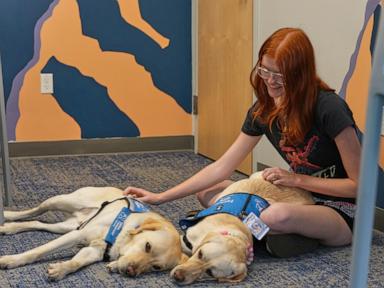
The Handler-Animal Dyad represents the primary vector of safety. Therapy dogs deployed in mass-trauma contexts are not casual pets; they are working animals conditioned to maintain emotional neutrality amidst high-stress environments. The handler serves as the cognitive anchor for both the animal and the student. Handlers monitor subtle canine stress signals while simultaneously reading the non-verbal cues of approached students—posture, gaze avoidance, hyperventilation, or micro-tremors. The interaction is structured to give the student absolute agency. Trauma strips individuals of control; the ability to approach, touch, or ignore the animal re-establishes a micro-domain of autonomy.
Environmental containment addresses the spatial logistics of the intervention. Post-shooting environments are chaotic, saturated with media, law enforcement, and grief responses. Introducing dogs into crowded hallways creates bottlenecks and sensory fatigue. Effective deployment isolates specific zones within the school—designated decompression hubs—where ambient noise is minimized, lighting is controlled, and access is regulated. These hubs function as stabilization airlocks, allowing students to transition from hyperarousal states back toward the window of tolerance before attempting re-entry into classrooms.
Longitudinal integration addresses the decay curve of trauma support. Institutional responses to school shootings follow a predictable decay curve: intense media and therapeutic presence in week one, followed by rapid withdrawal as public attention shifts. The nervous system, however, processes trauma over months and years. Therapy dog programs that persist beyond the acute news cycle provide a stable touchpoint during the delayed onset of post-traumatic stress symptoms, which often manifest thirty to ninety days post-incident.
Evaluating the systemic impact of canine deployment involves measuring both physiological markers and behavioral metrics. While self-reported surveys ("Do you feel calmer?") are culturally standard, they are susceptible to social desirability bias and placebo effects. Rigorous assessment requires tracking objective proxies: attendance rates following the crisis, disciplinary referrals (which spike as trauma manifests as externalizing behavioral outbursts), nurse's office visits for somatic complaints like stress-induced migraines or gastrointestinal distress, and performance stability on standardized academic assessments.
Data from institutional deployments across various crisis sites indicate that students interacting with therapy dogs exhibit accelerated heart rate recovery times following trauma recall exercises compared to control groups receiving standard counseling alone. This physiological data confirms that the intervention operates via mechanoreceptor stimulation and oxytocinergic pathways rather than mere distraction. The tactile engagement—stroking fur, feeling a steady heartbeat, regulating one's breathing to match a resting animal—provides an anchor for somatic grounding.
Yet, institutional adoption of canine intervention programs encounters significant structural friction. Funding models for public education rarely allocate line items for specialized animal-assisted therapy protocols, forcing reliance on volunteer organizations, philanthropic grants, or ad-hoc community donations. This creates variance in the quality and consistency of the intervention. Furthermore, liability frameworks, risk management assessments regarding animal temperament, and health department regulations concerning hygiene in educational facilities impose administrative hurdles that can delay deployment during the critical window immediately following an event.
Scaling these programs requires transitioning from a reactive, crisis-response model to a standardized preparedness framework. Schools must pre-qualify and vet animal-assisted intervention teams as part of their comprehensive emergency operations plans, much like establishing protocols for structural engineers or crisis counselors before an incident occurs. Integrating animal handlers into district-wide safety drills ensures that logistical pathways—such as designated quiet zones, transport protocols, and communication channels—are tested and operationalized prior to activation.
The strategic imperative moving forward is the institutionalization of somatic stabilization protocols within educational crisis management. Relying exclusively on talk-based frameworks in the immediate aftermath of systemic trauma ignores the physiological reality of the traumatized brain. By systematically incorporating regulated canine intervention into the acute response phase, institutions can bridge the gap between physiological survival and cognitive recovery, mitigating the long-term developmental disruption of acute trauma exposure.
Establish pre-incident memoranda of understanding with accredited animal-assisted therapy organizations, mapping specific deployment zones and communication protocols into the district crisis response manual before the next operational cycle begins.