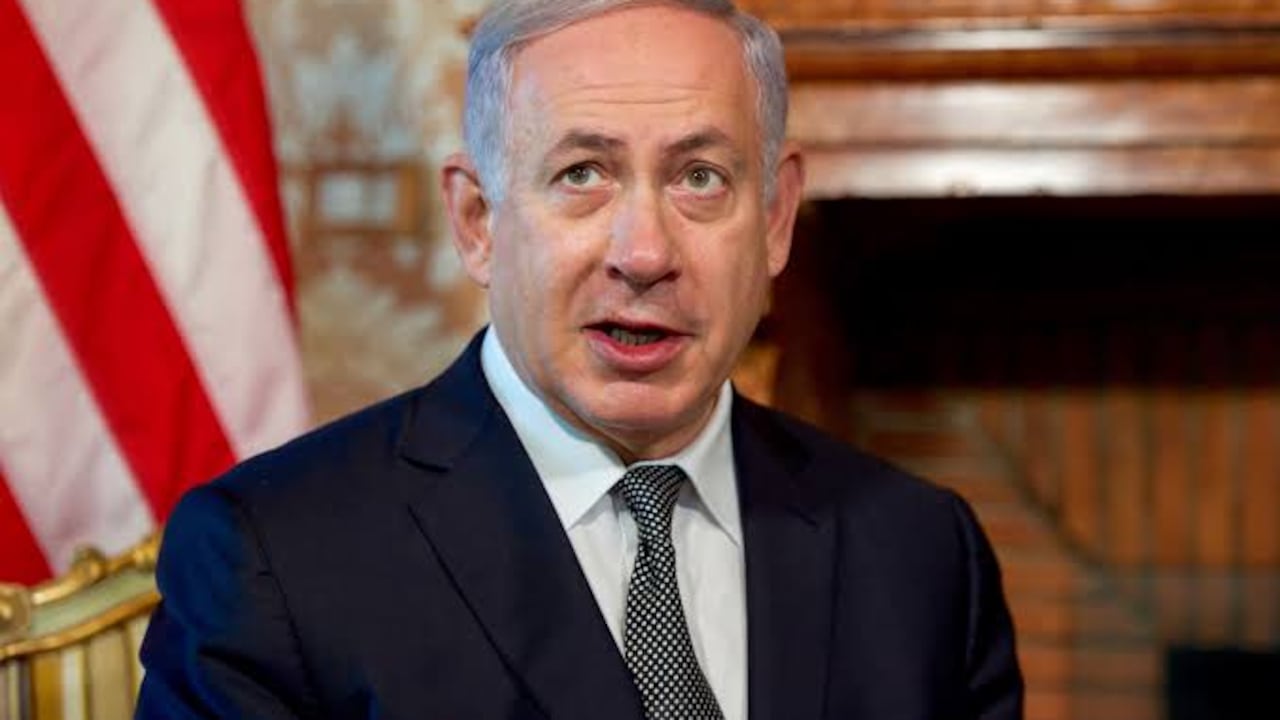
Prime Minister Benjamin Netanyahu recently made Israel's red lines in Syria impossible to misinterpret. Following an airstrike by the Israel Defense Forces on a military airfield in northwestern Syria, Netanyahu delivered a direct message to Ankara: do not build up forces near the border.
When asked about the strike on a podcast, Netanyahu didn't mince words. He stated in English, "Don't". He added that because initial warnings were ignored, Israel had to ensure the message was understood much more clearly.
The Spark Behind The Strike
The kinetic escalation happened after the IDF targeted the Abu al-Duhur air base in Idlib province, roughly 185 miles from the Israeli border. According to the Israeli Prime Minister's Office, the operation was a direct response to a looming security breach.
Israel and Syria had tacitly maintained a fragile security status quo following the fall of the Assad regime. Jerusalem claimed that Damascus was on the verge of shattering that balance by permitting Turkish troops to deploy at the strategic air base.
Intelligence pointed to a growing Turkish footprint that Israel views as an unacceptable strategic threat on its northern flank. Before the bombs dropped, backchannels were already active. Reports indicate that Mossad chief Roman Gofman held a phone call with Syrian Foreign Minister Asaad al-Shaibani to address the creeping Turkish presence. When diplomatic signals failed to halt the deployment, the military stepped in.
Ankara Fires Back
Ankara immediately rejected the rationale behind the raid. Turkish officials dismissed Jerusalem's claims as frivolous allegations designed to legitimize unlawful strikes against Syrian sovereignty. An unnamed Turkish source flatly denied that any military presence was being established at the Idlib airfield, accusing Israel of manufacturing pretexts to destabilize the region.
Meanwhile, Western diplomats found themselves scrambling. United States envoy Tom Barrack labeled the strike an unnecessary escalation. Washington has actively backed Syria's new transitional leadership and now faces the difficult task of establishing a working deconfliction mechanism between Israel, Turkey, and Damascus to prevent a wider collision.
Domestic Turbulence And Regional Realities
Back in Israel, the move drew sharp domestic criticism. Opposition figures like former prime minister Ehud Barak labeled the escalation reckless, arguing that Turkey is a major regional power whose footprint cannot be handled through blunt force alone. Critics argue that such high-stakes friction risks alienating international partners and deepening regional isolation.
Yet Netanyahu remains unapologetic. His calculus rests on a hardline security doctrine: any foreign military entrenchment moving south toward Israel's sphere of interest will be met with immediate kinetic pushback. As the shifting post-Assad landscape takes shape, Jerusalem is signalling that it will draw its own security boundaries, regardless of who objects.