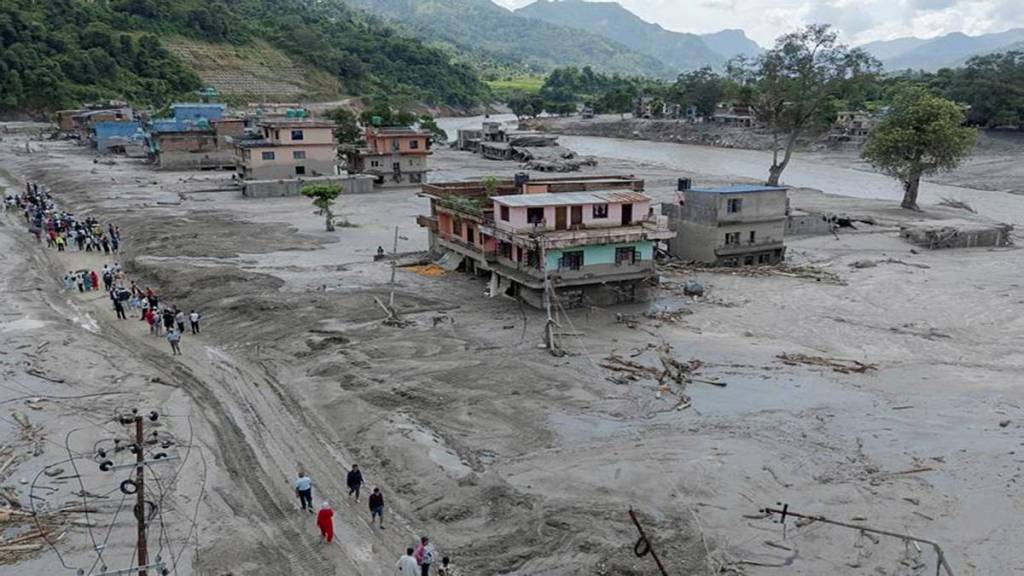
High above the Trishuli and Bhotekoshi river basins, the vertical world of the Himalayas is coming unglued. When a massive section of ice and underlying bedrock broke away from the Langtang Lirung peak, it did not merely trigger a localized avalanche; it unleashed a hydraulic hammer that caught thousands of villagers, tourists, and infrastructure projects entirely off guard. Drone footage and satellite imagery have since mapped the raw mechanics of the disaster, confirming a high-altitude slope failure that sent a multi-story wall of mud, rock, and melted ice roaring down narrow mountain valleys. Hundreds of lives were lost, and over a thousand individuals remain unaccounted for across the Nepal-Tibet border.
Media coverage has focused heavily on the shocking visual evidence—isolated houses surrounded by swirling brown oceans and drone captures of towering dust plumes. Yet, looking past the viral clips reveals a much more systemic vulnerability. The disaster exposes the lethal intersection of accelerating climate shifts, fragile mountain geology, and inadequate early-warning architecture in remote trans-boundary watersheds.
The Mechanics of a High-Altitude Failure
Geomorphologists studying post-disaster satellite data have clarified that this was not a simple surface ice slide. The event involved a catastrophic structural failure of the mountain's bedrock itself, situated more than 7,200 meters above sea level. When a massive section of rock foundation gave way, it dragged an enormous mass of glacial ice down with it into the narrow gorge below.
As this hybrid avalanche of stone and ice slammed into the valley floor, its kinetic energy converted rapidly into a fluid, hyper-concentrated debris flow. Water levels in the Trishuli River spiked by nearly nine meters within thirty minutes. This sudden surge bypassed standard hydrological monitoring thresholds.
The falling debris temporarily choked the Lhende River, creating an unstable natural landslide dam. When that temporary barrier inevitably breached under hydrostatic pressure, it delivered a secondary pulse of water and sediment that widened riverbanks by dozens of meters and obliterated bridges, roads, and hydropower installations.
Trans-Boundary Blind Spots
Disasters operating across international borders expose chronic institutional friction. The geography of the Himalayas respects no political demarcations, yet disaster response mechanisms often stall at customs checkpoints and bureaucratic silos.
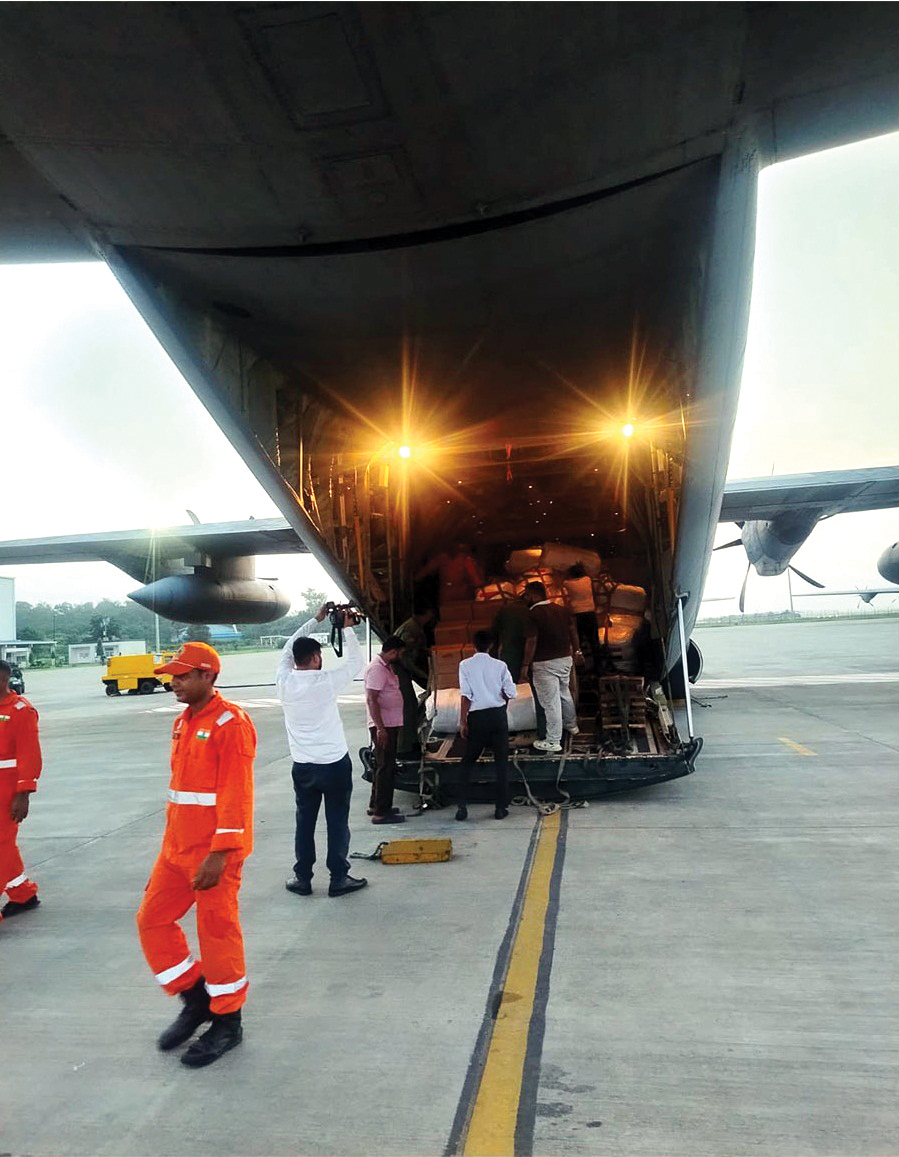
When the debris-choked floodwaters surged from Tibetan territory down into Nepalese districts, emergency communications faced severe latency. Communities downstream had minutes—sometimes seconds—to react. While Chinese and Nepalese authorities mobilized search-and-rescue teams numbering in the thousands, the rugged terrain rendered traditional deployment obsolete. Helicopters became the only lifeline for isolated hamlets in districts like Rasuwa and Nuwakot.
Hydropower facilities embedded directly within these narrow gorges sustained heavy damage. These industrial assets, vital for regional energy grids, are frequently constructed in high-risk zones where geological assessments often underestimate the compounding velocity of glacial lake outbursts and rock-ice avalanches.
The Long Shadow of Warming Peaks
The physical reality of the Hindu Kush Himalaya region is shifting beneath our feet. Decades of rising atmospheric temperatures have thinned mountain permafrost, the frozen glue that stabilizes steep rock walls. When this internal cement thaws, slopes that have stood stable for millennia suddenly lose their structural integrity.
Scientists have warned for years that rapid deglaciation creates hidden pockets of instability. Yet, policy frameworks continue to treat these high-altitude zones as static geography rather than dynamic, high-risk hazard arenas. Regional infrastructure planning rarely accounts for bedrock failure scales of this magnitude.
Downstream communities are left paying the price for an ecological transformation they did nothing to author. As rescue operations transition into the grim task of recovery across avalanche-scoured valleys, the structural safety of dozens of other Himalayan settlements remains an open question mark, waiting for the next slope to yield.