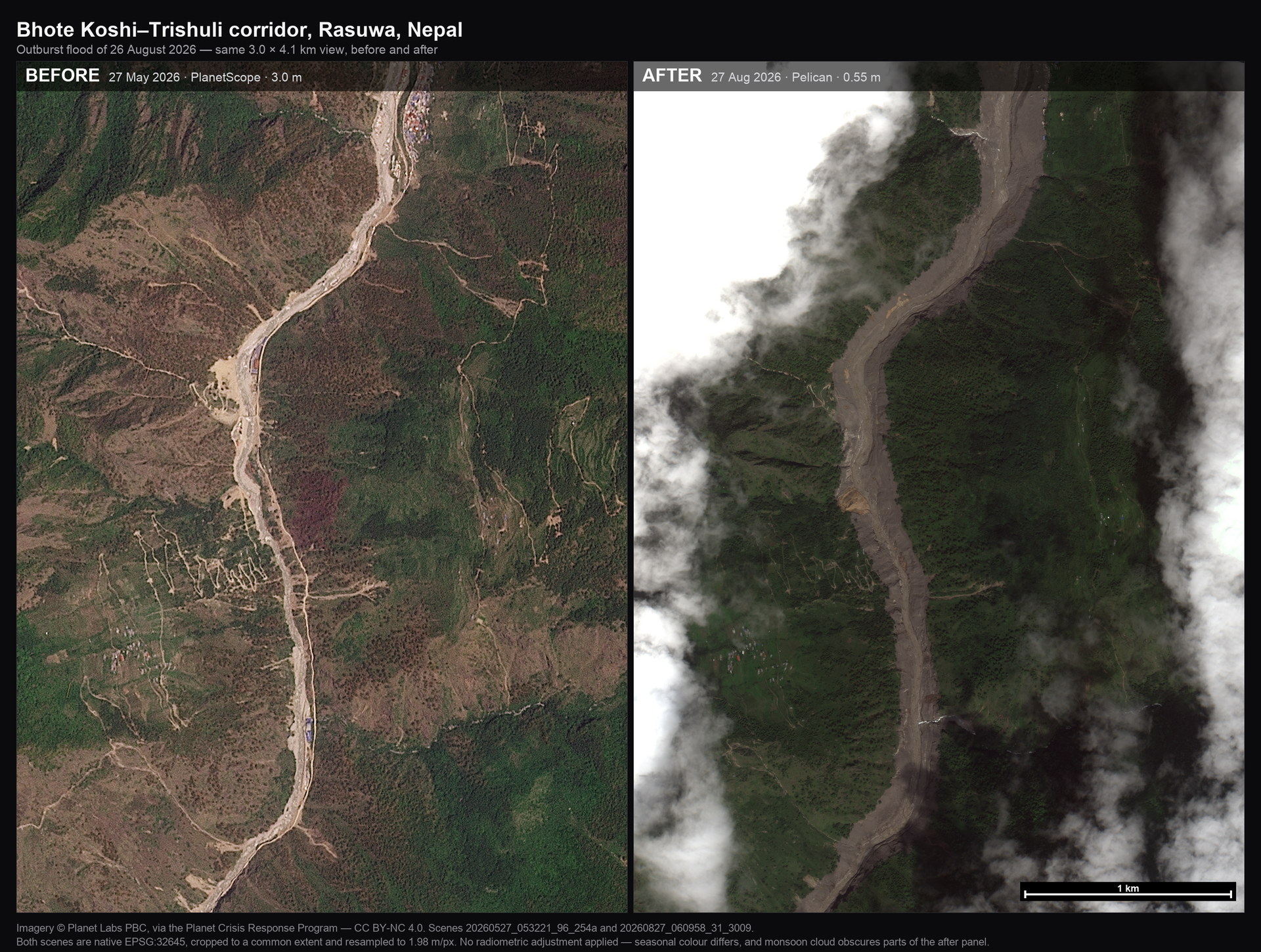
The numbers coming out of Kathmandu are staggering. Property, housing, and infrastructure worth at least 387.5 billion Nepalese rupees, which translates to about $2.56 billion, vanished in a matter of hours.
When a glacier collapsed near the border with China on August 26, it triggered a massive surge of ice, rock, and mud down the Trishuli River. Entire villages were flattened. Weeks later, the true economic and human toll is coming into sharp focus, exposing just how fragile mountain infrastructure can be when faced with sudden climate catastrophes.
The Immediate Financial Breakdown
Dharma Raj Upreti, who heads the National Disaster Risk Reduction and Management Authority, laid out the grim assessment. The immediate four-month recovery phase alone will require roughly $52.6 million just to clear roads, set up temporary shelters, restore basic power, and truck in safe drinking water.
Insurance claims are piling up just as fast. Commercial insurance losses are expected to blast past $132 million. Hydropower projects bore the brunt of the damage, wiping out roughly ten percent of Nepal's total power generation capacity. Access roads to plants like Chilime are choked with ceiling-high debris, and heavy equipment sits buried under millions of tons of mud.
Rebuilding Homes and Lives
Beyond the commercial grid, ordinary people are paying the highest price. More than 1,250 people died in the disaster, and thousands more remain unaccounted for.
The housing crisis is daunting. Authorities state that roughly 20,000 houses need total rebuilding across the flood-ravaged valleys, with at least 7,500 homes completely wiped off the map. Providing temporary roofs before winter sets in remains an uphill battle for local relief teams.
Rescue workers are still combing through ruined tunnel networks at multiple hydroelectric sites where hundreds of workers were trapped. Heavy machinery struggles to clear routes blocked by 2.2 million tonnes of silt and debris.
Government agencies are coordinating with international specialists to map out permanent reconstruction policies. Funding these repairs will require massive global assistance as Nepal attempts to stabilize its economy and secure its vulnerable mountain corridors against future glacier collapses.