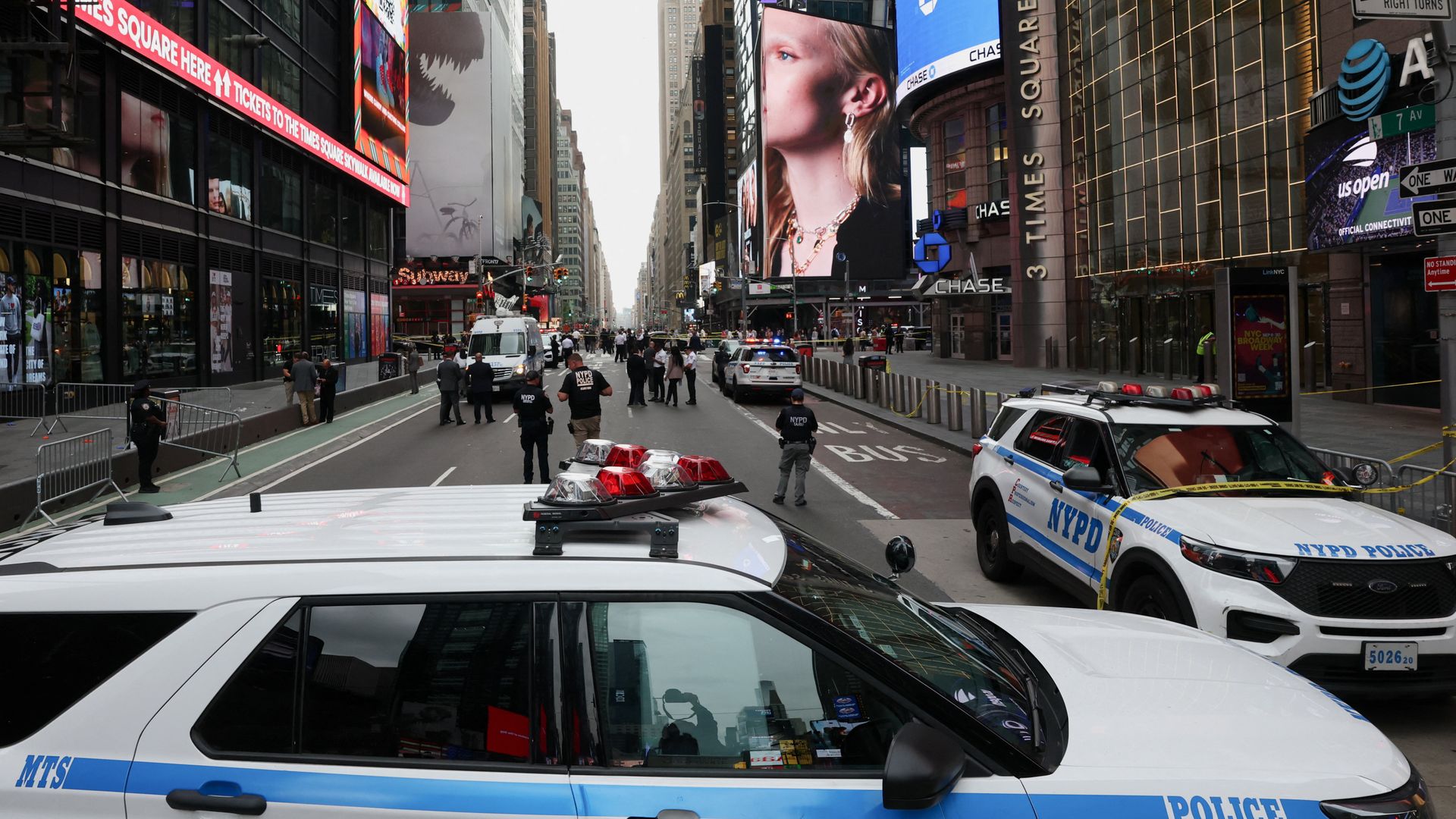
The sidewalk does not remember the blood. It never does.
Midday in Times Square is an exercise in organized chaos, a sensory onslaught of giant LED billboards screaming advertisements into the smog, yellow cabs jockeying for inches of asphalt, and a river of human foot traffic moving with the singular, determined pulse of a metropolis that refuses to slow down. Tourists pull luggage behind them like stubborn pets. Office workers check their watches, calculating the exact seconds they can spare for a lukewarm coffee. Street performers adjust their costumes in the shadows of scaffolding.
It is a place where you are simultaneously invisible and surrounded. Millions of eyes pass you by, yet nobody truly sees you.
On a Tuesday afternoon in July, that terrifying anonymity became a lethal vulnerability.
His name was Tanvir Ahmed. To the sprawling machinery of corporate finance, he was a vice president at Bank of America, a man who spent his days navigating spreadsheets, risk assessments, and the high-stakes balancing acts of modern banking. To his family, he was a provider, a fixture of stability, a person whose absence leaves an impossible crater in the dining room. But at 11:30 AM on a bustling Manhattan thoroughfare, none of those titles mattered.
A knife does not care about your LinkedIn profile.
The sequence of events unfolded with the terrifying speed of a nightmare intruding upon a mundane Tuesday. A dispute. A flash of steel. A sudden, violent disruption of the urban rhythm. While investigators later combed through surveillance footage—piecing together the pixelated movements of a suspect and a victim from cameras mounted on every corner—the immediate reality was much simpler and much more brutal. A human being was hunted and struck down in broad daylight, surrounded by hundreds of strangers who were looking everywhere except at each other.
We treat cities like protective cocoons. We assume that safety is a municipal utility, something piped into the streets along with water and electricity. We believe that if there are enough lights, enough sirens, enough bodies moving in unison, danger becomes a statistical impossibility. We walk with our headphones on, eyes glued to glowing screens, lulled into a deep sleep by the white noise of urban life.
Then the bubble pops.
Consider what happens next in the collective consciousness of the city. For twenty-four hours, the headlines flash red. Pundits debate transit security, police presence, and the mental health crises spilling onto public streets. Social media becomes a graveyard of hot takes and quick judgments. People who have never set foot in Manhattan declare it a war zone, while locals stubbornly insist that this is just the price of admission for living in the greatest city on earth.
Then the news cycle shifts. A new scandal breaks. A celebrity says something foolish. The billboards change their advertisements. And the sidewalk is power-washed.
The water runs clear down the storm drains. The commuters return to their routes, stepping right over the spot where a life ended, perhaps shortening their stride just slightly before resuming the frantic march toward their desks.
This is the hidden cost of urban indifference. We build our lives around the assumption of order, yet we are separated from chaos by a paper-thin wall. The tragedy of Tanvir Ahmed is not just that a man went to work and did not come home. It is the jarring reminder of how fragile our public spaces truly are, and how easily we normalize the horrors that happen in our peripheral vision.
There is a strange loneliness in walking through a crowd of ten thousand people. You are sharing air, space, and a momentary glance with strangers who will vanish from your mind a second later. Most of the time, that anonymity is liberating. It allows us to reinvent ourselves, to move anonymously, to exist without being scrutinized.
But it has a dark side. When things go wrong, that same anonymity means silence. It means hesitation. It means the terrifying realization that in a crowd of thousands, you might still be entirely alone.
We look away because looking hurts. We scroll past the articles because confronting random, senseless violence requires us to admit that we are not in control. We want to believe that bad things happen to people who make bad choices, in places that are far away, at hours when honest people are asleep. We cannot accept that a vice president at a major bank can be stabbed to death while buying lunch or walking to a meeting under the bright glare of midday neon.
The investigation closed. The suspect was apprehended. The legal machinery ground forward, generating case numbers, court dates, and legal briefs. Justice, in its slow and bureaucratic way, began to turn.
Yet none of that brings back the person who walked out of his apartment that morning and left his shoes by the door, completely unaware that he was stepping into his final hour.
When the sun sets over Midtown, the billboards change from daytime advertisements to glowing, hypnotic blocks of magenta and cyan. The light reflects off the wet pavement, turning the asphalt into a mirror of neon fire. People pour out of office buildings and theaters, laughing, shouting over the traffic, spilling into bars and subway stations. The city resets itself, erasing the memory of the afternoon as efficiently as a wave wiping away footprints in the sand.
Somewhere in that crowd, someone is checking their phone, rushing to catch a train, entirely convinced that tomorrow will look just like yesterday. And the street says nothing.