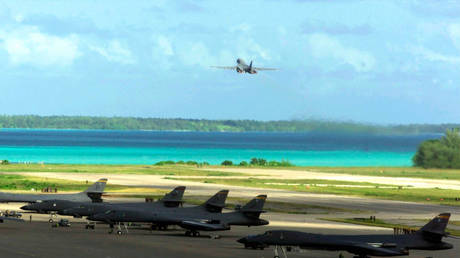
The Pentagon currently maintains enough hardware and personnel in the Middle East to execute a full-scale maritime blockade of Iran, according to senior defense officials. While the physical assets—destroyers, carrier strike groups, and littoral combat ships—are positioned across the Persian Gulf and the Gulf of Oman, the strategic machinery remains stalled. The missing component is not firepower. It is a finalized set of rules of engagement that would define exactly when a sailor pulls a trigger or boards a vessel.
For months, the talk in Washington and at Central Command (CENTCOM) has centered on "maritime security operations." This is often a polite euphemism for stopping the flow of weapons and oil that fuels regional instability. But a blockade is a different beast entirely. It is an act of kinetic pressure that sits just one degree below open warfare. Current assessments suggest that while the fleet is ready to pivot from patrol to blockade within forty-eight hours, the political appetite for the fallout remains thin.
The Logistics of a Modern Cordon
Maintaining a blockade in the Strait of Hormuz is a nightmare of geography and physics. The strait is a narrow neck of water where the shipping lanes are only a few miles wide. It is the world’s most significant oil chokepoint. To effectively "close" it to specific traffic while allowing global commerce to continue requires more than just parking a ship in the middle of the lane.
It requires a layered defense. You start with Aegis-equipped destroyers positioned to intercept ballistic missiles and drones launched from the Iranian coastline. Closer in, you need smaller, more agile vessels to handle the swarms of fast-attack craft used by the Islamic Revolutionary Guard Corps (IRGC) Navy. Behind the scenes, the real work happens via MQ-4C Triton drones and satellite imagery that tracks every hull in the water.
The sheer volume of traffic makes manual inspection impossible. A functional blockade in 2026 relies on automated identification systems (AIS) and signals intelligence. If a tanker "goes dark" by turning off its transponder, it becomes an immediate target for interception. U.S. officials have indicated that the current force posture includes specialized boarding teams—Marines and Coast Guard Tactical Law Enforcement squads—trained specifically for high-stakes boardings on moving tankers.
Rules of Engagement and the Shadow of Escalation
The hesitation to pull the trigger on a formal blockade comes down to the "Rules of Engagement" (ROE). These are the specific directives that tell a commander what constitutes a hostile act. In a standard patrol, a commander might only fire if fired upon. Under a blockade, the rules change. A ship failing to heave to after a warning shot could be disabled or sunk.
The Biden administration, and any subsequent leadership, faces a terrifying calculus. If a U.S. vessel sinks an Iranian-linked tanker, the retaliation won't just be at sea. It will be in the form of proxy strikes in Iraq, Syria, and Lebanon. This is why the "Sufficient Forces" headline is a double-edged sword. Having the power to do something is not the same as having the permission to use it.
Military analysts point out that the current ROE drafts are likely focused on non-lethal compliance. This includes electronic jamming to disable a ship's navigation or using "slippery foam" and high-pressure water cannons to prevent IRGC boarders from seizing Western assets. But these are half-measures. In a true blockade scenario, the goal is total denial of movement. You cannot achieve that with foam.
The Economic Shrapnel of Maritime Tension
If the U.S. moves from "patrolling" to "blocking," the global economy feels the vibration instantly. Insurance premiums for tankers in the Persian Gulf are already at historic highs. A formal blockade would likely trigger "War Risk" clauses in maritime contracts, potentially tripling the cost of shipping crude from the region.
China is the silent observer here. As the primary buyer of Iranian "shadow fleet" oil, Beijing views any U.S.-led blockade as a direct attack on its energy security. The U.S. Navy isn't just staring down Iranian fast boats; it is staring down the economic interests of the world’s second-largest economy.
The Shadow Fleet Problem
Iran has spent years perfecting the art of the "shadow fleet." These are aging tankers, often under flags of convenience like Panama or Liberia, that engage in ship-to-ship transfers in the middle of the night.
- Dark Transfers: Moving oil between ships with transponders off.
- Fake Paperwork: Forging bills of lading to claim the oil is Iraqi or Malaysian.
- Spoofing: Using electronic devices to make a ship's GPS coordinates appear miles away from its actual location.
Stopping this requires a level of persistence that the U.S. Navy hasn't had to exercise since the Tanker Wars of the 1980s. It means constant helicopter sorties and the potential for "unintended contact" between American and Iranian sailors.
Hardware is Not Strategy
The Pentagon can move an extra carrier strike group into the North Arabian Sea, but that doesn't solve the underlying problem. A blockade is a static target. The more ships the U.S. puts in the region to enforce a blockade, the more targets it provides for Iran's coastal defense cruise missiles.
The IRGC has spent decades investing in asymmetric warfare. They don't need to win a ship-on-ship battle with a billion-dollar destroyer. They only need one lucky hit with a $20,000 "suicide" drone to create a political crisis in Washington. The "sufficient forces" mentioned by officials are primarily designed for high-end, conventional combat. They are significantly less efficient at stopping a swarm of low-tech threats without depleting their million-dollar interceptor missiles.
The Intelligence Gap
A blockade is only as good as the intelligence behind it. To stop the right ships, the U.S. needs deep visibility into the ownership structures of global shipping firms. Many of the companies moving Iranian oil are shell corporations based in jurisdictions that don't cooperate with Western investigators.
This isn't just a naval mission; it's a financial one. The Treasury Department has to work in lockstep with the Navy. If the Navy stops a ship, the Treasury needs to have the legal groundwork ready to seize the cargo and sanction the owners. Without this coordination, a blockade is just an expensive exercise in staring through binoculars.
Current naval doctrine is shifting toward Unmanned Surface Vessels (USVs). These small, autonomous boats can stay at sea for weeks, acting as remote sensors. They are the tripwire. By using USVs, the Navy can expand its "eyes" over the Gulf without risking human life in the initial stages of an encounter. This technology is being tested under Task Force 59, but it hasn't been integrated into a formal blockade structure yet.
The Reality of Local Alliances
None of this happens in a vacuum. Regional partners like Saudi Arabia and the UAE are caught in the middle. While they want Iranian influence curtailed, they are the ones who will suffer most if the Gulf becomes a no-go zone. A U.S. blockade that fails to provide 100% protection for neighboring ports is a failure in the eyes of Riyadh.
The logistical footprint required to protect Saudi oil terminals while simultaneously blocking Iranian exports is staggering. It requires a level of coordination with local navies that is currently "in progress" but nowhere near "complete." The rhetoric of being "ready" ignores the reality that a blockade would likely turn the entire region into a shooting gallery where the neutral parties have the most to lose.
The Navy knows how to block a port. It knows how to sink a ship. What it doesn't know—and what the "rules of engagement" are struggling to define—is how to do those things in 2026 without starting a chain reaction that ends in a global energy depression. The ships are there. The sailors are trained. The missiles are in the tubes. But the most powerful military on earth is currently waiting for a piece of paper that tells them how to win without actually fighting.
The true test of these "sufficient forces" won't be a dramatic battle on the high seas. It will be the tedious, dangerous, and politically thankless task of boarding rusted tankers in the dark, hoping the other side doesn't decide today is the day the cold war turns hot.