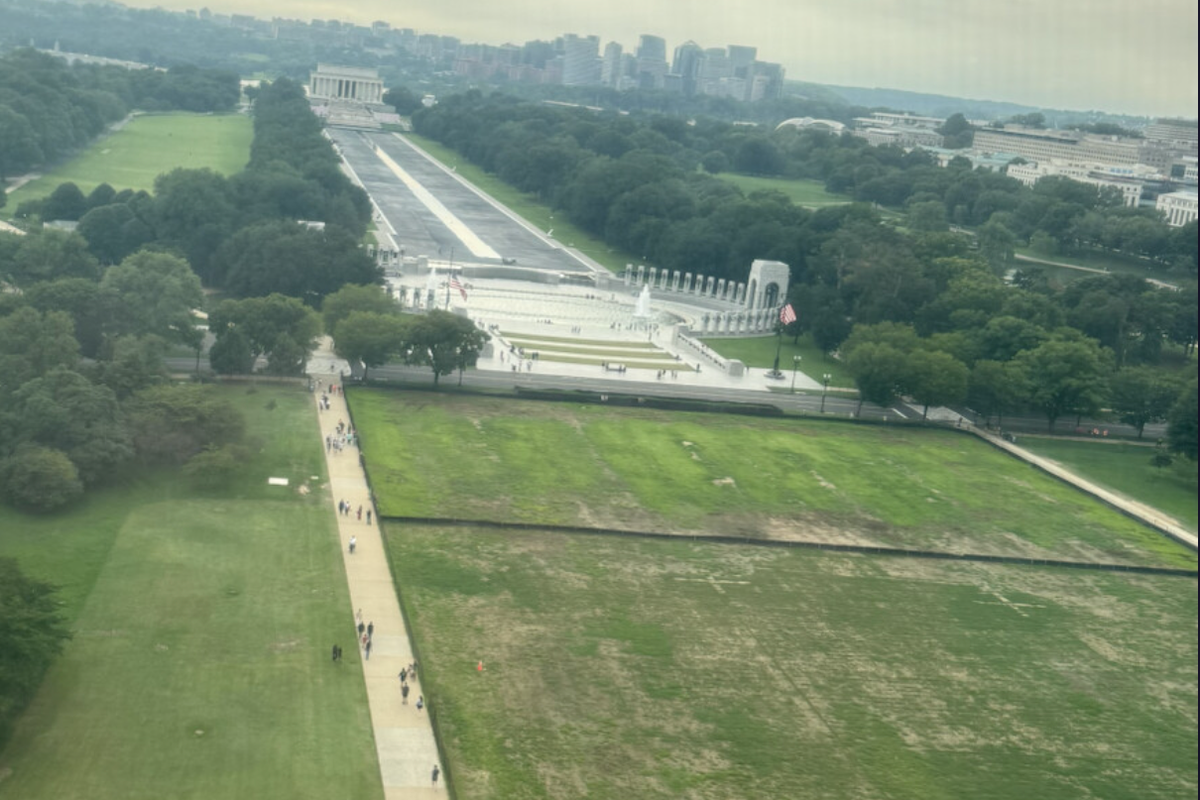
When large-scale public events intersect with high-traffic urban green spaces, structural turf failure is a predictable physical outcome. The recent degradation of lawns surrounding the World War II Memorial and the Lincoln Memorial Reflecting Pool following the Independence Day celebrations offers a clear case study in asset management friction, mechanical wear, and political attribution logic. Rather than evaluating the ecological carrying capacity of cool-season turf under heavy compaction loads, official discourse has increasingly attributed environmental degradation to malicious human intervention.
A rigorous analysis of this dynamic requires stripping away political rhetoric to examine three primary vectors of urban park degradation: mechanical compaction, installation sequencing errors, and accountability deflection frameworks.
The Mechanics Of Turf Compaction Under Heavy Load
Urban park management operates under strict biological constraints. The grassy expanses of the National Mall primarily consist of turfgrass varieties that experience severe cellular damage when subjected to sustained vertical pressure. When hundreds of thousands of individuals gather within a confined footprint, or when heavy temporary infrastructure—such as staging, scaffolding, and lighting towers—is deployed, the underlying soil structure undergoes severe compaction.
Compaction expels oxygen from the soil matrix, crushing macropores and preventing root systems from acquiring moisture and nutrients. Photographic evidence from streaming webcams and on-site documentation following the July 4 events illustrates that the exact perimeter of turf failure maps cleanly onto the footprint of the temporary bandstands and dense spectator zones. The physical cause-and-effect chain is straightforward:
- Heavy machinery and dense pedestrian foot traffic compress soil bulk density beyond critical thresholds.
- Root respiration ceases as oxygen diffusion drops to near zero.
- Foliage yellows and dies back as the root architecture fails to sustain transpiration under summer heat stress.
Attributing this widespread dieback to targeted vandalism ignores the baseline physics of turf management under high-density event loads. Without aeration, soil remediation, and immediate post-event turf replacement, structural collapse of the lawn is an engineering certainty rather than a criminal conspiracy.
Asset Rehabilitation And The Cost Function Of Quick Turnarounds
The tension over the National Mall lawns is mirrored by concurrent disputes regarding the structural integrity of the Lincoln Memorial Reflecting Pool. High-profile renovation projects driven by aggressive timelines often encounter execution failures. When compressed schedules collide with specialized construction tasks—such as applying advanced pool sealants or modern liners—the probability of material failure increases exponentially.
In the case of the reflecting pool, legal and investigative reviews by federal authorities determined that peeling coatings and algae proliferation stemmed from installation and construction anomalies rather than intentional destruction. However, institutional incentives frequently favor externalizing blame onto bad actors.
This creates a recurring pattern in public asset administration:
- Projects are executed under compressed timelines to meet hard political or commemorative deadlines.
- Material or environmental degradation manifests rapidly due to accelerated wear or installation shortcuts.
- Administrative bodies face reputational costs, prompting an immediate shift toward external threat narratives, such as vandalism or sabotage, to protect project credibility.
The Political Utility Of Attribution Shifting
From a strategic standpoint, framing operational and ecological failures as criminal acts serves a distinct communicative function. It reframes a technical management problem into an adversarial conflict. When turf dies from compaction or pool sealants fail due to chemical incompatibilities, the appropriate remedy requires administrative accountability, operational redesign, and increased maintenance expenditures.
Conversely, framing these outcomes as the result of targeted vandalism shifts the burden of proof onto law enforcement and security agencies. It converts a structural maintenance deficit into a narrative about public safety and civic decay. This explains the friction between political appointees and career civil servants, such as those within the National Park Service and the U.S. Attorney's office, who must reconcile observable physical reality with official declarations of malice.
To resolve recurring asset degradation on federal lands, future capital allocation must prioritize post-event turf recovery budgets and realistic infrastructural curing windows over rapid deployment timelines that bypass foundational ecological safeguards.