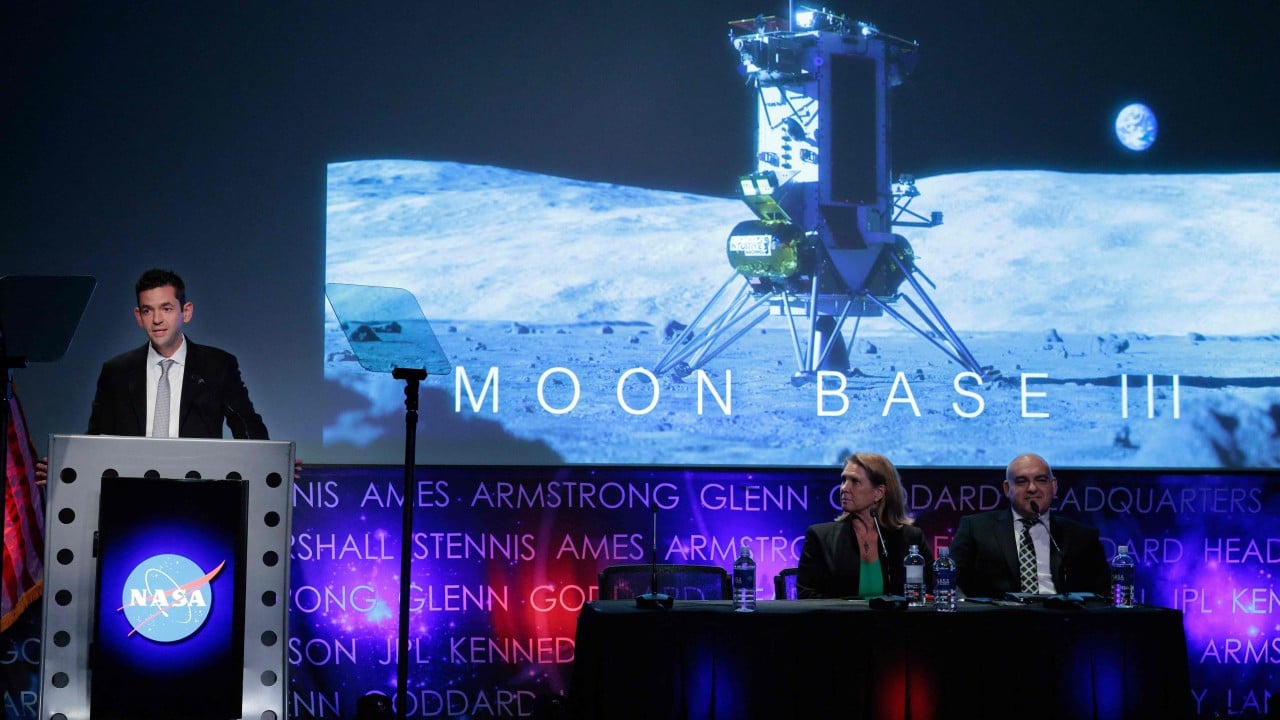
We have been lied to by decades of Hollywood cinema. When you picture a human settlement on the Moon, you probably imagine sprawling glass domes, sleek titanium skyscrapers, and astronauts strolling casually along pristine lunar walkways.
The reality is much dirtier. It is also far more fascinating.
NASA is actively laying out the blueprint for its permanent lunar presence under the Artemis program. If you look closely at the agency's actual manifests, the priorities are not architecturally stunning habitats. The immediate future of human life on the Moon relies on a gritty, utilitarian trio: rugged landers, autonomous buggies, and specialized drones.
Building a sustainable presence on another world requires a logistics-first mindset. Space agency planners care about survival, power generation, and moving heavy dirt. Here is what the upcoming lunar base camp actually looks like, stripped of the cinematic gloss.
The Massive Landers Taking Over the Lunar Sky
You cannot build a base if you cannot land the bricks. For decades, the Apollo-era model dictated small, single-use vehicles designed to touch down gently and leave nothing behind but a flag and some footprints. Artemis changes that entirely.
NASA shifted its strategy to rely heavily on commercial partnerships for human landing systems. SpaceX and Blue Origin are building massive vehicles that dwarf anything from the 20th century. Space Exploration Technologies Corp is adapting its Starship vehicle to serve as the initial human landing system, while Blue Origin is developing the Blue Moon lander.
These are not just transport vehicles. They are mobile apartment complexes and heavy-duty cargo ships.
The sheer scale of these landers introduces a massive engineering problem: lunar dust. When a vehicle weighing dozens of tons fires its engines to touch down on the Moon, it kicks up regolith at bullet-like speeds. This isn't normal dust. Lunar regolith is razor-sharp, abrasive, and carries a static charge that makes it stick to everything.
Early missions will face significant risks from their own landing blasts. NASA engineers are prioritizing the development of landing pads. We need to figure out how to blast-shield our equipment, or the very vehicles arriving to build the base will sandblast the existing infrastructure into oblivion.
The Unsung Heroes Are Remotely Operated Buggies
Astronauts will not spend most of their time walking. The lunar environment is too hostile, radiation is too high, and human stamina is too limited. The real heavy lifting during the foundational phase of the Artemis Base Camp will be done by uncrewed, remotely operated vehicles.
NASA is investing heavily in the Lunar Terrain Vehicle (LTV). Think of it as a golf cart on steroids, designed to survive the brutal 14-day lunar night where temperatures plunge below minus 200 degrees Fahrenheit.
These buggies serve a dual purpose. When astronauts are on the surface, the LTV functions as a crewed transport, allowing researchers to explore the South Pole region. When the crew returns to Earth, the vehicle does not sit idle. Operators on Earth will pilot these buggies remotely, using them to scout resources, transport cargo between landing zones, and map out the terrain for future construction.
Driving on the Moon is incredibly difficult. Without an atmosphere to scatter light, shadows are pitch black and completely hide dangerous craters. The terrain is an obstacle course of loose rocks and deep powder. Companies like Intuitive Machines, Lunar Outpost, and Venturi Astrolab are currently competing to build these rovers, focusing on extreme durability and autonomous navigation systems that don't rely on GPS.
Drones in an Environment with No Air
The idea of a lunar drone sounds like a technical impossibility. Drones need air to generate lift. The Moon is a vacuum.
NASA is redefining what a drone means for space exploration. Instead of using spinning propellers like a quadcopter on Earth, lunar drones rely on tiny, precise rocket thrusters or compressed gas systems to hop across the landscape.
Why do we need them? The Artemis program is targeting the lunar South Pole because it contains permanently shadowed craters. These deep depressions have not seen sunlight in billions of years. They are cold traps, holding vast reserves of water ice.
Sending a human or a heavy wheeled rover down into a pitch-black, sub-zero crater is a massive gamble. If they get stuck, they die.
This is where the hoppers come in. Small, autonomous rocket-powered drones can launch from a lander, dive into a shadowed crater, take samples, map the ice density, and fly back out. Intuitive Machines has worked on these micro-nova hopping craft specifically for this type of extreme reconnaissance. They provide the high-resolution, close-up data that orbital satellites simply cannot capture.
Forget the Glass Domes, Think Regolith Sandbags
The image of a transparent dome overlooking a lunar valley is dead. If you live inside a glass dome on the Moon, cosmic radiation or a stray micrometeorite will kill you very quickly.
The first real permanent structures on the Moon will look more like bunkers or burial mounds. NASA is investigating in-situ resource utilization. That means building with what is already there.
Lunar regolith is excellent at blocking radiation and absorbing extreme temperature swings. The initial structures will likely be inflatable habitats deployed by cargo landers, which are then covered by a thick layer of lunar soil using autonomous bulldozers and 3D-printing systems. ICON, a construction technology company, received NASA funding to develop these lunar 3D-printing systems.
You protect your assets by burying them. It isn't glamorous. It won't look great on a postcard. But it keeps people alive.
The Immediate Logistics Roadmap
If you want to track the actual progress of the Moon base over the next few years, ignore the hype about human colonies and look at the uncrewed logistics milestones. The real build-out follows a strict, unsexy sequence.
First, robotic scouts must map the ice. We need to know exactly where the water is and how deep it sits, because water means life support and rocket fuel.
Second, automated cargo flights must deliver the heavy machinery. Before a crew spends months on the surface, survival gear, power grids, and communication arrays must be functional.
Your next step to truly understand this space race is to watch the commercial robotic lander missions scheduled over the next 24 months. These commercial payload services are the true bellwether. If private companies can routinely land automated payloads without crashing, the foundation for the permanent base is secure. If they struggle, the timeline slips. Track the hardware, ignore the renderings, and watch the cargo manifests.