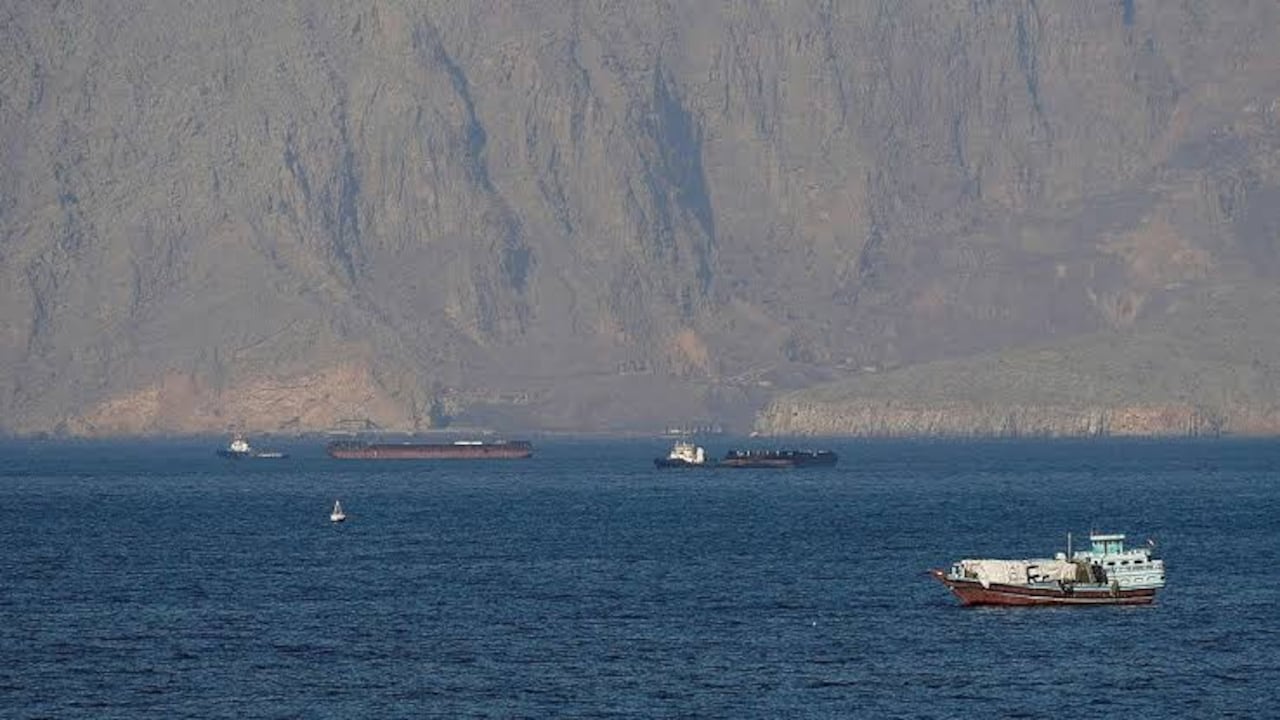
Salt crusts the bridge wing of a supertanker crawling through the dark, and the air smells like hot oil and fear.
Twenty-one miles wide at its absolute pinch point. That is all the space the world gets. Two channels, each just two miles wide, separated by a median line that separates routine commerce from total economic catastrophe. Through this narrow throat between Iran and Oman passes roughly a fifth of the petroleum consumed on planet Earth.
Captain Elena Vance knows every centimeter of the Strait of Hormuz. She has navigated these green-black waters for fifteen years, watching the desert bluffs of the Persian Gulf morph from hazy mirages into stark, jagged walls of rock. But tonight, the routine transit feels different. Tonight, the radio is too quiet.
And then, the sea shatters.
A muffled concussive thud ripples through the steel hull of the vessel, vibrating straight up through the deck shoes and into the marrow of the bone. It is not an engine malfunction. It is the signature sound of a modern maritime nightmare. Tanker reports of new explosions in Hormuz are no longer abstract headlines flickering on Bloomberg terminals in London or New York. They are physical shocks felt by men and women whose only crime is trying to deliver the fuel that keeps municipal buses running, hospital generators humming, and cargo planes in the sky.
Minutes earlier, across the water in Muscat, diplomatic delegations had been shaking hands. High-level talks between Iranian and Omani officials were supposedly charting a course toward regional de-escalation, mutual maritime security, and economic cooperation. Ink was drying on diplomatic communiques while fuel tanks were burning off the coast of Fujairah.
This is the eternal disconnect of the Strait. What happens in the air-conditioned conference rooms of Gulf capitals bears almost no resemblance to the reality experienced on the water.
Consider what happens next:
Insurance premiums spike by hundreds of thousands of dollars for a single voyage. Crew members begin checking the expiration dates on their life rafts with trembling fingers. Crude futures tick upward by three dollars, five dollars, ten dollars a barrel, and within forty-eight hours, a family in suburban Chicago or rural France fills up their sedan and wonders why their grocery budget suddenly doesn't stretch to the weekend.
We talk about geopolitical flashpoints as if they are chess boards. We move little blue and red markers across television graphics. We listen to analysts drone on about supply chain resilience and maritime choke points.
It is a comforting illusion. It keeps the horror at a safe distance.
The truth is much more fragile.
I remember standing on the fantail of a container ship during a previous spike in regional tensions, watching the twilight bleed purple over the Omani coastline. The sea was glass. Absolutely dead calm. Yet every single soul on board was wearing a heavy orange life vest over their coveralls, even though we were off-watch. Nobody joked. Nobody played music on their portable speakers. We stared into the dark horizon, waiting for a flash that might never come—or might come too fast to matter.
That is the hidden cost of Hormuz. It is the psychological tax paid by mariners who serve as the involuntary shock absorbers of international conflict.
When talks between Iran and Oman stumble, or when diplomatic channels freeze, the shockwave travels immediately to the water. Omani diplomats work tirelessly behind the scenes to maintain neutrality, acting as the crucial diplomatic bridge between Tehran and Western-aligned powers. They understand what is at stake. Oman's own shores are just across the water; a major ecological disaster in the strait would devastate their fisheries, their tourism, and their coastal communities just as swiftly as it would cripple global energy markets.
Yet diplomacy moves at the speed of bureaucracy, while missiles and mystery explosions move at the speed of sound.
The recent blasts reported by commercial tankers underscore a chilling operational reality. Navies can patrol, escorts can shadow, and satellites can track every vessel down to the last wave it kicks up, but you cannot guard every inch of a twenty-one-mile corridor against asymmetric disruption. A sea mine, an aerial drone, or an unblinking standoff missile requires very little infrastructure to deploy, yet it commands the attention of the entire global economy.
When Elena Vance looks out into the darkness from her wheelhouse, she isn't thinking about gross domestic product or OPEC quotas. She is thinking about her crew of twenty-four souls. She is thinking about the Filipino wiper down in the engine room who is saving money to build a house for his parents in Cebu. She is thinking about the chief mate whose wife just gave birth to twins.
They are hostages to geography.
The world demands cheap energy, frictionless delivery, and endless economic expansion. Yet we place that entire edifice upon the narrowest of foundations—a thin ribbon of water bordered by nations locked in deep ideological and geopolitical struggle. Every time an explosion echoes across the Gulf, it is a reminder that our modern way of life is built on a tightrope stretched over an active volcano.
The talks in Oman will continue. Delegations will drink small cups of cardamom-scented coffee, exchange pleasantries, and issue statements about mutual respect and regional stability. Tankers will keep sailing because the world cannot afford to stop them. Captains will keep scanning the horizon, listening to the hum of the radar, waiting for the sea to speak again.
And out in the dark, the water remains deep, indifferent, and profoundly dangerous.


