Salt spray coats the glass of the bridge windows. It is four in the morning. Outside, the Arabian Gulf is not water; it is a sheet of dark, polished obsidian reflecting a sky devoid of stars.
Captain Harris has crossed the Strait of Hormuz forty times. He knows the contours of the shipping lanes the way a blind person knows the furniture in a familiar room. Every mile of this twenty-one-mile-wide bottleneck is mapped, measured, and watched. But tonight, the maps feel obsolete. Tonight, the air smells of old fuel and a sudden, sharp sulfur that sets every nerve on edge. For an alternative view, consider: this related article.
A flash.
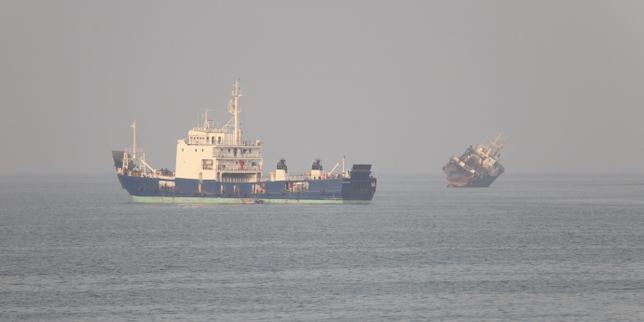
It does not roar initially. It blooms. A brilliant, blinding white orange signature that tears through the pre-dawn quiet a hundred yards off the starboard bow of a heavily laden supertanker. Further coverage on the subject has been provided by Al Jazeera.
Air pressure strikes the hull before the sound does. A concussive thump that rattles coffee mugs in the galley and shakes the teeth in their sockets.
"Hard port," Harris mutters into a dead microphone, his hands gripping the mahogany console until his knuckles turn white.
Around him, screens flicker. Warnings cascade in amber and red. Somewhere thousands of miles away, stock markets have not yet opened, but the invisible gears of global energy are already grinding into panic. Closer by, over the burning horizon near Kuwait, the distinct, mechanical whine of drone engines cuts through the night like a dentist’s drill.
We talk about geopolitics as if it were a game of chess played on a polished wooden board in Geneva. We move markers. We speak of crude oil futures, barrel prices, maritime choke points, and sovereign airspace violations as though they were abstract math problems.
They are not.
They are weight. They are heat. They are the sweat on the neck of a twenty-four-year-old radar operator staring at a blinking green dot that might be a seagull or might be a precision-guided loitering munition.
Consider what happens next: a sudden spike in shipping insurance rates that ripples outward until a loaf of bread in a Midwestern grocery store costs an extra nickel, until a heating bill in Berlin forces a retired couple to turn the thermostat down another degree. Everything is tethered to this narrow ribbon of water. Roughly a fifth of the world’s petroleum passes through this liquid throat daily. When someone drops an explosive device in its immediate vicinity, the shockwave does not just rattle steel hulls. It echoes through the global economy with terrifying speed.
To understand the fragility of our daily lives, you have to stand on the deck of a ship where the margin between safe passage and catastrophe is thinner than a cigarette paper.
Think of the Strait of Hormuz as a crowded highway built over an active fault line. On one side stands Iran, its coastline shadowing every southbound vessel. On the other lie the Arab states of the Gulf, pumping the black blood that keeps modern civilization running. For decades, this tension has hummed beneath the surface like a transformer about to blow.
Lately, the hum has turned into a scream.
When reports filtered out of Kuwait regarding coordinated drone incursions hitting industrial infrastructure, the reaction in capitals around the world was swift, predictable, and hollow. Statements were drafted. Condemnations were issued. Emergency committees convened to review options that nobody really wants to execute.
Yet back on the water, statements do not deflect shrapnel.
Harris watches the radar sweep. Another trace appears. Faint. Low to the water. Moving fast.
We forget how fragile our interconnected world actually is until the thread frays. We live in cities powered by electricity we never generate, eating food we never harvest, burning fuel we never refine. We assume the system is permanent. We assume the ocean lanes are safe because they have always been safe, right up until the morning they are not.
The drone passes overhead, a mechanical hornet buzzing in the dark, heading inland toward the lights of Kuwait. The explosion follows a minute later, a dull thud that shakes the horizon.
The tanker keeps moving. It has to. Stopping means becoming a sitting duck. Turning around means economic ruin.
So the ship cuts through the dark, carrying the weight of a fragile world on its steel back, heading blindly into a sunrise that promises no answers.