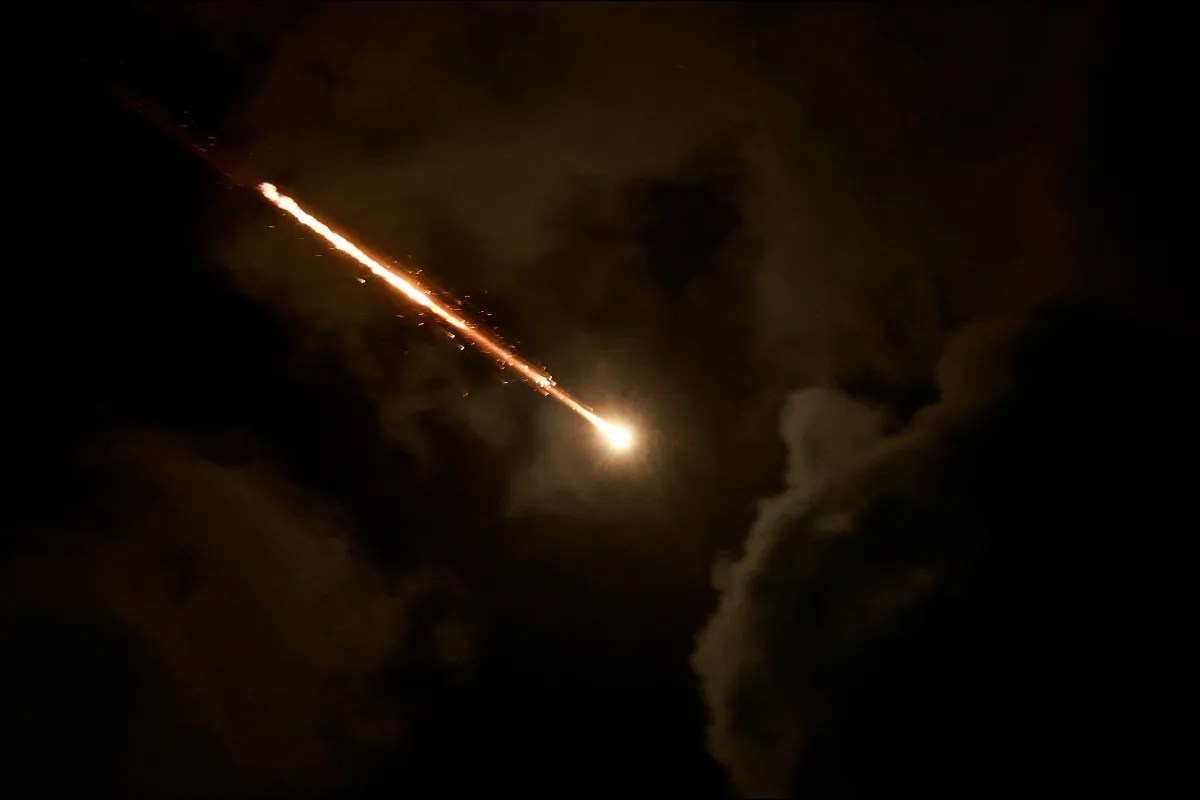
The mainstream media is treating the recent ballistic missile strikes on regional airbases as the opening salvo of a global conflict. Headlines are screaming about a massive shift in warfare. Analysts on cable news are sweating over maps, pointing at smoke plumes, and predicting the imminent collapse of regional stability.
They are fundamentally misreading the theater.
What we just witnessed was not a military kinetic success. It was an incredibly expensive piece of political performance art. The lazy consensus states that launching dozens of ballistic missiles at a heavily fortified military installation is an act of total war meant to degrade an adversary's fighting capability. In reality, these strikes are highly choreographed, technologically predictable events designed more for domestic consumption and diplomatic leverage than actual tactical disruption.
When you strip away the sensationalism, the math and the mechanics of modern missile defense tell a completely different story.
The Illusion of the Unstoppable Missile
For decades, defense contractors and alarmist pundits have built a narrative around the absolute terror of ballistic technology. They want you to believe that once a missile leaves the pad, the target is effectively erased.
I have spent years analyzing regional defense architectures and watching billions of dollars flow into early-warning networks. Here is the reality the talking heads ignore: modern state-tier military installations are the hardest targets on earth to hit by design.
A ballistic missile is not a ghost. It follows a highly predictable, mathematically rigid trajectory. The moment the booster ignites, space-based infrared sensors detect the thermal signature. Within seconds, tracking data is fed into automated command structures. By the time the warhead begins its terminal descent, defensive batteries like the Patriot system or regional equivalents have already calculated intercept geometry.
To call these strikes a "surprise attack" is to ignore how modern radar works. The airspace over these bases is monitored with overlapping layers of high-frequency surveillance. Launching a ballistic missile at an alert adversary is the strategic equivalent of telegraphing a punch from three rooms away.
The Cost-Benefit Breakdown
Let's look at the brutal economics of this kinetic exchange.
- The Offensive Cost: A single medium-range ballistic missile costs millions of dollars to manufacture, fuel, maintain, and launch.
- The Deflection Cost: Interceptor missiles are similarly expensive, but they protect assets that are functionally irreplaceable in the short term.
- The Kinetic Reality: Cratered runways can be repaired with quick-setting concrete in less than twenty-four hours. Hangars are reinforced. Aircraft are routinely shuffled or scrambled the moment the early warning sirens sound.
When an actor fires a barrage of missiles only to have the vast majority intercepted, with the remainder hitting empty dirt or superficial tarmac, that is not a demonstration of overwhelming force. It is an operational failure disguised as aggression.
Dismantling the Escalation Panic
The public always asks the wrong question after a strike like this. People immediately want to know, "Is this the start of a massive regional war?"
The premise of the question is flawed because it assumes both sides want total destruction. They do not. Every action in this specific theater is meticulously calibrated to avoid cross-domain escalation while saving face.
Think of it as a violent, high-stakes negotiation. Actor A needs to show its population and its proxies that it can strike back against a superpower or its allies. Actor B needs to demonstrate that its defensive umbrella is impenetrable. Both sides get exactly what they want from a non-lethal, highly visible missile strike. Actor A claims a victory by showing footage of launches; Actor B claims a victory by showing footage of successful intercepts and minimal damage.
If the goal were genuine destruction, the tactical approach would look entirely different. You would not send a handful of easily tracked ballistic missiles. You would saturate the airspace with low-flying cruise missiles and swarm drones disguised by electronic warfare assets to blind radar arrays. Firing big, bright, loud rockets is an intentional choice to limit the actual body count while maximizing the geopolitical noise.
The Uncomfortable Truth About Air Superiority
The hard truth that hawks refuse to admit is that these missile exchanges actually validate the existing balance of power rather than disrupting it.
Modern fifth-generation fighter jets do not sit on tarmacs waiting to be turned into scrap metal by incoming ordnance. They operate within a dynamic network. Long before a missile reaches its terminal phase, high-value assets are either airborne or safely secured in deeply buried, hardened shelters.
The idea that a sudden missile barrage is going to permanently ground a major air force is a fantasy left over from the mid-twentieth century. Satellites see the prep work. Signals intelligence intercepts the fueling commands. By the time the button is pushed, the target is already a shell.
This brings us to the actual risk of this contrarian view: the danger isn't a massive, coordinated invasion. The danger is a mechanical malfunction or a miscalculation in the theater—a stray missile hitting a crowded barracks by accident instead of the empty field it was aimed at. That is where the choreography breaks down. But as long as the telemetry remains predictable, the outcome remains entirely under control.
Stop looking at the explosions on the news and calling it a tactical shift. It is a status quo maintaining ritual, executed with expensive hardware, designed to keep both sides exactly where they already are.