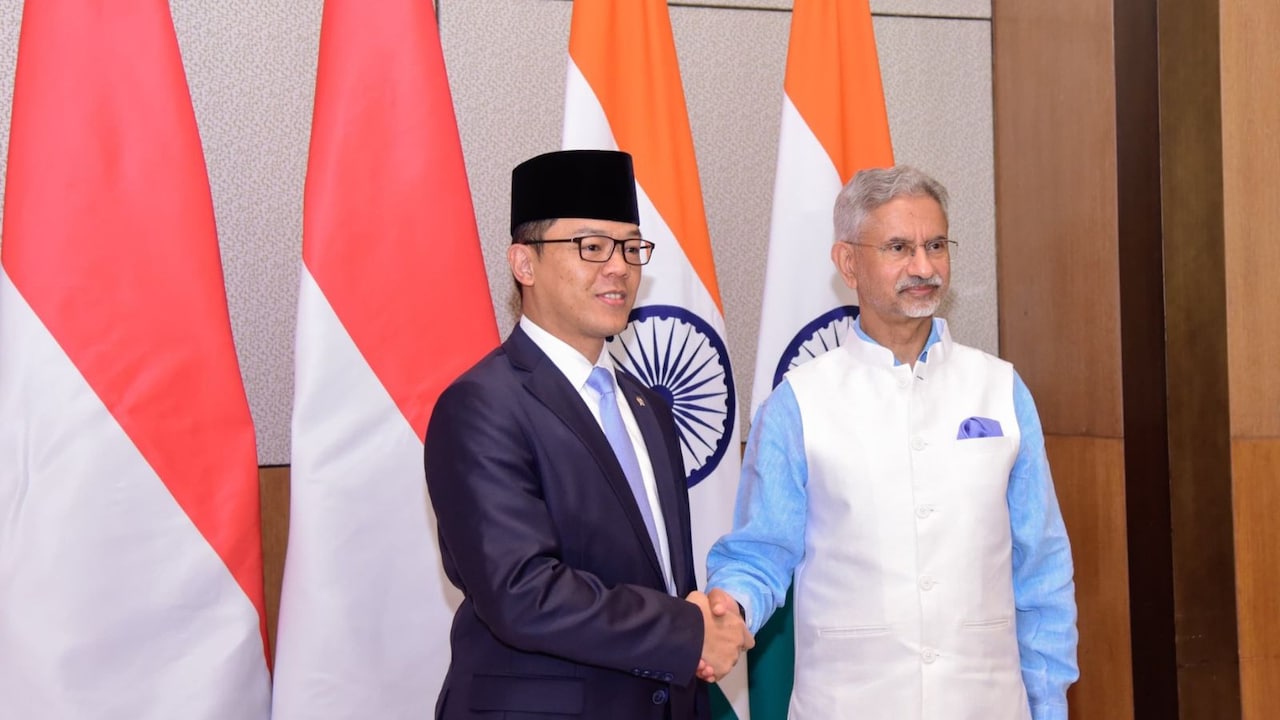
Diplomats love a good photo op. They love handshake agreements, vague communiqués about "shared democratic values," and high-level ministerials even more. The recent bilateral meeting between Indian External Affairs Minister S. Jaishankar and his Indonesian counterpart is being toasted across Delhi and Jakarta as a massive win for regional stability.
The consensus from mainstream foreign policy analysts is predictable. They claim this meeting tightens the maritime security grid, counters Chinese hegemony, and solidifies a democratic counterweight in Southeast Asia.
They are wrong.
This hyper-focus on bilateral summits ignores a glaring reality. India and Indonesia are fundamentally misaligned on the issues that actually matter. While political commentators celebrate the rhetoric of cooperation, the economic and structural data tells an entirely different story. Jakarta and New Delhi are drifting into a state of polite, transactional indifference, masked by diplomatic theater.
The Trade Illusion: Raw Materials Do Not Equal Strategic Integration
Mainstream media points to growing bilateral trade figures as proof of a deepening bond. It is a shallow metric.
Look at the composition of that trade. India buys Indonesian coal and crude palm oil. Indonesia buys Indian refined petroleum, commercial vehicles, and agricultural commodities. This is not high-tech integration or supply chain interdependence. It is a primitive commodities exchange.
I have analyzed trade networks across emerging markets for two decades. When your economic relationship relies almost entirely on volatile, low-margin raw inputs, you do not have a strategic partnership. You have a buyer-seller relationship that can be disrupted by a single regulatory shift or a cheaper supplier elsewhere.
The Looming Friction Points
- Protectionist Instincts: Both nations are deeply protectionist. India walked away from the Regional Comprehensive Economic Partnership (RCEP), a massive free-trade agreement that Indonesia heavily championed. New Delhi feared an influx of cheap goods, effectively cutting itself off from the very economic ecosystem Indonesia anchors.
- The Palm Oil Volatility: Whenever Jakarta faces domestic inflation, it slaps export bans or taxes on palm oil. This routinely blindsides Indian consumer goods markets, causing immediate friction.
- Zero Regulatory Alignment: Try moving capital or setting up a joint manufacturing venture between Noida and Surabaya. The bureaucratic red tape on both sides is legendary.
True strategic alignment requires deeply intertwined supply chains. Think semiconductors between Taiwan and the West, or automotive components across the US-Mexico border. India and Indonesia do not have this. They are economic competitors disguised as partners, both vying to capture the exact same manufacturing flight from mainland China.
The South China Sea Delusion
The biggest piece of fiction coming out of these bilateral briefings is the notion of a unified maritime defense posture. The lazy assumption is that because both nations look at China's naval expansion with anxiety, they are ready to link arms in the Sabang port or the Malacca Strait.
They are not.
Jakarta operates under a strict, constitutional foreign policy doctrine known as Bebas-Aktif (Independent and Active). It is a foundational identity that prevents Indonesia from ever joining a formal or informal military bloc targeting a single power. While India inches closer to Western security architectures like the Quad, Indonesia views the Quad with deep suspicion, fearing it turns Southeast Asia into a superpower battleground.
+------------------------------------------+------------------------------------------+
| India's Security Posture                 | Indonesia's Security Posture             |
+------------------------------------------+------------------------------------------+
| Active balancing via external coalitions | Strict non-alignment (Bebas-Aktif)       |
| (Quad, bilateral military pacts).        | avoids anti-China coalitions.            |
+------------------------------------------+------------------------------------------+
| Views the Indian Ocean as an exclusive   | Views regional seas as neutral transit   |
| sphere of influence.                     | zones, wary of external naval surges.    |
+------------------------------------------+------------------------------------------+
Consider the Sabang port development. For years, analysts touted Indian investment in this Indonesian port at the mouth of the Malacca Strait as a strategic masterstroke to choke Chinese naval transit. Walk the docks of Sabang today. The project is bogged down in commercial disputes, environmental assessments, and local political maneuvering. Jakarta has zero intention of letting the Indian Navy turn Sabang into a forward operating base. Doing so would provoke Beijing, Indonesia's largest trading partner and infrastructure financier.
Imagine a scenario where a naval skirmish breaks out in the South China Sea. If you think Indonesia will allow Indian warships to use its maritime choke points for logistical resupply or combat operations, you fundamentally misunderstand Jakarta’s geopolitical DNA. They will close the straits to everyone, issue a neutral statement calling for calm, and protect their economic lifeline with Beijing.
Dismantling the Global South Rhetoric
People often ask: Can India and Indonesia lead the Global South together as a unified front?
The question itself is flawed because it assumes the "Global South" is a coherent geopolitical bloc with shared objectives. It is not. It is an agglomeration of states with wildly divergent national interests.
When Jaishankar talks about reform of the United Nations Security Council or restructuring global financial institutions, Indonesia nods politely. But their priorities are entirely local. Jakarta is focused on funding its massive new capital city, Nusantara, securing capital for its nickel-processing facilities, and maintaining domestic stability across an archipelago of 17,000 islands.
India wants to be the loud, assertive voice of the developing world on the global stage. Indonesia prefers quiet, pragmatic hedging. This is not a complementary relationship. It is an awkward dance where both parties are listening to entirely different songs.
The Real Winner of the Bilateral Deficit
The hard truth nobody wants to admit at these diplomatic summits is that Beijing wins when New Delhi and Jakarta settle for superficial engagements.
While Indian and Indonesian ministers sign minor memoranda of understanding on cultural exchanges and space cooperation, Chinese state-owned enterprises are physically building the high-speed rail lines, the nickel smelters, and the digital architecture that powers Indonesia. Beijing does not rely on vague promises of shared democratic heritage. They deploy hard, cold capital.
The downside of pointing this out is obvious. It exposes the limits of middle-power diplomacy. It forces us to admit that without massive economic heft and a willingness to tolerate asymmetric trade deficits, India cannot displace Chinese influence in ASEAN's largest economy. Lip service about historical ties dating back to the Chola dynasty or common cultural roots in the Ramayana cannot compete with multi-billion-dollar infrastructure financing.
The Unconventional Blueprint For Actual Progress
If these two regional giants want to move past the empty theater of the bilateral circuit, they must stop focusing on grand geopolitical grandstanding and fix the structural plumbing of their relationship.
- Drop the Security Pretense: Stop pretending a joint naval exercise involving two corvettes constitutes a strategic maritime alliance. Accept that Indonesia will not join an anti-China coalition. Shift the defense focus entirely to low-stakes, high-yield cooperation like anti-piracy, illegal fishing monitoring, and disaster relief.
- Force Currency Internationalization: The true bottleneck to bilateral commerce is reliance on the US dollar for settlement. Both central banks have signed agreements for local currency settlement (Rupee-Rupiah). Execute it aggressively. Remove the transactional friction for mid-sized enterprises that cannot afford dollar conversion spreads.
- Industrial Integration Over Trade: Stop trading raw commodities. Establish a dedicated industrial corridor linking India’s pharmaceutical and digital services sectors with Indonesia’s manufacturing and mineral processing zones. If Indian tech firms cannot easily operate in Jakarta, or if Indonesian battery materials cannot flow seamlessly into Indian electric vehicle plants, the economic relationship will remain dead on arrival.
The next time a press release drops announcing a breakthrough bilateral meeting between Delhi and Jakarta, ignore the flowery language. Look past the joint statements. Check the hard data on tariff reductions, capital flows, and actual infrastructure implementation. Everything else is just expensive noise designed to keep diplomats employed while the real geopolitical map is drawn by actors who actually spend money. Stop buying the hype.