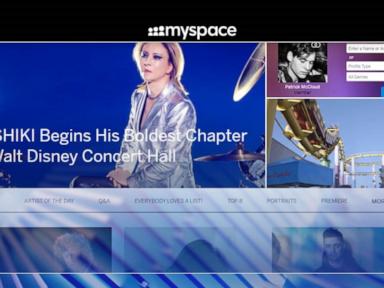
Remember spending hours tweaking your HTML profile code just to get the background colors right? You also had to carefully curate your Top 8 friends list, knowing it might start a schoolyard war. Now, the owners of Myspace are talking about a relaunch, and the internet is collectively losing its mind.
Chris and Tim Vanderhook, whose company acquired the platform back in 2011, recently confirmed in a documentary titled Myspace that they plan to bring the iconic brand back. They admit they are just waiting for the right moment, having already burned through more than $150 million trying to resurrect it a decade ago.
Let's be brutally honest about this. Nostalgia makes for great headlines. It rarely makes for a sustainable social network.
The Weight of Memory Versus Reality
People look back at the mid-2000s with rose-tinted glasses. Back in July 2006, Myspace actually beat out Google and eBay to become the most-visited website in the United States. It was chaotic, loud, and entirely personalized. Independent bands uploaded tracks directly to their pages, launching careers for electronic producers and indie rock bands alike.
You could embed auto-play music tracks and glitter graphics. It felt like your space.
That internet is dead.
When the Vanderhook brothers tried to modernize Myspace in 2013 with a music-heavy redesign, advertisers fled to Facebook and YouTube. Users didn't want a modernized corporate clone. They wanted the messy, glitchy time capsule they left behind. Trying to bottle up 2005 energy and drop it into today's algorithmic attention economy is an uphill battle.
Can You Fight the Algorithm?
Modern platforms survive on endless vertical video feeds and machine-learning algorithms designed to keep your eyes glued to the screen. The owners hint that a new version could act as an antidote to modern social media fatigue, steering clear of heavy algorithmic control.
That sounds noble. It also sounds financially risky.
If a platform lacks a retention engine, users check it once for the novelty, smile at the memories, and return to their primary apps within ten minutes. Network effects rule the digital space. Your friends aren't logging into a niche retro site every day unless there's an overwhelming utility keeping them there. Nostalgia opens the door, but utility keeps people in the room.
What Needs to Happen Next
If the team actually pulls the trigger on this relaunch, they can't rely on pure sentimentality. They need to figure out what value proposition they offer that TikTok, Instagram, and Reddit don't already cover.
Here is what a smart strategy actually looks like for anyone trying a legacy revival:
- Lean into true creative ownership: Bring back deep profile customization instead of forcing uniform grid layouts. Let users code again.
- Target indie creators: Rebuild the raw music discovery engine that made the original site famous, giving underground artists a direct pipeline to fans without predatory revenue splits.
- Accept a smaller niche: Stop trying to rival tech conglomerates. Build a profitable, tight-knit community rather than a mass-market giant.
Don't hold your breath waiting to pick your new Top 8. Until concrete product features drop, this remains an expensive daydream wrapped in a press tour.