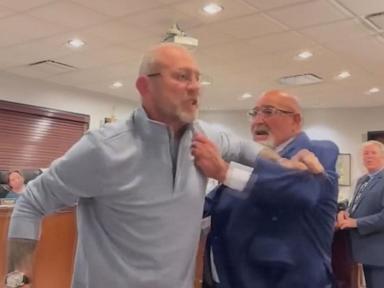
Public meetings in local government fail when emotional friction overrides institutional protocol, transforming routine civic debates into legal and political liabilities. When Pemberton Township Mayor Matthew Bianchini charged toward resident Michael Sawka during an October 2026 council meeting, standard viral coverage focused on shock value—the lunge, the profanity, and the subsequent defense. This analytical breakdown replaces surface-level outrage with a structured examination of how civic escalations unfold, why public-official defenses create dual legal and political traps, and how municipal leaders can build friction-resistant governance systems.
Deconstructing Standard Coverage and Its Analytical Gaps
Conventional news coverage of town hall confrontations typically relies on a binary narrative loop: video clip, official justification, and resident counter-claim. In the Pemberton Township episode, reports noted that the clash occurred while a former township employee addressed the council, that Sawka made an obscene gesture prior to the mayor running toward him, and that Bianchini claimed comments aimed at his wife and daughter triggered the reaction. Sawka disputed making remarks about the mayor's family and sought criminal charges through a municipal court complaint.
That reporting structure captures the immediate sequence of events, yet it leaves three analytical blind spots:
- De-contextualized triggers: Treating an obscene gesture or an alleged family remark as an isolated spark ignores cumulative tension built over prior meetings, personnel disputes, and unresolved grievances.
- Conflation of motives with legal standards: Explaining why a public official felt provoked does not establish legality under assault, disorderly conduct, or open-meeting norms.
- Omission of institutional incentives: Standard coverage rarely maps how municipal officials weigh personal honor against statutory duty, public optics, and liability exposure.
Distinguishing established facts from educated hypotheses is essential here. Known facts include the existence of video footage showing the mayor charging and shouting, Bianchini's public statement admitting he "snapped" while calling his actions both wrong and justified, and Sawka's municipal court complaint seeking assault and terroristic threats charges. What remains unverified in public reporting is the exact spoken exchange prior to the lunge and whether law enforcement will pursue formal prosecution. Any claim about hidden motives behind the gestures or statements is an educated hypothesis rather than a settled fact.
The Escalation Mechanics of Public Meetings
Municipal council chambers operate as high-density pressure cookers where power asymmetry meets personal proximity. Unlike national legislative floors separated by security perimeters and formal procedural distance, local town halls place elected executives, municipal staff, family members, and residents within a few yards of one another.
The Four Stages of Town Hall Escalation
- Baseline Grievance Accumulation: Contested policies, tax shifts, or employment terminations—such as the dispute involving a recently fired township employee in Pemberton—establish a baseline of hostility before the meeting starts.
- Boundary Breach: A speaker or observer crosses an informal or formal norm, whether through hostile rhetoric, profanity, obscene gestures, or alleged remarks involving bystanders.
- Cognitive Override: Under acute stress or perceived threat to family or status, executive restraint narrows. In behavioral terms, fast reactive emotion displaces deliberative role adherence, producing what Bianchini described as snapping after a long buildup.
- Institutional Spillover: Once physical movement or threats occur, the conflict exits the parliamentary record and enters criminal complaints, media cycles, and electoral calculus.
Cause-and-effect dynamics in these settings are rarely linear. When a presiding officer leaves the dais or charges across a room, the act immediately shifts the room's locus of control from gavel-backed order to physical intervention—here requiring others, including a former police chief, to step in. That shift elevates a verbal dispute into a potential physical offense, multiplying legal stakes for everyone involved.
The Paradox of the "Wrong Yet Justified" Defense
When public figures defend a physical charge by arguing that it was simultaneously wrong and justified—"I would do it again if I had to," as Bianchini stated while citing family protection—they enter a high-friction rhetorical bind. In organizational and political crisis management, this posture creates two competing pressures that pull in opposite directions.
Legal Exposure Versus Political Signaling
From a legal standpoint, admitting an act was "wrong" while asserting readiness to repeat it under similar provocation undermines claims of purely accidental or momentary loss of control. Even if an official frames the conduct as a defense of family members seated nearby, prosecutors and courts evaluate physical acts and threats against statutory elements rather than personal thresholds of offense.
From a political standpoint, the same statement signals fierce loyalty to family and refusal to be bullied. Among supporters who view local critics as abusive or acting in bad faith, toughness can read as authenticity. Among swing voters, institutionalists, and municipal employees, however, physical aggression at a public podium signals volatility and poor judgment.
Consider a hypothetical comparison between two municipal executives facing similar heckling during a budget vote. Executive A pauses public comment, calls a five-minute recess, and directs security or police to enforce decorum rules; the meeting resumes with its legal record intact. Executive B steps toward the heckler and shouts a threat; even if supporters applaud the defiance, the municipality now faces complaint reviews, public-records requests, and months of reputational drag. The operational lesson is straightforward: personal retaliation carries high institutional downside even when it satisfies an immediate emotional urge.
Governance and Legal Trade-Offs After a Confrontation
After a public clash, local governments confront interconnected legal, administrative, and democratic mechanisms. Each pathway carries distinct constraints and trade-offs.
- Municipal Court and Police Review: A resident filing a citizen or municipal court complaint initiates a process that may or may not result in formal charges brought by police or prosecutors. Legal standards focus on imminent apprehension of harmful or offensive contact or specific statutory threat definitions, not merely rude speech or offensive gestures.
- First Amendment and Open Public Meetings Boundaries: Public bodies must balance orderly conduct of business against free-expression protections in public forums. Overbroad crackdowns on criticism risk chilling speech, whereas physical confrontations risk suppressing participation through intimidation.
- Electoral Accountability: Voters ultimately evaluate the incident through their own priorities—weighing perceived provocation, family dynamics, temperament, and governance competence ahead of the next election.
No procedural rule eliminates human emotion entirely. A limitation of strict decorum rules is that rigid enforcement can inflame residents who already feel ignored by town leadership, while overly permissive rules allow personal insults and baiting to fester unchecked. Effective governance requires calibrating rules before crises erupt rather than improvising mid-argument.
Tactical Playbook for High-Tension Public Meetings
Municipal leaders, clerks, and presiding officers who want to prevent physical escalation can apply a structured operational protocol before, during, and after contentious sessions:
- Separate Seating From High-Friction Zones: Position family members, non-participating staff, and sensitive observers away from direct sightlines and verbal crossfire with agitated attendees whenever room layout allows.
- Enforce Time-Boxed, Topic-Bound Comment Rules Consistently: Apply identical timers and decorum standards to every speaker so rules are perceived as neutral infrastructure rather than selective retaliation against critics.
- Use Immediate Recess Mechanics as a Circuit Breaker: When tension spikes, call a brief, formal recess rather than trading barbs across the room. A three-to-five-minute pause lowers physiological arousal and restores procedural authority.
- Route Security and Removal Through Designated Officers: Presiding officials should never initiate physical pursuit or personal threats. Clear lines of authority should assign de-escalation and removal strictly to trained law enforcement or designated security personnel.
- Audit Post-Incident Statements for Legal and Institutional Impact: Before making public remarks after an altercation, separate personal grievances from official municipal statements to avoid compounding legal exposure with unnecessary admissions or threats.
Strategic Recommendation
Municipal executives and council leaders should treat emotional regulation and meeting architecture as core infrastructure—just as vital as budgets, agendas, and legal counsel—by adopting a mandatory recess-and-de-escalation protocol paired with pre-meeting briefings for officials and staff. Waiting until a heated exchange reaches a physical threshold forces leaders to manage crises under maximum public scrutiny and legal jeopardy; institutionalizing calm procedural pauses early preserves both public order and democratic legitimacy.