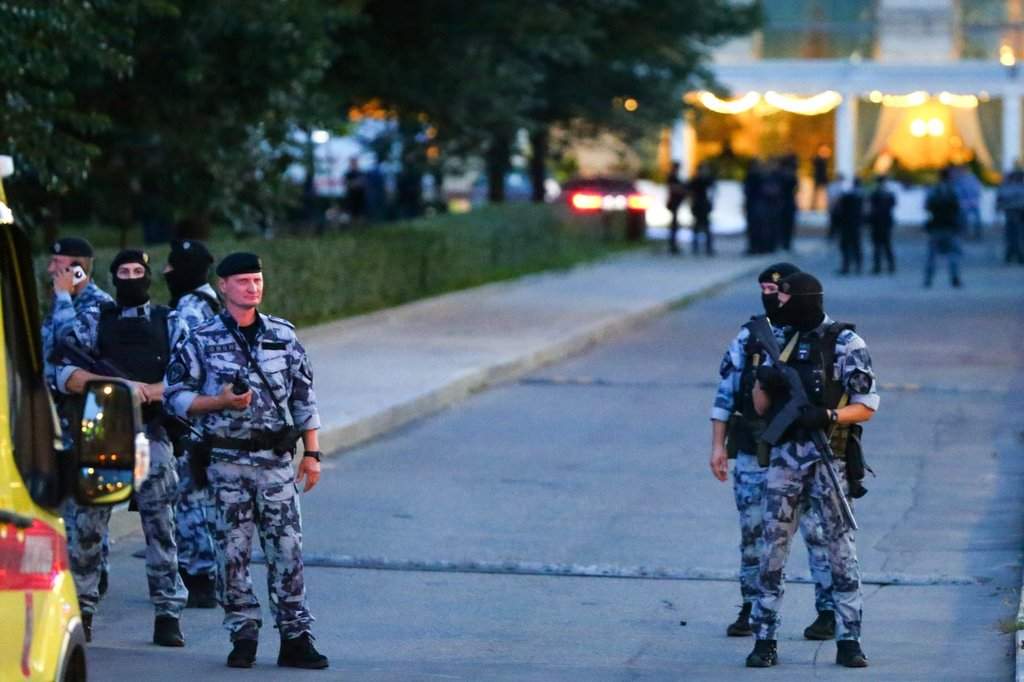
The explosion tore through the dining room with a calculating precision that instantly shattered the illusion of routine safety in the Russian capital. Moscow Mayor Sergei Sobyanin labeled the restaurant bomb attack a brutal terrorist act within hours of the blast, mobilizing emergency services and setting the official narrative before the smoke had even cleared from the pavement. Yet beneath the swift condemnation and the immediate deployment of state security forces lies a much more unsettling reality. This was not merely an isolated act of criminal violence. It was a stark symptom of deep structural vulnerabilities that have festered beneath the surface of a society tightly managed by state apparatuses.
When an explosive device detonates inside a bustling venue in the heart of a heavily policed metropolis, the immediate response from official channels is predictable. Condemnation follows categorization, and categorization precedes a tightening of control. But for anyone who has spent years tracking security protocols, urban intelligence, and geopolitical fallout in Eastern Europe, the official framing raises more questions than it answers. How did the perpetrators bypass urban surveillance grids boasting facial recognition and automated license plate tracking? What does this breach reveal about the shifting vectors of asymmetric conflict reaching deep into urban centers?
To understand the weight of this event, we must look past the immediate headlines and examine the mechanics of urban security in a nation currently embroiled in extensive foreign entanglements.
The Anatomy of an Urban Security Failure
Modern megacities operate under the constant promise of total surveillance. Moscow, in particular, has invested billions of rubles into facial recognition software, smart traffic cameras, and comprehensive data-gathering networks designed to track citizens and visitors alike. On paper, slipping an explosive device into a public establishment should be practically impossible. In practice, human systems always find ways to exploit bureaucratic blind spots.
Intelligence analysts often talk about the friction between technological capability and human execution. A camera network is only as effective as the analysts monitoring the feeds and the protocols governing rapid response. In this specific incident, the failure points likely multiplied long before the device was ever assembled.
- Logistical gaps: The procurement of explosive precursors remains a persistent challenge for domestic security agencies, pointing toward either sophisticated smuggling routes or leaks within regulated industrial supply chains.
- Surveillance fatigue: Even the most advanced automated monitoring systems suffer from high volumes of false positives, frequently creating cognitive overload for human operators tasked with verifying threats.
- Institutional priorities: When state security apparatuses redirect massive personnel and technical resources toward political dissent and internal compliance, traditional counter-terrorism operations can inadvertently experience resource drainage.
These factors create an environment where determined actors can exploit administrative sluggishness. The mayor can denounce the act with absolute rhetorical force, but the rhetoric cannot mask the operational failure that allowed the bomb to reach its destination.
The Broader Geopolitical Ripple Effects
Every high-profile security breach in a capital city carries immediate political consequences. In the current climate, any major domestic incident in Russia undergoes intense scrutiny from both state propagandists and foreign intelligence agencies.
When a restaurant bombing occurs, the immediate domestic utility for the government is consolidation. Fear is a powerful tool for galvanizing public support behind restrictive measures. By framing the attack strictly as an external or proxy-driven act of terror, authorities can justify further crackdowns on civil liberties, expand internal surveillance mandates, and rally a weary populace around the flag.
However, this strategy carries diminishing returns. Each time a major security failure pierces the capital's perimeter, public confidence takes a subtle hit. Citizens begin to quietly calculate their own exposure. The psychological contract between the state and the populace relies entirely on a foundational guarantee: absolute safety in exchange for political compliance. When that guarantee fractures in a casual dining space on a regular evening, the psychological fallout lingers far longer than the physical debris.
Assessing the Threat Matrix
Independent military and security analysts have noted a distinct evolution in the types of tactics appearing across the region. As conventional battle lines remain largely static, asymmetric warfare increasingly spills over into urban environments through sabotage, targeted explosions, and deep-cover operations.
[Conventional Frontlines]
       │
       ▼ (Stalemate)
[Asymmetric Spillover] ──► [Urban Sabotage & Bombings] ──► [Erosion of Domestic Security Illusion]
This pipeline represents a fundamental shift in risk calculus. Governments can no longer rely solely on border security or foreign military engagements to insulate their domestic populations. The battlefield has flattened, and the front door of a popular neighborhood restaurant is just as vulnerable as a military checkpoint hundreds of miles away.
The Danger of Overcorrection
History shows that authoritarian and semi-authoritarian states react to security crises by doubling down on the exact mechanisms that failed in the first place. More cameras. Stricter identity checks. Broader police powers.
Yet, adding more digital layers to a compromised foundation does not solve the underlying decay. It merely increases administrative bloat while alienating ordinary people who find themselves subjected to endless checkpoints and digital tracking that ultimately fails to stop determined operatives.
The mayor's declaration of a brutal terrorist act was designed to close the book on a messy situation by defining its parameters before anyone else could. But the questions raised by this explosion will not disappear with the cleanup crews. They point toward a future where urban centers in conflict-adjacent nations become increasingly fragile zones, caught between the grandiose security promises of the state and the harsh, unpredictable realities of modern asymmetric warfare.
The glass has been swept from the streets, the official statements have been archived, and the political machinery moves forward. But the underlying vulnerability remains entirely unaddressed.