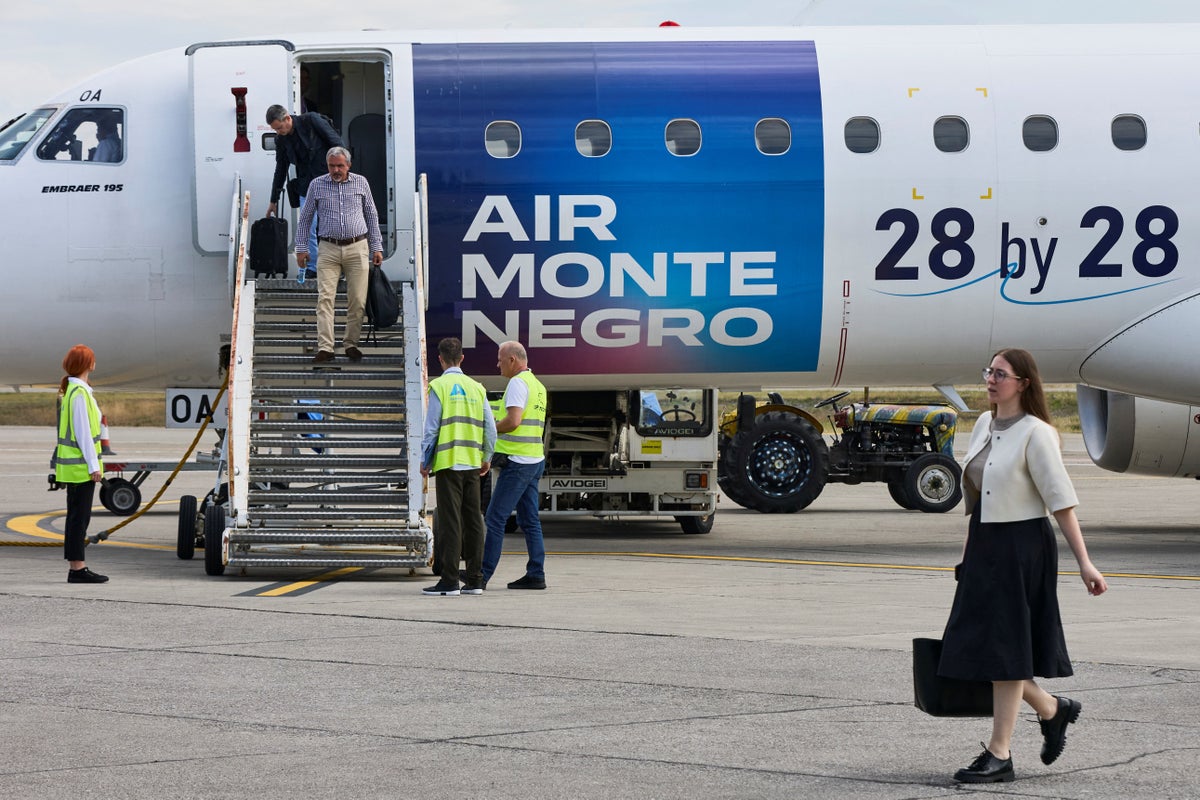
The European Union has a stagnation problem, but a tiny Balkan nation might just break the logjam. Montenegro wants in, and they want in fast. The current rallying cry in Podgorica is "28 by 28" which means becoming the 28th member state of the European Union by the year 2028. It is an ambitious timeline for a country with a population smaller than Amsterdam, but it is the most realistic expansion target Brussels has looked at in over a decade.
Brussels has been suffering from expansion fatigue ever since Croatia joined the bloc back in 2013. Bureaucracy slowed down. Geopolitical anxieties grew. Promises made to the Western Balkans started looking like permanent carrots on unreachable sticks. But the geopolitical shockwaves of recent years changed the math completely. Security is now the driving force behind EU policy, and Montenegro finds itself in the right place at the right time.
This isn't just about a small country wanting a seat at the big table. It's about whether the EU can still function as a stabilizing force in Europe. If Montenegro can't get across the finish line, nobody else in the Western Balkans stands a chance anytime soon.
The Reality Behind the 2028 Goal
Let's look at the actual numbers because they tell a story that political speeches usually hide. Montenegro opened all 33 negotiating chapters of the EU acquis. That sounds impressive until you realize they only provisionally closed three of them over the last decade. Progress was stuck in the mud for years due to domestic political instability, shifting coalitions, and corruption scandals.
Things changed over the last couple of years. The current government under Prime Minister Milojko Spajić has treated EU accession like a corporate turnaround project. They managed to push through critical judicial reforms that had been frozen for years. They filled long-vacant positions in the constitutional court and the judicial council.
These aren't just technical checkboxes. These were the fundamental roadblocks holding up the entire process. The European Commission noticed the shift. In mid-2024, Montenegro received a positive Interim Benchmark Assessment Report, known as an IBAR. In the language of Brussels bureaucrats, this was a massive green light. It meant Montenegro could finally start closing the remaining chapters of the treaty.
The government's plan is to close up to ten chapters by the end of this year. They want the rest wrapped up by 2026. That leaves two years for ratification by all 27 existing EU member states. It is a tight schedule. A single political hiccup in Paris, The Hague, or Budapest could derail the whole thing. But for the first time in years, the timeline isn't completely delusional.
Why Montenegro is Different From the Rest of the Pack
People often lump the Western Balkan applicants together into one messy basket. That's a mistake. Montenegro is fundamentally different from its neighbors in ways that make it much easier for Brussels to say yes.
First, it has no major bilateral disputes with its neighbors. Consider the alternative options. Serbia and Kosovo are locked in a permanent diplomatic standoff. North Macedonia keeps getting blocked by Bulgaria over historical and linguistic disputes. Bosnia and Herzegovina remains paralyzed by its complex post-war constitutional structure. Montenegro doesn't have these issues. It recognized Kosovo, it maintains decent relations with Serbia, and it shares a peaceful border with Croatia.
Second, the country is already deeply integrated into Western structures. It joined NATO in 2017 despite fierce opposition and active interference from Moscow. That move signaled a permanent strategic choice. It also uses the Euro as its de facto currency. Montenegro didn't ask permission to use the Euro back when it adopted it in 2002, but the reality is that its economy is already tied to the Eurozone. There is no currency transition shock to worry about.
Third, size matters here. With roughly 620,000 citizens, Montenegro's accession won't disrupt the balance of power inside EU institutions. It won't cause a massive migration wave that scares voters in Western Europe. Adding Montenegro to the EU is statistically a rounding error for the bloc's economy, making it a low-risk political bet for leaders like Emmanuel Macron or Olaf Scholz.
The Internal Hurdles Nobody Wants to Talk About
It isn't all smooth sailing. The biggest threat to Montenegro's EU dream isn't in Brussels. It's at home. The country's political scene is notoriously fragile and deeply polarized.
The political landscape fractured after the historic 2020 elections, which ended three decades of rule by Milo Đukanović’s Democratic Party of Socialists. The coalitions that followed have been shaky alliances of pro-Western modernizers, populist economic reformers, and pro-Serbian nationalist parties. Spajić’s government relies on the parliamentary support of parties that are traditionally closer to Belgrade and Moscow than to Brussels.
This creates a permanent underlying tension. One day the parliament passes EU-mandated anti-corruption laws. The next day, nationalist MPs push controversial resolutions about regional history that anger neighboring EU members like Croatia. Zagreb has already warned Podgorica that stoking historical grievances could impact its EU path. That's a serious threat. Every single EU member holds veto power over every step of the accession process.
Then there is the issue of organized crime and systemic corruption. For decades, Montenegro was notorious as a hub for cigarette smuggling and maritime drug trafficking routes. The scale of the problem is massive for a country so small. The Special State Prosecutor's Office has made high-profile arrests recently, picking up former supreme court presidents and top police officials. It proves that the judiciary is starting to act independently, but it also shows just how deep the rot ran. Cleaning that up completely takes decades, not months.
What This Means for Global Geopolitics
The push for EU expansion isn't happening in a vacuum. The war in Ukraine changed everything. Before 2022, Brussels treated enlargement as a tedious bureaucratic exercise based on merit and reform metrics. Now, it's a matter of geopolitical survival.
Russia has long viewed the Western Balkans as a soft underbelly where it can disrupt European unity. Moscow tried to stoke a coup attempt in Montenegro back in 2016 to prevent it from joining NATO. The Kremlin still funds media outlets and local organizations aimed at turning public opinion away from the West.
If the EU fails to integrate Montenegro soon, it sends a clear signal to the rest of the region that the door is closed. That leaves a vacuum. Russia, China, and Gulf states are more than happy to fill that space with infrastructure loans, investments, and political influence. China already owns a massive chunk of Montenegro's national debt due to a controversial highway project funded a decade ago. The EU had to step in with Western banks to help re-finance that loan to prevent Beijing from seizing assets.
Allowing Montenegro into the club proves that the EU can still project power and offer a viable future to its neighbors. It shows Ukraine, Moldova, and the rest of the Balkans that the accession process isn't a dead-end street.
The Action Plan for Podgorica
If Montenegro wants to hit that 2028 target, the government needs to stop celebrating political rhetoric and focus entirely on execution. The next twelve months are critical.
First, they must protect the independence of the Special State Prosecutor's Office. Political interference in high-profile corruption cases will destroy credibility in Brussels instantly. The EU needs to see convictions, not just arrests.
Second, the ruling coalition needs to keep its nationalist elements on a tight leash. Provoking diplomatic fights with Croatia or Bosnia for cheap local political points is a fast track to a veto. Foreign policy must remain strictly aligned with the EU, including full compliance with sanctions packages.
Third, public administration needs a massive upgrade. Closing dozens of chapters requires an army of competent bureaucrats who can translate thousands of pages of EU law into domestic legislation. Montenegro lacks human capital due to its small population. They need to recruit experts from the private sector and the diaspora immediately to handle the workload.
The window of opportunity is open right now, but it won't stay open forever. EU political priorities shift with every election cycle. Montenegro has a clear run toward the finish line, but they have to run without stumbling. Focus on the technical reforms, keep the political peace at home, and ignore the regional distractions. That's how you turn "28 by 28" from a political slogan into reality.


