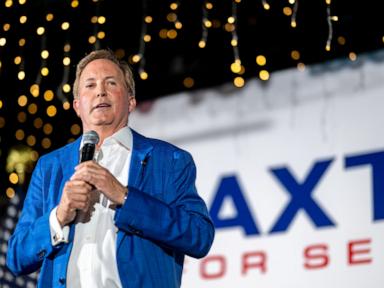
Every cycle, the political establishment repeats the same lazy narrative. The conventional wisdom drones on about campaign finance reports, cash on hand, and war chests. If a candidate trails in fundraising, the pundits write their obituary before the first yard sign goes up. They treat political campaigns like corporate balance sheets, assuming the candidate with the most dollars always wins the race.
It is a comfortable framework for lazy analysts because it reduces complex human behavior to a simple spreadsheet. It is also completely wrong.
Look at the discourse surrounding Texas politics and high-profile figures navigating fundraising cycles. The mainstream media obsesses over every dollar raised, treating a dip in contributions as a fatal wound. This misses the entire point of how modern influence actually operates. I have watched campaigns flush millions of dollars down the drain on poorly targeted media buys, while insurgent outsiders capture the public imagination with a smartphone and a clear enemy.
Money is not the engine of modern politics. It is merely the lubricant.
The Fallacy of the War Chest
Start with the core delusion: the belief that voters care about your cash-on-hand reports.
Voters do not read Federal Election Commission filings. They do not cross-reference quarterly disclosures while deciding who to trust. When political commentators hyperventilate over a fundraising deficit, they are projecting their own obsession with institutional metrics onto an electorate that views politics through an entirely different lens.
Think about how attention works today. Traditional advertising is background noise. Between streaming services, ad blockers, and sheer fatigue, the average voter tunes out million-dollar television blitzes. When a campaign relies purely on outspending an opponent, they are paying inflated rates for diminishing returns.
A massive war chest often indicates an over-reliance on consultants who profit off the spend. Every dollar funneled into generic mailers and consultants' retainer fees is a dollar that could have been spent building direct, unfiltered leverage.
Attention Beats Capital Every Single Time
If fundraising was the sole determinant of political survival, billionaires would never lose elections and insurgent longshots would never break through. Yet, political history is littered with self-funded candidates who spent fortunes to secure single-digit percentages, alongside lean operations that shifted the entire debate with zero budget.
Attention is the currency of the realm. If you control the narrative, you control the tempo.
When a candidate faces a fundraising squeeze, the conventional playbook demands panic, frantic donor calls, and corporate PAC pandering. The contrarian playbook does the exact opposite. It forces discipline. It strips away the bloat and focuses the message like a laser.
A candidate who has to fight for oxygen without a hundred-million-dollar buffer is forced to take risks. They have to be interesting. They have to pick fights that break through the noise. Safe, consultant-approved messaging requires massive budgets to stick because it is inherently boring. Edgy, high-stakes positioning costs nothing to distribute because people share it for you.
The Downside of the Lean Model
To be entirely fair, this approach carries a heavy penalty. Running a low-liquidity, high-impact campaign requires an iron stomach and a terrifying tolerance for chaos.
When you do not have a massive financial buffer, you have zero margin for error. A single strategic misstep, an unvetted comment, or a fractured coalition can sink a campaign overnight because there are no reserve funds to pivot or buy out the bad news. Institutional donors will freeze you out, party apparatuses will distance themselves, and you will find yourself operating without a safety net.
It is exhausting. It tests relationships, mental fortitude, and message discipline. Most politicians prefer the comforting numbness of dialing for dollars in a windowless call center because it feels like work, even if it yields declining returns.
Why the Establishment Hates This Shift
The political consulting complex has a vested interest in keeping the fundraising myth alive. Their business model depends on convincing donors and candidates that survival requires an endless river of cash managed by high-priced intermediaries.
If candidates realize that raw authenticity, cultural resonance, and asymmetric communication can bypass the traditional financial tollbooths, the entire consultant class becomes obsolete.
Stop measuring power by the size of the bank account. Watch who commands the room, who dictates the media cycle, and who makes their opponents react instead of act.
The next time you hear that a campaign is struggling with its fundraising numbers, do not look for an obituary. Look for the pivot. That is where the real fight begins.


