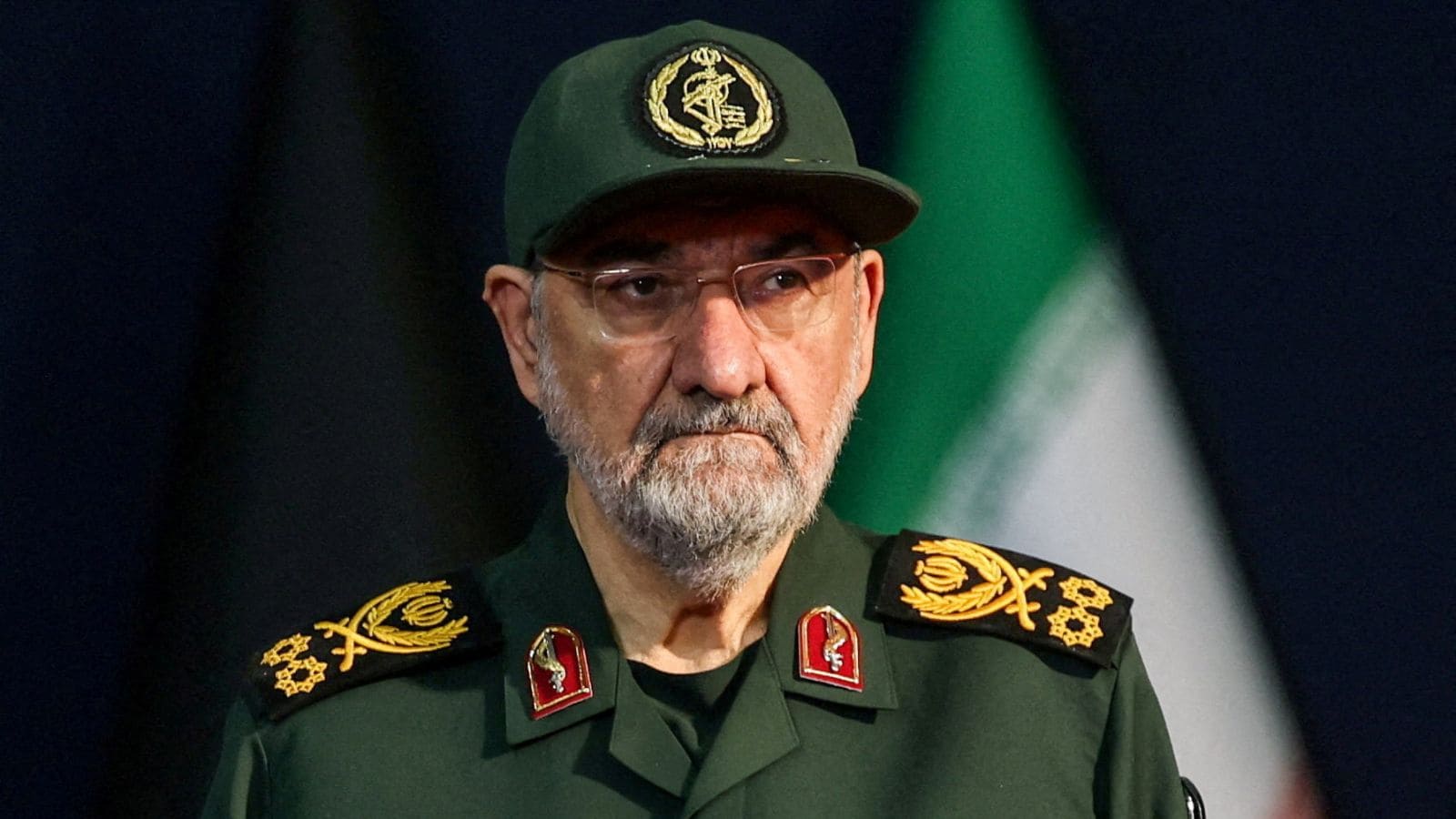
Mohsen Rezaei is back at the controls of Iran's national security apparatus. If you think this is just another bureaucratic shuffle inside Tehran, you aren't paying attention. At seventy-one years old, the former Islamic Revolutionary Guard Corps commander has taken over as secretary of the Supreme National Security Council. He replaces Mohammad Bagher Zolghadr after a brief four-month tenure, stepping into a position that dictates how Iran handles its standoff with Washington and its volatile regional policy.
This isn't a random appointment. Supreme Leader Ayatollah Mojtaba Khamenei handpicked Rezaei to anchor a tighter, more centralized state strategy. To understand why this matters right now, you need to look past the official press releases and examine the bloody history, the economic struggles, and the uncompromising ideology defining Rezaei's decades at the core of the Iranian establishment.
From Anti-Shah Guerrilla to Young Revolutionary Commander
Rezaei's path to power started in the underground resistance cells of the 1970s. Born in Khuzestan province, he joined Mansouroun, an armed Islamist group fighting the Pahlavi monarchy. That path earned him a stint in the notorious SAVAK prisons as a teenager, an experience that hardened his ideological stance against Western influence.
When the 1979 revolution upended the Middle East, Rezaei's rise was meteoric. Founder Ayatollah Ruhollah Khomeini appointed him head of the IRGC in 1981 at the staggering age of twenty-seven. For sixteen years, Rezaei shaped the Guards from a raw militia into a dominant military and economic empire.
He commanded the force through the devastating grinding attrition of the 1980-1988 Iran-Iraq War. That era left deep scars. Critics still point to brutal tactical choices during offensives like Operation Karbala-4—where heavy casualties sparked enduring debates about his military judgment. Yet, Rezaei survived every political tremor, transitioning smoothly from battlefield commander to a permanent fixture of Iran's unelected power structures.
Why His Appointment to the Supreme National Security Council Matters
The Supreme National Security Council is where Iran coordinates its military, foreign policy, and nuclear posture. With President Masoud Pezeshkian chairing the body, putting a hardline veteran like Rezaei at the operational helm signals that the clerical leadership wants zero daylight between civilian governance and hardline military objectives.
Rezaei isn't a newcomer to executive policy. He spent decades running the Expediency Discernment Council and even served as vice president for economic affairs under the late Ebrahim Raisi from 2021 to 2023. He holds a doctorate in economics from the University of Tehran. That academic credential hasn't saved Iran from crushing inflation, but it proves he understands the mechanics of state survival under sanctions.
His public rhetoric leaves little room for diplomatic optimism. During recent flare-ups, Rezaei openly scoffed at extended ceasefires with the United States and criticized vague clauses in regional agreements. When tension spiked over transit fees in the Strait of Hormuz, Rezaei made sure Washington knew the IRGC was watching every tanker. Placing him at the security helm tells you that Tehran expects confrontation, not compromise.
The Regional and International Baggage
Rezaei brings heavy international baggage back into the spotlight. Argentine prosecutors have long tied him to the decision-making behind the 1994 bombing of the AMIA Jewish community center in Buenos Aires, keeping him under an Interpol Red Notice for years. He denies any involvement, but the accusation ensures his return to high office will draw immediate hostility from Western capitals.
Domestically, his political profile is equally complex. While undeniably a hardliner, Rezaei isn't cut from the same populist cloth as former president Mahmoud Ahmadinejad. Rezaei ran against Ahmadinejad in the contentious 2009 elections, publicly lambasting his erratic economic management and reckless foreign posturing. Rezaei operates as an institutional conservative. He believes fiercely in the survival of the Islamic Republic, but he prefers systemic control and calculated pressure over chaotic grandstanding.
What to Watch Next in Tehran
You should stop viewing Iranian policy as a simple tug-of-war between reformers and hardliners. That binary model is dead. The real power struggle now centers on institutional discipline and how Tehran plans to navigate ongoing economic collapse while facing a hostile Washington.
Rezaei's return means the military establishment is tightening its grip on daily decision-making. Watch how Iran handles enforcement in the Persian Gulf and whether the government adopts a harsher stance on regional proxy lines. If you want to understand where Tehran is heading, keep your eyes on the security council, because the old commander is back on the warpath.