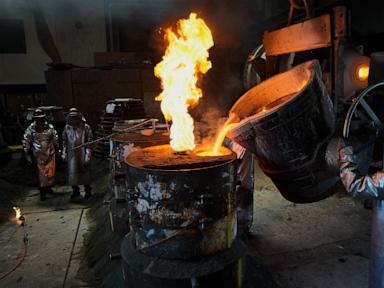
The lazy consensus in heritage manufacturing reads like a tech brochure written by someone who has never smelled hot bronze. You know the narrative. A centuries-old bell foundry installs a 3D printer, digitizes a mold-making workflow, or hooks up a computer-controlled kiln, and the cultural commentariat swoops in to applaud how innovation saved history.
It is a comforting delusion.
I have watched traditional operations hemorrhage capital trying to digitize a craft that derives its entire economic and cultural gravity from physical, analog error. When you inject software into a process defined by touch, acoustic resonance, and trial-and-error chemistry, you do not modernize the art. You ruin the moat.
Stop trying to save bell foundries with tech stacks they do not need.
The Fallacy of the Digital Mold
Let us look at the core claim made by the status quo: that CAD software and digital scanning make bell casting faster, cleaner, and more precise.
Precision is the enemy of a great bell.
A church bell or a carillon is not a precision machined engine part. If you want a silent, dead thud, machine it to micro-tolerances. A bell sings because of micro-imperfections in the bronze, the subtle variations in the loam mold, and the hand-carved inscriptions that disrupt harmonic distortion in ways no algorithm can fully predict.
When a foundry introduces digital modeling to replace the sweep-board and loam technique—a method unchanged since the Middle Ages—they trade acoustic soul for corporate efficiency. And for what? To shave three days off a twelve-week production cycle that nobody was complaining about?
Clients do not buy bells because they want speed. They buy them because they want a monument that outlives empires.
The Economics of Nostalgia vs. Reality
Let us talk about the balance sheet. I have seen heritage workshops blow hundreds of thousands of pounds on automated temperature sensors, robotic glaze applicators, and digital design suites.
The rationale sounds smart in a board meeting. Reduce human error, scale output, lower labor costs. But bell casting is not a volume business. You cannot scale a market where the total global demand for large-scale bronze instruments can be met by a handful of specialized workshops working at capacity.
When you scale a niche, you lose the exclusivity that justifies a six-figure price tag. Worse, you load a small business with software subscription fees, maintenance overhead, and a dependency on technical consultants who charge hourly rates higher than a master founder makes in a week.
You are taking a business model based on elite craftsmanship and trying to run it like a SaaS startup. It breaks every single time.
What People Get Wrong About Acoustic Engineering
People always ask: "Can computer simulations match the sound profile of a traditional bell before it is poured?"
The short answer is yes. The practical answer is that simulation kills the magic.
Acoustic modeling software can map out partial tones—the fundamental, the hum note, the tierce, the quint, the nominal—with terrifying accuracy. But bell founders have been doing this for centuries using physical ratios and tuning rings. They shave bronze off the inside of the casting by ear on a lathe.
When you rely entirely on digital simulation to hit the target note on the first try, you eliminate the master craftsman's intuition. You turn an artisan into a button-pusher. And once the craft becomes operationalized, the product loses its narrative value. Buyers of high-end bells are paying for human mastery, not computer math.
The Uncomfortable Truth About the Modernization Trap
Admitting this comes with a heavy downside. If you reject modern tech, you limit your output. You cannot crank out fifty bells a month. You cannot compete on price with mass-produced industrial chimes coming out of low-cost manufacturing hubs.
Good. You shouldn't try.
The moment a heritage foundry tries to compete on volume, it enters a race to the bottom against automated foundries that can stamp out structural bronze cheaper and faster.
The winning play for a bell foundry isn't adding digital tools. It is doubling down on friction. It is keeping the horse-hair, the cow dung, the brick dust, and the open-fire melting pits because those elements are the actual product.
Throw away the tablet. Pick up the sweep-board. Pour the bronze by hand, or close the doors.