Hockey media loves a cheap soap opera.
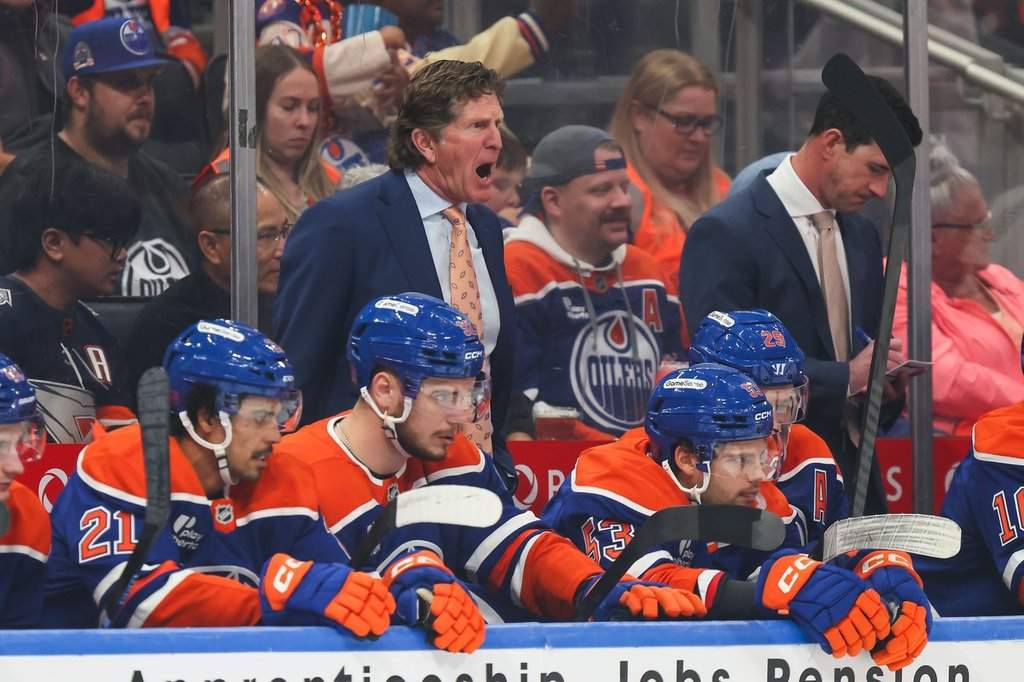
When a former bench boss returns to Scotiabank Arena wearing the opposition's crest—specifically walking behind the Edmonton Oilers bench to face the Toronto Maple Leafs—the beat writers practically trip over each other to file the exact same copy. They frame it as a theatrical collision. The stern taskmaster versus the soft, high-flying core he couldn't quite push over the hump. A test of maturity for Auston Matthews and Mitch Marner. A second chance at relevance for a veteran coach who wore out his welcome in the center of the hockey universe.
That narrative is lazy, nostalgic drivel. It mistakes emotional melodrama for tactical reality.
If you actually watch the tape and track how NHL systems have evolved over the last half-decade, the story of Mike Babcock returning to Toronto isn't about grudges, unresolved locker room tension, or whether the Leafs have "grown up" since 2019. It is an autopsy of an outdated coaching philosophy colliding with modern, pace-driven roster construction—and a warning about what happens when front offices confuse volume with accountability.
The Myth of the "Heavy" Coach
Every time an offensive juggernaut like Toronto or Edmonton flames out in the first or second round of the playoffs, the chorus starts up again. They need a hard-nosed coach. They need someone who demands structure. They need accountability.
This is the exact logic that prompted Toronto to hand Babcock an eight-year, $50 million contract in 2015, and it is the exact flawed impulse that keeps recycling the same dozen retread coaches across the league. Front offices panic when skill doesn't immediately translate to postseason grinding, so they hire a disciplinarian hoping fear will manufacture grit.
Here is the problem with that theory: structure is not a substitute for puck possession, and volume is not leadership.
During his tenure in Toronto from 2015 to 2019, Babcock took over a rebuilding roster and undeniably instilled professional habits in a young group. Nobody disputes that. Getting teenagers to understand backchecking angles and neutral-zone coverage is foundational work.
But once that foundation was poured, the blueprint became a cage.
Look at the actual mechanics of Babcock's late-era Toronto teams. His reliance on dump-and-chase entries, rigid line matching that routinely starved his best players of ice time in elimination games, and an obsession with veteran "gud pros" over dynamic puck-movers actively suppressed the roster's ceiling. When you have elite transition skaters capable of entering the offensive zone with control at a rate well above league average, forcing them to chip pucks off the glass and grind along the boards isn't "teaching them how to win in the playoffs." It is surrendering possession voluntarily.
In the modern NHL, giving away the puck is fatal. Defenders are too mobile, exit passes are too crisp, and goaltending is too structured to rely on low-percentage point shots and corner battles as your primary offensive engine.
Why Putting That System Behind Edmonton's Bench Breaks the Machine
Now apply that exact tactical friction to an Edmonton Oilers lineup built around Connor McDavid and Leon Draisaitl.
The conventional wisdom says a disciplined, defense-first tactician is the missing ingredient for an Oilers squad that has historically traded chances at a reckless pace. Critics look at Edmonton's occasional defensive breakdowns and assume the cure is a rigid, conservative system that locks down the neutral zone and demands every forward come back below the hash marks before thinking offense.
On paper, it sounds sensible. On the ice, it is coaching malpractice.
Imagine a scenario where you take the most lethal transition forward in hockey history—a player who creates high-danger scoring chances simply by accelerating through the middle of the ice with speed—and instruct him to slow down, support the wall defensively, and prioritize low-event hockey. You haven't fixed Edmonton's defensive zone coverage. You have simply neutralized their greatest defensive weapon: keeping the puck 200 feet away from their own net.
I have watched front offices across pro sports make this exact mistake for twenty years. They look at a high-variance, high-output team, panic over the variance, and hire a manager who eliminates the risk by eliminating the upside. You don't turn a Formula 1 car into a tank by putting heavier armor on it; you just ruin the suspension and finish tenth.
What People Actually Mean When They Ask About "Accountability"
Whenever Babcock's name surfaces alongside a star-studded roster, the search queries and talk-radio segments immediately zero in on the same question: Can superstars handle tough coaching?
That question is rigged from the start. It implies that if a star player pushes back against a coach's methods, the player is soft, entitled, or uncoachable.
Let's dismantle that premise. Elite athletes do not hate hard coaching. In fact, the best players in the world are usually the most obsessive, self-critical people in the building. What elite players despise is arbitrary authority—rules and deployments that make no tactical sense and actively hurt the team's chances of winning.
There is a massive difference between holding a player accountable for a blown coverage assignment and benching a top-six forward on his milestone night, or playing a fourth-line grinder in the final two minutes of a Game 7 while your best goal-scorer sits on the pine. One is coaching. The other is ego.
Look at the coaches who have actually hoisted the Stanley Cup over the past several years—Jon Cooper in Tampa Bay, Jared Bednar in Colorado, Bruce Cassidy in Vegas, Paul Maurice in Florida. None of them are pushovers. All of them demand relentless defensive commitment, ruthless forechecking, and detailed structural play.
Yet none of them rely on psychological mind games or public humiliation to extract effort. They use video, clear tactical adjustments, and trust. When Jon Cooper benches a star player for a shift, the player knows exactly which missed assignment triggered it. When an old-school taskmaster plays psychological chess with a 21-year-old's confidence—like forcing a rookie to rank his teammates' work ethic and then sharing the list—it doesn't build character. It fractures the room.
The Tactical Chess Match Nobody Is Watching
If you want to understand what actually happens when a Babcock-coached Oilers squad steps onto the ice in Toronto against the Maple Leafs, ignore the pre-game skate interviews and watch three specific tactical battles:
Neutral Zone Regroups vs. Controlled Entries
Toronto's core—whether under Sheldon Keefe or Craig Berube's heavier, more direct north-south adjustments—thrives when they can attack spaced-out defenders. A classic Babcock neutral zone relies on a strict 1-2-2 trap designed to clog the middle and force dump-ins. If Edmonton executes that trap cleanly, Toronto's defensemen get forced into hurried rim-arounds. If Toronto's blueliners beat the first wave of pressure with quick, short-area passes, that rigid 1-2-2 gets shredded by East-West puck movement.Power Play Zone Entries
The drop-pass entry has become an NHL staple for a reason: it forces penalty killers to stand still at the blue line while a carrier attacks with a 15-mph speed differential. Old-school coaches hate the drop pass because a turnover looks catastrophic. Watch whether Edmonton's power play is allowed to improvise at the blue line or if they are forced into predictable, low-percentage dump-and-retrieve sequences.Third-Period Line Matching
This is the ultimate tell. When the game is tied with eight minutes left in the third period, does the bench boss shorten the rotation and ride his two generational centers for twenty-four minutes, or does he roll four lines out of a stubborn commitment to "earning your ice"? Against a Maple Leafs roster loaded with top-end finishing talent, rolling out a shutdown line just to prove a point is begging to lose by a goal.
The Uncomfortable Truth About The Retread Carousel
We need to be honest about why this matchup even generates headlines, and it isn't because the hockey world is starving for tactical innovation.
The NHL has an addiction to familiarity. General managers terrified of losing their jobs rarely hire innovative thinkers from junior hockey, European leagues, or the college ranks. If a first-time coach fails, the GM gets fired for taking a gamble. If a guy with a Stanley Cup ring and Olympic gold medals from over a decade ago fails, the GM can shrug at the press conference and say, "Hey, we hired a proven winner, the players just didn't execute."
It is career insurance disguised as hockey operations.
To be fair, the contrarian view isn't without its own blind spots. The modern, player-friendly, analytics-driven coach has plenty of failures on the ledger too. When coaches become too collaborative, systems can turn soft. Without a firm hand on the wheel, talented rosters will default to perimeter play, cheat for offense, and treat defensive zone coverage as an optional chore until the puck hits the back of their own net in April. Structure matters. Discipline matters. You cannot win four rounds of playoff hockey on vibes and skill alone.
Stop Confusing Nostalgia With Progress
A coach walking back into an arena where he was fired five years earlier is a great hook for a pre-game broadcast package. The cameras will cut to his stoic expression during the national anthem. The commentators will bring up the 2018 and 2019 Game 7 losses in Boston. Someone will inevitably ask Auston Matthews after morning skate if it feels "weird" looking across the red line.
Matthews will give a bland, media-trained answer about focusing on the two points. And for once, the cliché will actually be the truth.
The game has moved past the era where one man's scowl behind the bench dictates the outcome of a Tuesday night in Toronto. Systems are faster, players are smarter, and the margin between winning and losing comes down to puck retrievals, exit efficiency, and whether a coaching staff is brave enough to let elite talent play fast without looking over their shoulder.
Stop treating a coaching reunion like a heavyweight title fight. Watch the neutral zone instead—you will see who actually adapted, and who is still coaching a game that no longer exists.