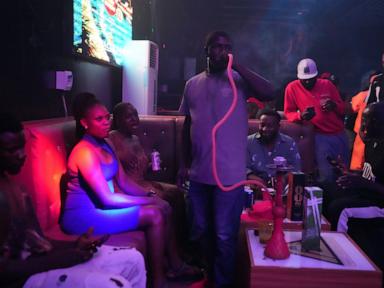
The bass does not merely vibrate through the floorboards of the club; it presses against the chest like a physical hand, heavy and demanding. Outside, the night air of Sokoto carries the dry, cooling dust of the Sahel, but inside, multicoloured strobe lights slice through haze and sweat. Voices merge into a singular, breathless chorus shouting the lyrics of an Afrobeats refrain.
It is nearly two in the morning.
To anyone watching from the bustling commercial hubs of Lagos or Abuja, this scene is unremarkable—a standard weekend release valve for urban youth. Yet this is northern Nigeria. This is the historical seat of the Caliphate, a region where deep-seated conservative religious codes, the looming shadow of militant violence, and economic freefall collide daily.
Life here is an exercise in high-wire balancing.
Consider the architectural irony of the city itself. By day, its streets are governed by a strict public morality enforced by the Hisbah, the regional Islamic police force. Authorized across a block of northern states, these officers patrol neighborhoods to suppress anything deemed outside the boundaries of Shariah and local statutes—from alcohol sales and unapproved haircuts to specific dress codes and public gatherings. Their presence is a constant, unyielding reminder of a societal compact that prioritizes collective spiritual purity over individual expression.
Yet humanity has a relentless habit of leaking around the edges of iron-clad rules.
When the sun drops below the horizon, a parallel reality awakens. In hidden lounges and discreet bars, patrons gather to reclaim a sense of normalcy that the broader geopolitical climate threatens to extinguish. For figures like Vincent Tabat, a frequent face in these nocturnal spaces, the weekend is not merely about entertainment; it is an act of quiet defiance against a claustrophobic reality. Surrounding them are the grinding anxieties of a region rattled by years of rebel insurgency, banditry, and inflation that turns basic survival into a grueling puzzle.
Nightlife becomes an escape hatch.
The psychological toll of living under a perpetual security threat cannot be overstated. When the news cycles are dominated by distant village raids, highway kidnappings, and economic despair, the human brain looks for sanctuary. People still need to laugh, touch, drink, and dance. They still need to participate in the raw mechanics of being alive.
The friction between these worlds creates bizarre spatial politics. At the club door, a posted notice spells out what is forbidden. Veils are turned away at this specific threshold—an inversion of the dress codes mandated just yards outside. Inside, bartenders pour cold drinks while patrons navigate an intricate dance of social survival, acutely aware that the line between private jubilation and public sanction is razor-thin.
The Hisbah maintains that their mandate is simple: maintaining peace, stability, and moral alignment. Commander Usman Abdullahi Jatau speaks of civic duty and moral obligations that every citizen must fulfill. But critics and legal scholars point out a deeper constitutional friction. Nigeria's federal framework exists in an unresolved tension, caught between secular constitutional promises and the parallel legal systems operating across the northern states—an open-ended question left unresolved by the courts for decades.
When morality enforcement expands to ban events with DJs, restrict music on public transit, or police the personal choices of digital creators online, the friction stops being theoretical. It becomes personal. It turns into a daily negotiation over who owns the public square and who defines the boundaries of human dignity.
And still, the music plays.
In the dark corners of the north, amidst the checkpoints and the quiet prayers, people continue to carve out spaces where they can breathe. They find joy not because the danger has vanished, but precisely because it has not.
The bassline thumps on, shaking the dust from the walls, drowning out the silence.