The rain in London does not fall; it hangs. It settles over the black brick of Downing Street like a damp woolen coat, blurring the edges of the streetlamps and smoothing the pavement into a dark, oil-slick mirror. Inside Number 10, the silence of the late hours is heavy. It is the kind of quiet that only exists in buildings where history is made by tired people staring at secure telephones.
On the other side of the Atlantic, the sun is blazing against the pink stucco and gilded trim of Palm Beach. The air smells of salt water, expensive turf, and gasoline from idling motorcades. You might also find this related article interesting: The One Billion Pound World Cup Lie Prime Ministers Love to Tell.
These two worlds should not fit together. They represent opposing tectonic plates of modern politics. Yet, the thread connecting them is one of the most fascinating, calculated pieces of human engineering in contemporary diplomacy. Keir Starmer, a man whose entire public persona is built on methodical preparation, prosecutorial restraint, and the quiet dignity of British institutions, has committed to keeping a direct line open to Donald Trump.
This is not a story about shared ideology. It is a story about the cold, friction-filled reality of human chemistry used as a shield for statecraft. As discussed in latest articles by The Washington Post, the results are significant.
The Chemistry of Contrast
Imagine two men sitting across a dinner table, looking at each other through the lens of entirely incompatible life stories.
On one side sits the British Prime Minister. Starmer spent his formative years in courtrooms, analyzing briefs, weighing evidence, and believing deeply that rules matter. He is a man who respects the process. His sentences are structured. His ties are perfectly knotted. He is the personification of the institutional machine.
On the other side is the master of the unconventional. Trump operates on instinct, grievance, and personal loyalty. To him, institutions are things to be tested, circumvented, or reshaped in his own image. He does not read briefs; he reads people. He does not value the process; he values the deal.
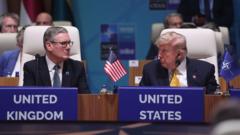
When these two worlds collided over a two-hour dinner at Trump Tower, the stakes were invisible to the casual observer. The public saw the standard press releases, the stiff photographs, the polite assertions of a "special relationship." But beneath the surface, a much more delicate operation was underway.
Diplomacy at this level is often misunderstood as a series of bureaucratic handshakes and treaty signings. It is not. It is an exercise in applied psychology. For a British leader, especially one from the center-left Labour Party, navigating a relationship with a right-wing populist American president is like walking through a minefield while wearing magnetic boots. Every step carries the risk of a catastrophic explosion at home, where voters view the American leader with deep skepticism. Yet, every misstep risks alienating the world’s ultimate superpower.
Starmer understood a fundamental truth early on. You do not get to choose the leader of your most critical ally. You only get to choose how you handle them.
The Ghost of Relationships Past
To understand why this quiet commitment to long-term communication matters, we have to look back at how British prime ministers have broken themselves on the shores of American politics before.
Think of Tony Blair. His relationship with George W. Bush was forged in the fires of crisis, built on a shared, almost missionary belief in changing the world. It cost Blair his political legacy, binding him inextricably to a war that fractured his country.
Think of Theresa May. She rushed to Washington, eager to be the first foreign leader to hold hands with the newly elected president, only to find that personal warmth could be revoked with a single tweet.
Starmer’s approach is entirely different. It is transactional, clear-eyed, and stripped of romanticism. He is not looking for a political soulmate. He is looking for a functional channel.
Consider the mechanics of how this works. When the British government looks at the global map, they see vulnerabilities everywhere. Security in Europe is fragile. Trade routes are volatile. The defense of the realm relies on American intelligence, American nuclear tech, and American willingness to honor alliances. If that willingness wavers, Britain’s position in the world shifts instantly.
So, what does a prime minister do? He builds a bridge out of words. He ensures that when a crisis hits at three in the morning, the person answering the phone in Florida or Washington recognizes the voice on the other end. They do not need to agree on tax policy or climate change. They just need to trust that the other man will keep his word within the narrow boundaries of the agreement they have made.
The Human Cost of Pragmatism
This kind of pragmatism does not come without a price. It requires a stomach for contradiction.
For Starmer, the internal calculation must be exhausting. By day, his government champions international law, human rights, and green energy transitions. By night, he must maintain rapport with a political figure who has frequently questioned the value of NATO, praised autocrats, and dismissed climate science as a hoax.
It is easy for critics on the sidelines to call this hypocrisy. It is simple to demand that a leader stand on principle and refuse to engage with those who hold different values. But those critics do not carry the weight of a nation's defense on their shoulders. They do not have to worry about whether a sudden tariff on British steel will devastate a community in Wales, or whether a shift in American intelligence sharing will leave a blind spot in London's counter-terrorism operations.
The real work of leadership is often found in these uncomfortable grey zones. It is the willingness to be disliked by your friends in order to protect them from your enemies.
During that dinner in New York, the conversation reportedly drifted across various topics, from global security to personal histories. It was an exercise in finding common ground where almost none existed. Starmer talked about his background; Trump talked about his mother’s Scottish roots. It was small talk, but small talk is the mortar that holds the bricks of international relations together when the storms hit.
The Long Game
Power is a fleeting thing. Prime ministers leave office. Presidents finish their terms. But the geography between nations remains unchanged. The Atlantic Ocean does not shrink because a different party wins an election.
By signaling an intent to keep this channel open well beyond the immediate confines of formal summits, Starmer is playing a long game. He is recognizing that the influence of the populist movement in America is not a temporary glitch in the system; it is a permanent feature of the modern political landscape. To ignore it, or to treat it as a passing phase, would be an act of supreme negligence.
The strategy is about creating a buffer against unpredictability. If the global order shifts, Britain cannot afford to be caught flat-footed. By establishing a direct, human connection that bypasses the traditional, often sluggish diplomatic channels, Starmer ensures that Britain remains relevant in the rooms where the biggest decisions are made.
It is a quiet, unsentimental kind of statecraft. There are no grand speeches here. There are no historic declarations of eternal friendship. Instead, there is just a telephone line, kept clear, waiting for the moment when the world tilts again, and two very different men must decide how to handle the fallout together.
The rain continues to fall on Downing Street, washing the soot from the old bricks. Inside, the lights remain on. The world outside is loud, chaotic, and deeply divided. But as long as the lines remain open, there is a chance to navigate the darkness.