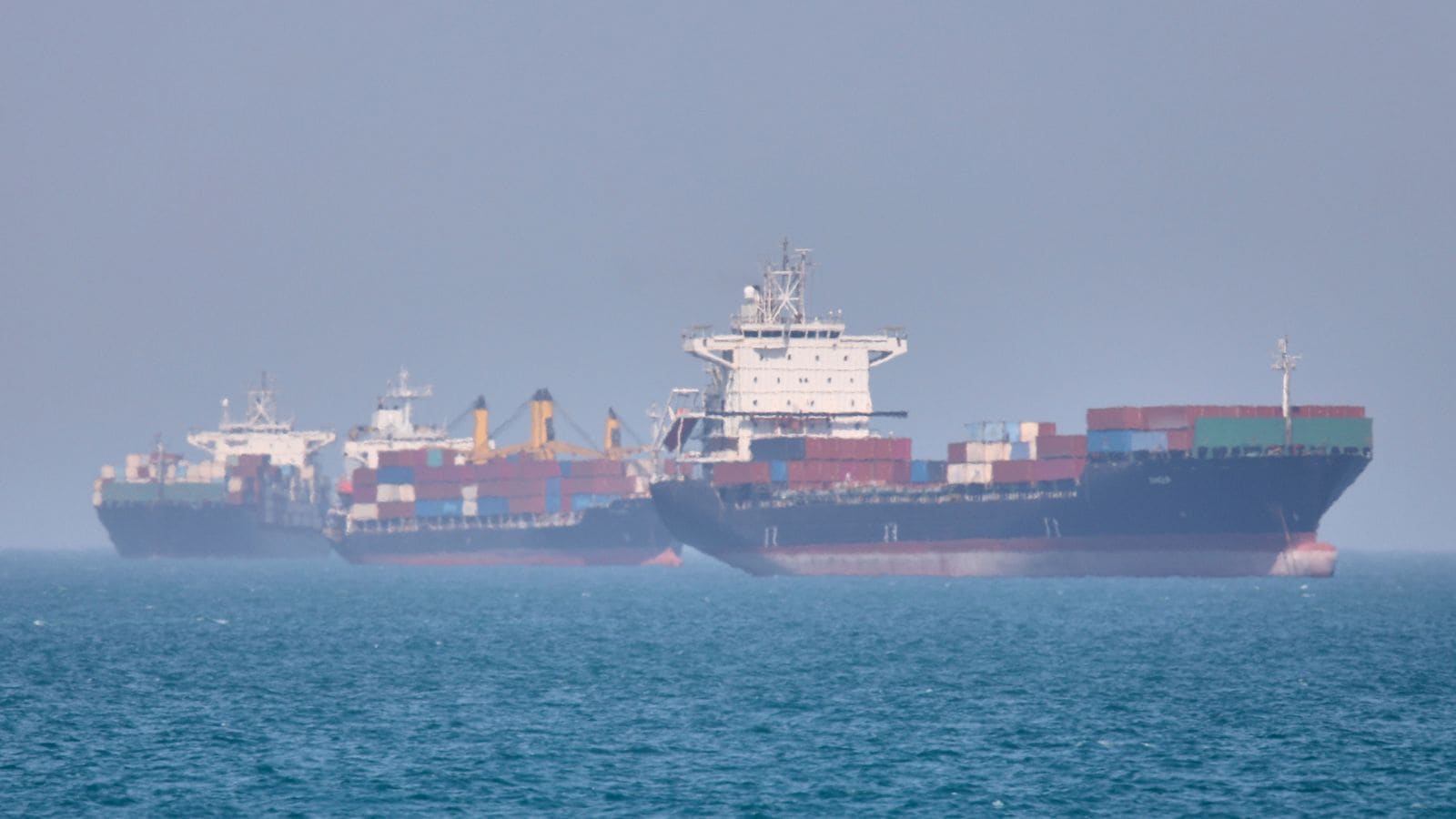
The steel hull of a massive oil tanker does not feel like a bridge between superpowers until you are standing on it in the dark.
Out here, a thousand miles from the nearest major city, the ocean is pitch black. The water swallows light. Underneath the surface lies millions of gallons of crude oil; above it, the suffocating humidity of the Middle Eastern shipping lanes. To the crew of the Iranian-flagged vessel, it was just another grueling night shift, the monotonous thrum of the massive diesel engines vibrating through the soles of their boots.
Then came the helicopters.
They arrived without warning, the chopping of their rotor blades slicing through the heavy night air. Within minutes, fast-moving assault boats flanked the tanker, throwing up plumes of white spray. Armed men in tactical gear, faces covered, swarmed up the side of the hull. In the span of a single heartbeat, a routine commercial voyage transformed into the epicenter of a geopolitical chess match.
This is not a scene from a Hollywood thriller. It is the reality of modern maritime interdiction, a high-stakes game of cat and mouse played out across the world's most vital economic choke points. When the US military boarded that Iranian-flagged tanker, suspected of trying to breach a strict international blockade, they weren't just seizing a ship. They were pulling back the curtain on a invisible war that dictates the price of your morning coffee, the stability of global markets, and the terrifyingly thin line between peace and total conflict.
The Cold Friction of the Sea
We like to think of the modern world as entirely digital, a frictionless space where money and goods move at the speed of light. It is an illusion.
Look around your room. The phone on your desk, the shoes on your feet, the fuel powering the grid that keeps your lights on—almost all of it traveled across an ocean. Ninety percent of global trade still moves by water. The oceans are the literal arteries of human civilization, and when those arteries clog, the world chokes.
To understand why a single ship matters so much, you have to understand the geography of isolation. Imagine a doorway. If you control the doorway, you control who enters the house. In the maritime world, these doorways are called choke points—narrow straits where shipping lanes compress into tight, easily monitored channels. The Strait of Hormuz, the Red Sea, the Bab el-Mandeb.
When a nation or a coalition imposes a blockade, they are effectively locking that door. But a lock is only as good as the person holding the key.
When a rogue tanker attempts to run a blockade, it is testing the lock. If they succeed, the blockade crumbles. If they fail, the consequences can cascade through the global economy in hours. Insurance rates for shipping vessels skyrocket. Oil futures spike on Wall Street. Shipping companies reroute their fleets around entire continents, adding weeks to journeys and millions to supply chain costs.
But on the deck of the ship, none of that macroeconomic data matters. What matters is the cold friction of steel, the glare of tactical lights, and the heavy silence of men waiting to see who blinks first.
Anatomy of a Takeover
The logistics of boarding a hostile or non-compliant vessel in open water are a nightmare of physics and human psychology.
Consider the sheer scale of the challenge. A fully loaded supertanker is a floating mountain of iron. It cannot stop quickly; it cannot turn on a dime. It moves with a terrifying, unstoppable momentum. For the boarding party—often elite Navy SEALs or Coast Guard Maritime Security teams—approaching such a vessel is an exercise in extreme vulnerability.
Imagine trying to climb a moving, five-story building made of wet steel, in the dark, while carrying eighty pounds of gear, knowing the crew inside might be armed and waiting for you.
The process begins long before the first boot hits the deck. Satellite tracking data monitors the ship’s erratic course. Intelligence analysts crunch data in windowless rooms in Washington and Bahrain, tracking the vessel's registration, its history, and its suspected cargo. They look for anomalies. Did the ship turn off its automatic identification system (AIS) transponder? Did it ride strangely low in the water despite claiming to carry a light load?
Once the decision is made to intervene, the execution must be flawless.
Speed is life. The boarding teams use fast-roping techniques from helicopters, dropping onto the superstructure of the ship while small boats contain the vessel from below. The initial goal is not destruction, but control. They must secure the bridge to command the steering, and the engine room to kill the propulsion.
For the mariners onboard the tanker, the experience is surreal. Most merchants and crew members are civilians, caught in a political crossfire they have no say in. They are men from developing nations, working long contracts to send money home to their families. Suddenly, their cramped living quarters are filled with flashing green lasers, commands barked in a foreign language, and the undeniable reality that one wrong move could end their lives.
The Ghost Fleet and the Shadow Economy
Why do nations take such immense risks? The answer lies in the shadow economy of the global oil trade.
When heavy sanctions are placed on a country like Iran, their ability to sell oil legally is choked off. Oil is their lifeblood. Without those revenues, regimes face economic collapse. This pressure breeds a sophisticated system of evasion—a phantom fleet of aging tankers that operate in the dark.
These ships change their names overnight. They fly "flags of convenience," registering in tiny island nations with lax maritime oversight. They engage in ship-to-ship transfers in the middle of the ocean, pumping oil from one hull to another under the cover of night to disguise its origin. It is a massive, multi-billion-dollar game of three-card monte.
The US military's intervention is the blunt-force tool used to disrupt this network. It sends a message that goes far beyond the specific tonnage of oil seized. It tells the shadow network that their cloaking devices are failing.
Yet, this creates a dangerous escalation loop. Every time a tanker is boarded, the opposing nation looks for a way to retaliate. They might seize a western commercial vessel passing through their waters under a flimsy legal pretext. They might deploy sea mines or utilize low-cost suicide drones to harass shipping lanes.
The ocean, once a shared common pasture for global commerce, transforms into a friction point where a single spark can ignite a regional war.
The Human Weight of the Anchor
We read about these events in short, sterile news snippets. We see headlines about blockades, international law, and strategic maneuvers. We consume them as abstract geopolitical data points, like moves on a board game.
But the board game is real, and the pieces are human beings.
Think of the captain of that Iranian tanker. He is likely an experienced mariner, navigating a decaying ship through hostile waters, balancing the intense pressure from his government bosses with the immediate safety of his crew. He knows he is being watched from space. He knows that if he fails, his career, his freedom, or his life could be forfeit.
Think of the twenty-two-year-old boarding team member, sitting in the dark of a helicopter cabin, feeling the vibration of the engine in his teeth, watching the silhouette of the massive tanker grow larger through his night-vision goggles. He isn't thinking about global oil prices. He is thinking about his training, his breathing, and his family back home.
The true cost of these operations is measured in this intense, concentrated human stress. It is the anxiety of a global economy that relies on perfect stability but is built on a foundation of constant geopolitical tension. We live in a world where a minor tactical decision made on a wet deck at 3:00 AM can change the trajectory of international relations for a decade.
The boarding ends. The ship is secured. The cameras are turned off, and the vessel is escorted to a neutral port for inspection and legal processing. The news cycle moves on to the next crisis, the next headline, the next outrage.
But out there on the water, the tension never truly dissipates. The ocean remains wide, dark, and indifferent to the ambitions of men. The ships keep moving, the locks remain on the doors, and somewhere in the dark, another boarding party is getting ready to climb.