Financial commentators are running the exact same playbook they have used since 1973. A drone flies over a desert, a missile hits a radar installation, and the headlines immediately scream about a global energy crisis. The mainstream media looks at a 4% jump in Brent crude futures and panics, telling you to prepare for five-dollar gasoline and runaway inflation.
They are selling you a ghost. If you enjoyed this piece, you might want to read: this related article.
The knee-jerk reaction to bid up oil prices during Middle Eastern geopolitical flare-ups is no longer rooted in physical reality. It is a pavlovian reflex triggered by legacy trading algorithms and talking heads who still think the global energy sector operates the same way it did during the Nixon administration. If you are trading or making corporate decisions based on the assumption that US-Iran escalations will structurally break the oil market, you are the liquidity more sophisticated players are feeding on.
The hard truth is simpler: the world is swimming in crude, the supply chains have built-in cushions the media completely ignores, and these geopolitical price spikes are nothing more than short-term wealth transfers from panicked retail observers to cold-blooded institutional shorts. For another look on this development, see the recent update from Forbes.
The Myth of the Structural Supply Shock
Every lazy analysis starts with the Strait of Hormuz. They tell you that twenty percent of the world’s petroleum passes through this narrow choke point, and that a single major military escalation will shut it down, starving the global economy.
Let’s dismantle the physical mechanics of how modern supply actually works.
When a conflict escalates between Washington and Tehran, algorithms buy "paper barrels"—futures contracts traded on the ICE and NYMEX. This drives the headline price up. But paper barrels do not run refineries. Physical "wet barrels" do. And in the physical market, the immediate supply does not magically vanish overnight when a strike occurs.
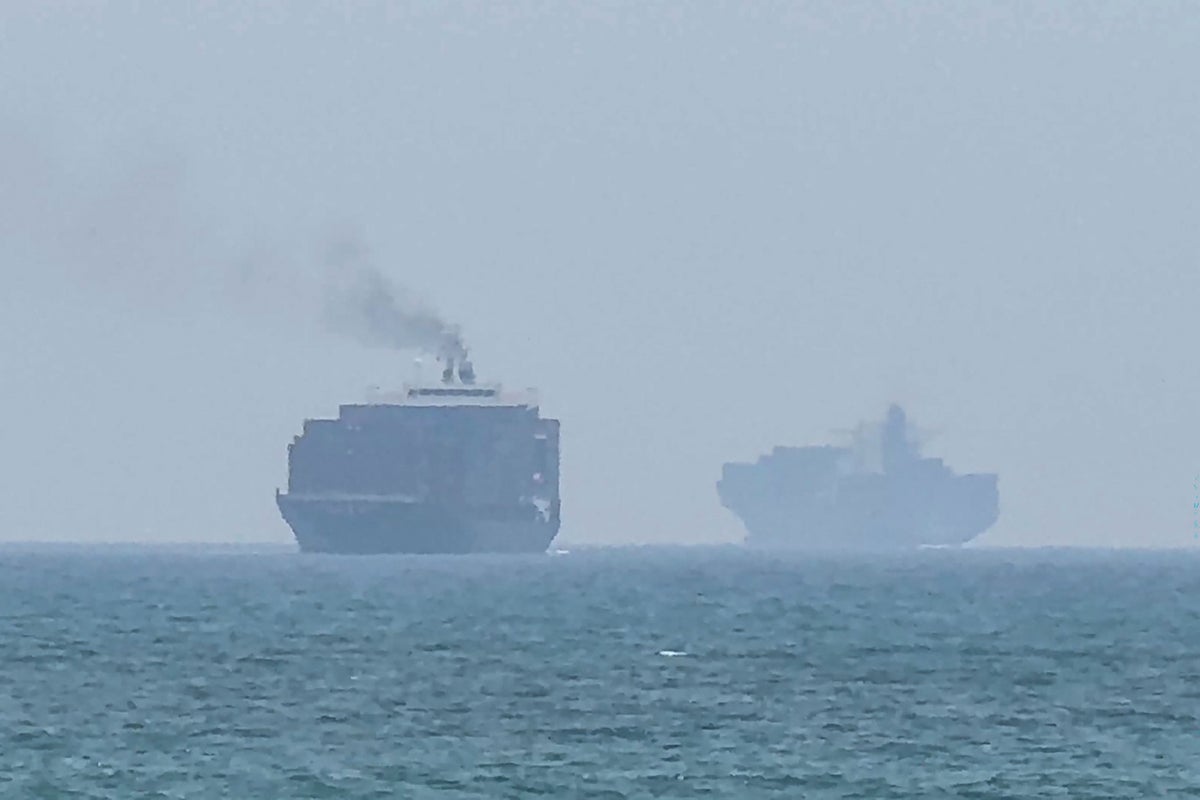
Tankers do not just disappear. They reroute, insurance premiums adjust, and operations continue. More importantly, the global supply map has shifted permanently away from total dependence on the Persian Gulf.
Consider the sheer volume of non-OPEC production. The United States is pumping over thirteen million barrels per day, a historic high that continually breaks records. Add to that the massive, quiet expansions in Guyana, Brazil, and Canada. This is structural, baseline supply that does not care about regional skirmishes in the Levant or the Gulf. Every single time OPEC or Iran tries to signal supply constraints, a wall of North and South American crude stands ready to fill the void.
I have watched corporate boards burn millions of dollars hedging against seventy-dollar oil turning into one-hundred-and-fifty-dollar oil based on political headlines. They lose every time because they confuse a temporary logistics hiccup with a terminal resource shortage.
Deconstructing the Algorithmic Panic Trap
To understand why these oil spikes fade so fast, you have to look at who is actually buying the news. The modern commodity market is dominated by Commodity Trading Advisors (CTAs) and quantitative funds running trend-following strategies.
When a news alert breaks regarding US or Iranian military action, these algorithms scan for keywords like "strike," "retaliation," and "Gulf." They instantly execute massive buy orders to capture momentum. This creates a self-fulfilling prophecy for the first forty-eight hours. The price surges, the media writes the article about the surge, and the public assumes the market knows something they don’t.
It is a statistical illusion. Look at the data from the last decade of Middle Eastern escalations.
| Event | Immediate Price Reaction (1-3 Days) | Price Reaction (30 Days Later) |
|---|---|---|
| 2019 Abqaiq Drone Attacks | +14% | -2% |
| 2020 Baghdad Missile Strikes | +6% | -11% |
| 2024 Red Sea Shipping Disruptions | +4% | -6% |
The pattern is flawless. The initial spike is driven by financial speculation, not physical scarcity. Once the algorithms exhaust their buying quotas, the market looks at actual refinery demand, realized inventory draws, and shipping schedules. When they realize that the physical oil is still flowing, the premium evaporates, and the market crashes back to its fundamental baseline.
By buying into the panic, you are effectively buying the absolute top of an artificial market cycle engineered by automated trading desks.
The Hidden Reality of China and Global Demand Destruction
The media's obsession with the supply side of the oil equation blinds them to a far more potent force crushing long-term prices: the systematic collapse of global demand growth.
While commentators worry about whether Iran will disrupt shipping lanes, they completely ignore the structural economic shift happening in the world's largest oil importer. China's economic engine is fundamentally changing. The hyper-growth era of massive infrastructure spend, concrete production, and unmitigated industrial expansion is over.
Furthermore, the commercial vehicle fleet in Asia is transitioning to liquefied natural gas (LNG) and electrification at a pace that Western analysts fail to calculate. Heavy-duty trucking in China—traditionally a massive consumer of diesel—is rapidly abandoning petroleum. When you combine this structural demand destruction with the broader economic deceleration across the Eurozone, the narrative of an oil-starved planet falls apart.
Imagine a scenario where a conflict successfully takes half a million barrels of daily production offline for two weeks. In 2005, that would have triggered a severe global shock. Today, that volume is easily absorbed by high inventory levels, strategic reserves, and the simple fact that global demand is structurally underperforming expectations. The threat is a paper tiger.
The Paper Premium vs. The Wet Reality
To successfully navigate commodity markets, you must learn to separate the financialized pricing of oil from the physical trade of the commodity itself. Refiners do not buy oil based on a dramatic tweet or a press briefing from the Pentagon. They buy oil based on cracking margins—the difference between the price of crude and the price of the refined products like gasoline and diesel they can extract from it.
When geopolitical events drive crude prices up artificially, refining margins often collapse. Why? Because the end consumers—the drivers at the pump, the airlines buying jet fuel, the logistics companies running fleets—cannot or will not pay the inflated price. Demand pushes back.
When refiners see their margins shrink, they reduce their runs. They buy less crude. This immediate drop in physical demand acts as an automatic brake on the market. The high price cures the high price, and it happens far faster than the news cycle can keep up with.
The risk premium applied to oil during these crises is not a reflection of real danger; it is a tax paid by the uninformed to the institutions that understand physical supply chain mechanics.
The Strategic Reserve Buffer
Another critical factor the alarmists miss is the weaponization of strategic stockpiles. The United States Strategic Petroleum Reserve (SPR), along with coordinated reserves across IEA member nations, exists specifically to blunt the impact of sudden supply disruptions.
While critics point out that SPR levels are lower than their historical peaks, they miss the tactical reality: the mechanism for releasing these barrels is highly greased and politically incentivized. Any true physical disruption that threatens to drive energy prices to politically damaging levels will be met with immediate, aggressive releases of state-controlled crude.
Governments will always prioritize short-term price stability over long-term strategic hoarding when an election cycle or economic stability is on the line. The knowledge that millions of barrels can be dumped into the market with the stroke of a pen prevents physical traders from holding onto long positions for too long. They know the floor can be pulled out from under them instantly.
Stop Asking if Oil Will Hit One Hundred Dollars
The media loves the one-hundred-dollar oil narrative because it generates clicks and stokes consumer anxiety. But asking whether a military strike will push oil past an arbitrary round number is entirely the wrong question.
The real question you should be asking is: how long can an artificially inflated price survive before it triggers massive production increases from private drillers and absolute demand destruction from consumers?
The answer is: not very long. The modern energy ecosystem is highly elastic. When prices rise, independent US operators turn on the taps, completing drilled-but-uncompleted wells within weeks. Concurrently, consumers alter behavior, supply chains optimize, and alternative energy sources take a larger share of the baseline load.
The risk in the oil market is not that a conflict in the Middle East will cause a permanent upward paradigm shift in energy costs. The risk is that you alter your business strategy, underwrite bad capital allocations, or execute panicked hedges based on a temporary media storm, leaving yourself exposed when the physical realities of oversupply and weakening global demand inevitably reassert themselves.
The conflict headlines will continue. The algorithms will keep buying the initial news alerts. The talking heads will keep predicting catastrophe. Let them. While they chase the temporary spikes of paper barrels, the physical world will keep pumping, shipping, and consuming oil based on hard economic data, not fear. Turn off the news, ignore the immediate 4% jumps, and look at the actual inventory builds. That is where the truth hides.